


This article was automatically translated from the original Turkish version.
+1 More
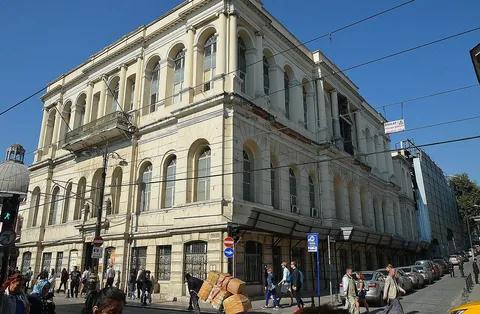
Press Museum
Affiliated Institution | Türkiye Gazeteciler Cemiyeti | ||||||||
|---|---|---|---|---|---|---|---|---|---|
Location | Çemberlitaş İstanbul Fatih | ||||||||
Year of Establishment | 9 May 1988 | ||||||||
Year of Construction | 1865 | ||||||||
Builder | Minister of Education Saffet Paşa | ||||||||
Previous Uses | Ministry of Education, Darülfünun, Censorship Building, Municipal Services Building | ||||||||
Main Themes | History of journalism, Press technology, History of communication | ||||||||
Exhibition Spaces | History of the press, Typesetting and printing machines, Memorial objects, Art gallery, Library, Handicrafts | ||||||||
Press Museum is a specialized museum affiliated with the Turkish Journalists Association, located in a historic building constructed in 1865 in the Çemberlitaş neighborhood of Istanbul’s Fatih district, in the Neoclassical style by Saffet Paşa, Minister of Public Education. It is not only Türkiye’s first press museum but also one of the few press museums in the world. The museum houses documents related to Turkish press history, tools used in journalism, personal belongings of prominent journalists, and various exhibitions.
The building that now houses the Press Museum was originally constructed in 1865 as the Ministry of General Education. It was later used as Istanbul Darülfünun, and in 1875, the International Painting Exhibition was held within its walls. During the reign of Sultan Abdülhamid II, the building served as the Censorship Office, and in 1908 it was transferred to the Istanbul Municipality. Between 1908 and 1983, it was utilized by various municipal departments.
In 1983, following discussions between then Istanbul Mayor Abdullah Tırtıl and the Board of Directors of the Turkish Journalists Association (chairman Nezih Demirkent), it was decided to convert the building into the Press Museum. Restoration works were carried out between 1984 and 1988, and the museum opened to the public on 9 May 1988.
The museum is a four-story structure. Due to its location in Çemberlitaş, it is one of the cultural and artistic centers of the Sultanahmet–Beyazıt tourist area. The museum is not merely a space for exhibitions; it is a multifunctional venue that hosts cultural events, panels, seminars, and art exhibitions. In addition to exhibition areas, the museum includes art galleries, a library, an archive and document center, and a handicrafts hall.
The four-story museum contains sections dedicated to press technologies, historical documents of journalism, personal belongings, art galleries, and a library. Its location in the Sultanahmet–Çemberlitaş–Beyazıt area gives it the status of an important cultural and artistic center.
This section presents the development of the Turkish press from the Ottoman period to the Republic, documented through archival materials and published examples. A 1:1 scale model of the printing press established by İbrahim Müteferrika in 1729 is exhibited here. The exhibition is enriched with examples of publications printed by the press and period engravings. Additionally, documents related to Vekayi-i Mısriye, the first journalistic activity in Türkiye (1828), publications reflecting the press movements during the Second Constitutional Era, announcements of the opening of the Grand National Assembly of Türkiye, and newspapers published after the Alphabet Reform in both Turkish and Latin scripts are displayed for visitors.
This section documents the historical evolution of press technology, featuring machines representing various printing methods from stone printing to offset. Exhibits include examples of stone printing, a 1870 proofing table, a 1892 type printing machine, an entertype typesetting machine, lead-casting devices, proof presses, guillotines, and offset machines. A Spies brand offset printing machine manufactured in Leipzig is displayed in working condition. Various molds used in type printing, wooden type cases, and embossing machines are also exhibited here. Tools used in cliché production and examples of machines used by the Anatolia Agency in its early years are located in the klişehane section.
This section displays personal belongings of journalists and writers who left a mark on Turkish press life. Objects belonging to Abdi İpekçi, Çetin Emeç, Sabiha Sertel, Zekeriya Sertel, Nazım Hikmet, Sabahattin Ali, Peyami Safa, Namık Kemal, Reşat Nuri Güntekin, Burhan Felek, 15 July martyr Mustafa Cambaz, Sedat Simavi, Cihad Baban, and Ahmet Emin Yalman are exhibited here. Among the displayed items are the money Abdi İpekçi saved from his first salary and the pen he was carrying when he was shot, which was broken by a bullet; the tie and last-read book of Çetin Emeç at the time of his assassination; the watch of Mehmet Ali Birand; columns written in old Turkish script by Burhan Felek; Sedat Simavi’s eye bath bowl; and the entry card of Orhan Erinç for the Yassıada trials. Oil paintings commissioned by the Association and memorial notebooks are also part of this collection.

Exhibited Objects (AA)

Exhibited Objects (AA)
The six separate art galleries within the Press Museum host exhibitions in various art forms including painting, ceramics, sculpture, engraving, illumination, miniature, calligraphy, and ebru. Works by local and international artists are presented to visitors through exhibitions renewed every 19 days. The halls are designed in varying sizes according to the number of artworks and technical requirements of the artists. Lighting systems provide suitable conditions for both viewers and artists.
Reorganized in 1998, the Press Museum Library is a specialized research center in the fields of media, journalism, communication, sociology, history, and culture. The library collection includes thousands of books alongside bound volumes of newspapers and periodicals. The library features a reading room with seating for 25 people, designed for silent study. A digital archive contains 1,081 newspaper issues in PDF format. There are 26,786 registered items in the inventory, with a total of approximately 30,000 archived materials. The museum’s registered inventory of objects stands at 204.
This hall, open to both local and foreign artists, displays handicraft products aimed at visitors of all age groups. It is open from 10:00 to 19:00 on weekdays and Saturdays.
The Press Museum is open to the public free of charge. The museum floor can be visited daily from 14:00 to 16:30 on weekdays. Advance written applications to the Press Museum Directorate are required for group visits such as tourist groups and school excursions.
The museum is visited by local and international tourists, researchers, students of communication faculties, and media professionals.
Anadolu Ajansı. “Bu Müzede Basın Tarihine Yolculuk Var.” Accessed April 30, 2025. https://www.aa.com.tr/tr/kultur-sanat/bu-muzede-basin-tarihine-yolculuk-var/1025981.
Ministry of Culture and Tourism of the Republic of Türkiye. "Basın Müzesi." Türkiye Kültür Portalı. Accessed April 30, 2025. https://www.kulturportali.gov.tr/turkiye/istanbul/gezilecekyer/basin-muzesi831003?ysclid=ma48kbaqt4129215019.
T.C. Ministry of Culture and Tourism, General Directorate of Cultural Assets and Museums. "Basın Müzesi." Accessed April 30, 2025. http://www.kulturvarliklari.gov.tr/yazdir?9B90F71C627B954A2F0276271B0360A8.

Press Museum
Affiliated Institution | Türkiye Gazeteciler Cemiyeti | ||||||||
|---|---|---|---|---|---|---|---|---|---|
Location | Çemberlitaş İstanbul Fatih | ||||||||
Year of Establishment | 9 May 1988 | ||||||||
Year of Construction | 1865 | ||||||||
Builder | Minister of Education Saffet Paşa | ||||||||
Previous Uses | Ministry of Education, Darülfünun, Censorship Building, Municipal Services Building | ||||||||
Main Themes | History of journalism, Press technology, History of communication | ||||||||
Exhibition Spaces | History of the press, Typesetting and printing machines, Memorial objects, Art gallery, Library, Handicrafts | ||||||||
Historic Building and Establishment Process
General Structure and Function
Museum Structure and Floor Plan
Museum Sections
History of the Press Section
Typesetting and Printing Machines Section
Memorial Objects Section
Art Galleries
Library and Document-Information Center
Handicrafts Exhibition Hall
Visit Information
Museum Inventory
Visitor Profile