


This article was automatically translated from the original Turkish version.
+1 More
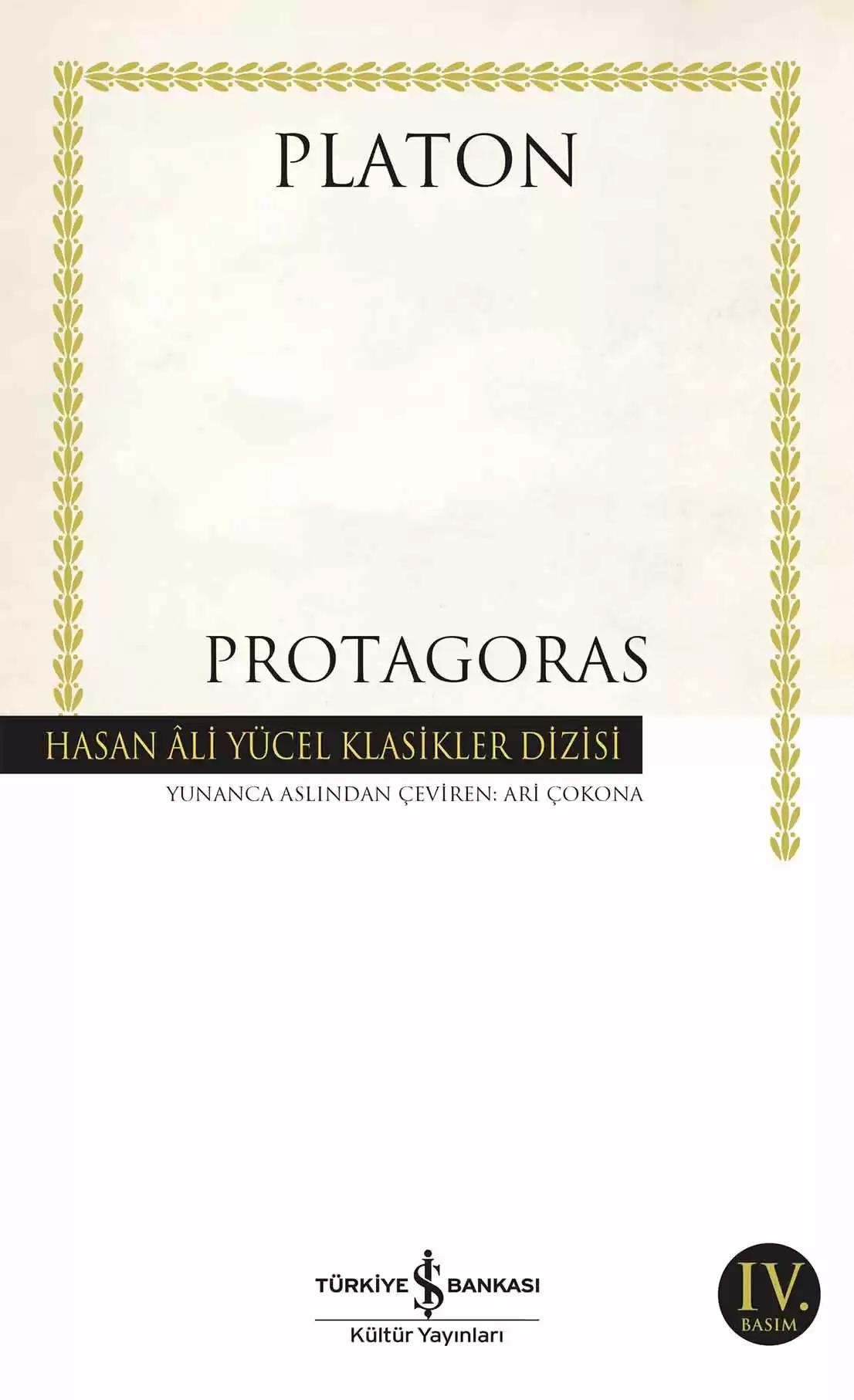
Protagoras (Book)
Author(s) | Plato | ||||||||
|---|---|---|---|---|---|---|---|---|---|
Genre | Dialogue | ||||||||
Subject(s) | Can virtue be taught? The relationship between pleasure and knowledge the good | ||||||||
Prominent Theme | Ethics and philosophy of knowledge debates | ||||||||
Plato’s work Protagoras is one of the foundational texts of ancient Greek philosophy. This dialogue between the sophist philosopher Protagoras and Socrates centers particularly on the question of whether virtue can be taught. Regarded as one of Plato’s early dialogues, Protagoras holds significant value for the history of ancient thought due to its philosophical debates and character portrayals. The Turkish translation of the work was published by Türkiye İş Bankası Kültür Yayınları.
Protagoras is one of Plato’s works written in the dialogue form. The dialogue begins with Socrates’ narration and explores philosophical discussions between Athenian nobles and sophists. At its core lies Protagoras’s understanding of knowledge and virtue. The debate shaped around the question of whether virtue can be taught extends to an examination of the concepts of pleasure, the good, knowledge, and happiness.
In the text, Protagoras, one of the sophists of the period, defends the art of sophistry, while Socrates critically examines this defense through his questioning approach. Throughout the discussion, philosophical method and moral values come to the fore.
The central theme of Protagoras revolves around the question: “Can virtue be taught?” In the dialogue, the teachability of moral virtues, the relationship between pleasure and the good, and the criteria individuals should use in their pursuit of a good life are all scrutinized.
Socrates argues that pleasures and pains must be measured correctly. The dialogue emphasizes that short-term pleasures may lead to long-term pains, and therefore highlights the importance of rational deliberation in evaluating pleasures. Within this framework, Protagoras also functions as an inquiry into the nature of knowledge, in addition to being an ethical discussion.
Protagoras, on the other hand, asserts that virtue can be taught. Education is defined as the process of making individuals better human beings. Throughout the dialogue, a philosophical debate unfolds between these two perspectives.
Plato (427–347 BCE) was one of the thinkers who played a decisive role in shaping the systematic structure of ancient Greek philosophy. A student of Socrates and teacher of Aristotle, Plato holds an important place in the history of philosophy through his dialogues. Protagoras is among Plato’s early works.
Protagoras is intended for readers interested in the history of philosophy, ancient Greek thought, ethical debates, and sophist philosophy. It is considered a fundamental text for academics, researchers, and graduate students working in the field of philosophy.
Protagoras is one of Plato’s dialogues that stands out in terms of ethics and the philosophy of knowledge. In the dialogue, the doctrine of virtue, the concept of pleasure, and the idea of attaining the good through reason are examined within a philosophical framework. The debates presented in the work lay the foundation for Plato’s views on the relationship between knowledge and virtue. Moreover, the dialogue is historically significant in philosophy for illustrating the contrast between sophist thought and Socrates’ critical method.
Plato. *Protagoras*. Trans. Candan Şentuna. Istanbul: İş Kültür Yayınları, 2022. https://www.iskultur.com.tr/protagoras.aspx.
Sönmez, Ayşe. "Platon’un Protagoras’ında Haz Anlayışı Üzerine Bir İnceleme." Ankara Üniversitesi Dil ve Tarih-Coğrafya Fakültesi Dergisi. https://dergipark.org.tr/en/download/article-file/2153470.

Protagoras (Book)
Author(s) | Plato | ||||||||
|---|---|---|---|---|---|---|---|---|---|
Genre | Dialogue | ||||||||
Subject(s) | Can virtue be taught? The relationship between pleasure and knowledge the good | ||||||||
Prominent Theme | Ethics and philosophy of knowledge debates | ||||||||
General Information about the Book
Subject
About the Author
Target Audience
Significance of the Work