


This article was automatically translated from the original Turkish version.
+2 More
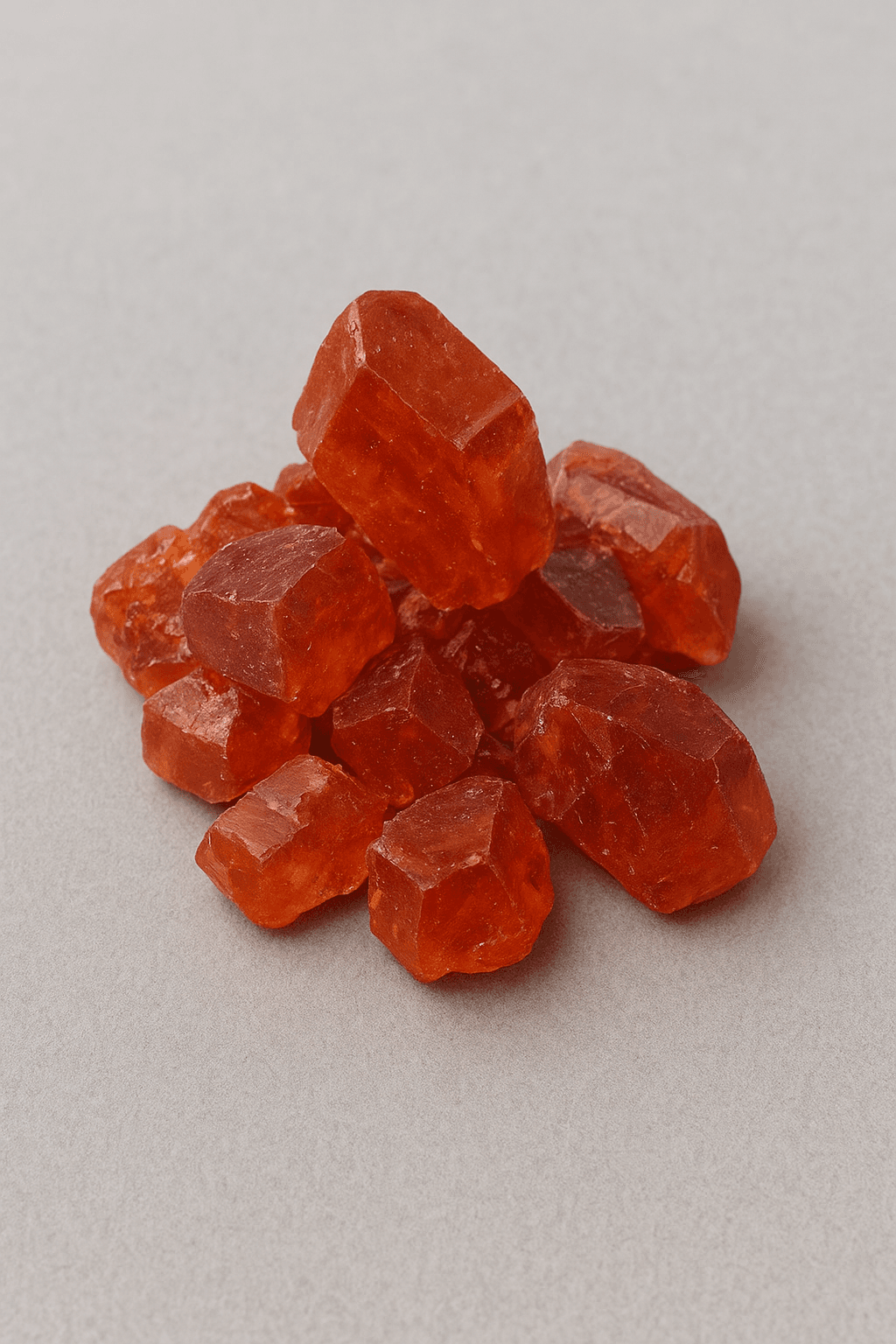
Yapayzeka tarafından oluşturulmuştur.
Purpurin is an anthraquinone-derived dye naturally found in plants of the Rubiaceae family, with the chemical formula C₁₄H₈O₅. It is one of the most important red pigments obtained particularly from Rubia tinctorum (madder root). Throughout history, it has found wide application in textile dyeing, artistic works, and later in biomedical research. Purpurin, noted both as a natural pigment and for its biological effects, continues to attract interest in pharmacology and biotechnology today.
Purpurin is a compound with the structure 1,2,4-trihydroxy-9,10-anthraquinone. It has a molecular weight of 256.21 g/mol, and the presence of three hydroxyl groups determines its coloring properties and biological activities. It exhibits low solubility in water but better solubility in organic solvents. Its color ranges from bright red to orange, a characteristic that made it an attractive pigment throughout history. Along with alizarin, purpurin is one of the main components of natural madder dye.
Purpurin is primarily extracted from the roots of plants in the Rubiaceae family, especially Rubia tinctorum (madder) and Rubia cordifolia. These plants have been widely used for dye production throughout history. The extract obtained after drying and processing the roots became a valuable natural dye source in the textile industry. Purpurin, together with alizarin, is one of the dominant components in these extracts. Although derived from natural sources, chemical synthesis methods for its production began to be developed from the 19th century onward.
Purpurin was widely used across various cultures from antiquity through the Middle Ages. It was particularly preferred for dyeing fibers such as cotton, wool, and silk in red and orange tones. During the Renaissance, it was employed as a natural pigment in miniature painting and fine art. With the development of synthetic production techniques in the 19th century, the use of natural madder declined. Nevertheless, purpurin retains its importance in the preservation of cultural heritage and the analysis of historical textiles.
Purpurin exhibits strong antioxidant activity due to its ability to scavenge free radicals. This property enables it to play a protective role in biological systems by reducing oxidative stress in cells. Research has shown that purpurin may prevent DNA damage. Its antioxidant capacity is particularly significant in the prevention of aging-related and oxidative stress-associated diseases. Consequently, purpurin is also being evaluated in functional food and supplement development.
Purpurin demonstrates antimicrobial properties against a variety of bacteria and fungi. It has been reported to be effective against pathogenic bacteria such as Staphylococcus aureus and Escherichia coli. Antifungal activity has also been observed in tests against various fungal species. This makes purpurin a promising candidate for use in food preservation and the development of natural antimicrobial agents. Additionally, it is considered an alternative in combating antibiotic-resistant microorganisms.
Recent studies have suggested that purpurin may have protective effects against neurodegenerative diseases. It has been reported to reduce oxidative stress associated with conditions such as Parkinson’s and Alzheimer’s disease. By enhancing antioxidant defenses in brain cells, it can protect neurons from damage. Animal model studies have demonstrated that purpurin may have positive effects on learning and memory. These findings position purpurin as a potential molecule for future neurological therapies.
In cell culture studies, purpurin induces apoptosis, or programmed cell death. It has been shown to inhibit proliferation and promote cell death in certain cancer cell lines. This has prompted research into its potential as an anticancer agent. Its antioxidant properties may also support the prevention of mutations linked to cancer. Although it has not yet entered clinical use, laboratory findings are promising.
Purpurin can suppress excessive immune responses that lead to inflammation. Controlling inflammation is a key target in the treatment of many chronic diseases. Studies have shown that purpurin modulates cytokine production, thereby balancing immune responses. This property offers potential for use in treating rheumatoid arthritis and other inflammatory conditions. Additionally, its natural origin provides advantages for long-term use.
Purpurin has been historically used to dye natural fibers such as cotton, wool, and silk. The durability and brilliance of its color made it a valuable natural pigment. Although its use declined with the rise of synthetic dyes, it has regained importance in ecological textile production. Today, growing interest in sustainable fashion has brought purpurin back into focus as an environmentally friendly dye for textile manufacturing.
Purpurin has been used as a pigment in historical paintings, miniatures, and decorative textiles. Its preservation is of great importance in the restoration of artworks, ensuring the authenticity of original pigments. Purpurin traces are frequently found in medieval and Renaissance artworks across Europe. This provides researchers with valuable data for the chemical analysis of cultural heritage. Research on purpurin continues today in museum and conservation studies.
Purpurin has potential as a natural colorant in the food industry. Due to its antioxidant properties, it is also considered as a functional food additive. In the cosmetic industry, it is being investigated as a component that provides both color and biological effects in skin care products. Its chemical stability and natural origin offer an alternative to synthetic colorants. Increasing consumer demand for clean-label products is enhancing the significance of purpurin.
Purpurin is intensively studied in pharmacology due to its biological properties. Its antioxidant, antimicrobial, neuroprotective, and anti-inflammatory effects have made it a multifaceted candidate molecule. Although it has not yet progressed to clinical applications, laboratory studies have yielded promising results. In the future, purpurin may be utilized in the design of natural pharmaceuticals. It holds potential as a component among plant-derived pharmacological agents.
Purpurin is also used in biotechnological research due to its biological activities. Studies on its apoptotic and antioxidant effects in cell cultures shed light on novel therapeutic approaches. Additionally, it is being evaluated as a potential agent for coloring biomaterials and designing biosensors. This diverse range of applications has transformed purpurin from merely a pigment into a valuable molecule in scientific research.
Singh, J., Y. Hussain, S. Luqman, and A. Meena. “Purpurin: A Natural Anthraquinone with Multifaceted Pharmacological Activities.” *Phytotherapy Research* 35, no. 5 (2021): 2418–28. Accessed September 30, 2025. https://doi.org/10.1002/ptr.6965
Takahashi, E., K. I. Fujita, T. Kamataki, S. Arimoto-Kobayashi, K. Okamoto, and T. Negishi. “Inhibition of Human Cytochrome P450 1B1, 1A1 and 1A2 by Antigenotoxic Compounds, Purpurin and Alizarin.” *Mutation Research/Fundamental and Molecular Mechanisms of Mutagenesis* 508, no. 1–2 (2002): 147–56. Accessed September 30, 2025. https://doi.org/10.1016/S0027-5107(02)00212-9

Yapayzeka tarafından oluşturulmuştur.
Chemical Properties
Natural Sources
Historical and Cultural Significance
Biological and Pharmacological Properties
Antioxidant Effects
Antimicrobial and Antifungal Activities
Neuroprotective Properties
Apoptosis and Anticancer Potential
Anti-inflammatory Properties
Applications
Textile Industry
Art and Cultural Heritage
Food and Cosmetic Industries
Pharmacology and Medicine
Biotechnology and Research