


This article was automatically translated from the original Turkish version.
+1 More
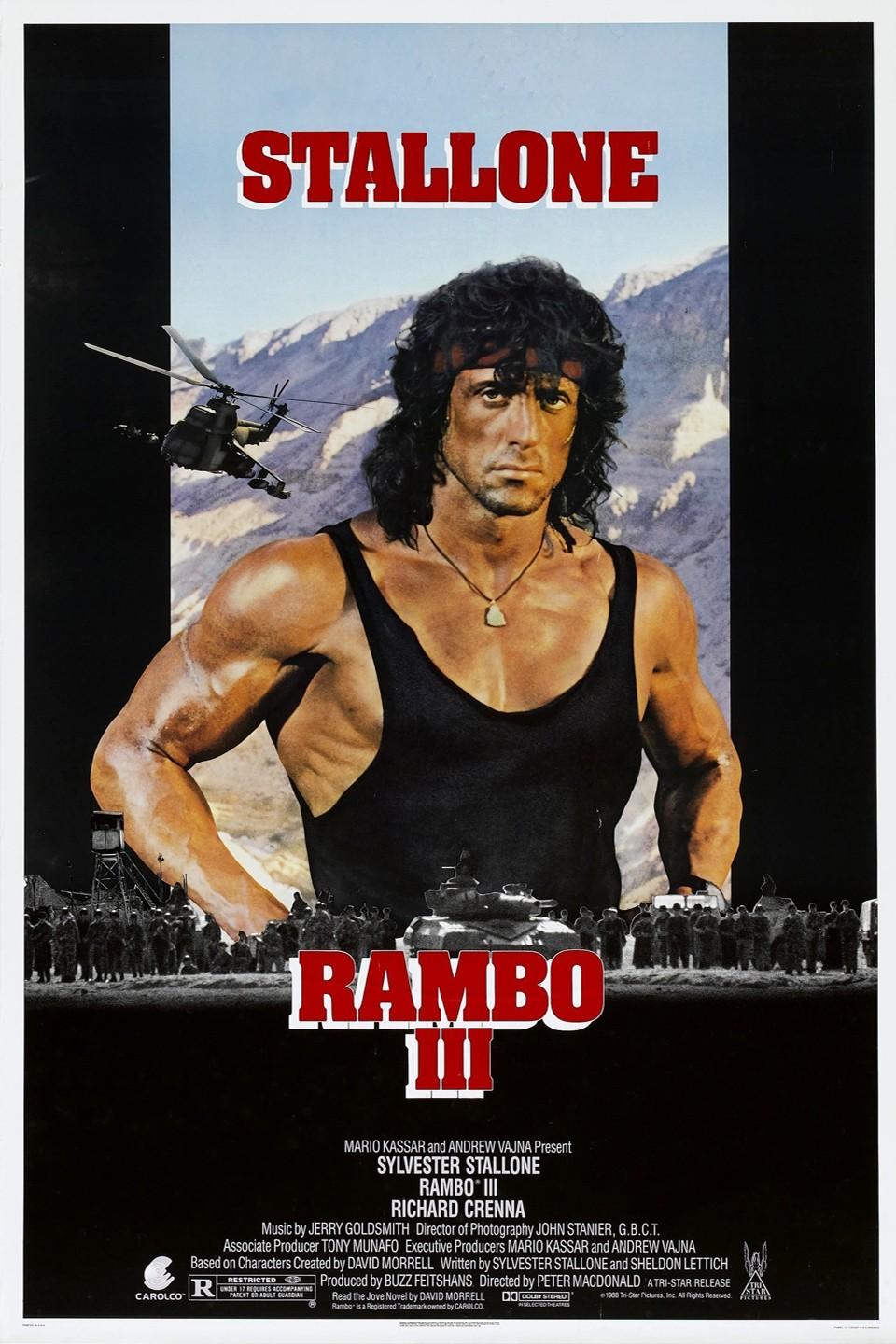
Rambo 3 is a 1988 American action film directed by Peter MacDonald and starring Sylvester Stallone in the lead role. place It is the third installment in the series that follows the story of Film famous action character John Rambo.
Following the first film in the series, First Blood (1982), and its sequel, Rambo: First Blood Part II (1985), Rambo 3 centers on a new adventure of the character set in Afghanistan.
The film begins with John Rambo living a quiet life as a life in Thailand when his former commanding officer, Colonel Sam Trautman, is dispatched to Afghanistan during the Soviet invasion. While traveling to aid the Afghan mujahideen, Trautman is captured by Soviet forces.
Initially reluctant to get involved, Rambo eventually takes matters into his own hands to rescue Trautman. The film chronicles Rambo’s alliance with the Afghan mujahideen and his mission to save his former commander.
Rambo 3 was filmed with a larger budget and greater production resources than its predecessors. Principal photography took place in Thailand, Israel, and the Arizona desert. Russell Mulcahy was originally hired as director but left the project shortly after filming began, and Peter MacDonald replaced him.
The film’s budget was approximately 60 million dollars, making it one of the most expensive American productions of its time. It grossed around 189 million dollars at the box office.
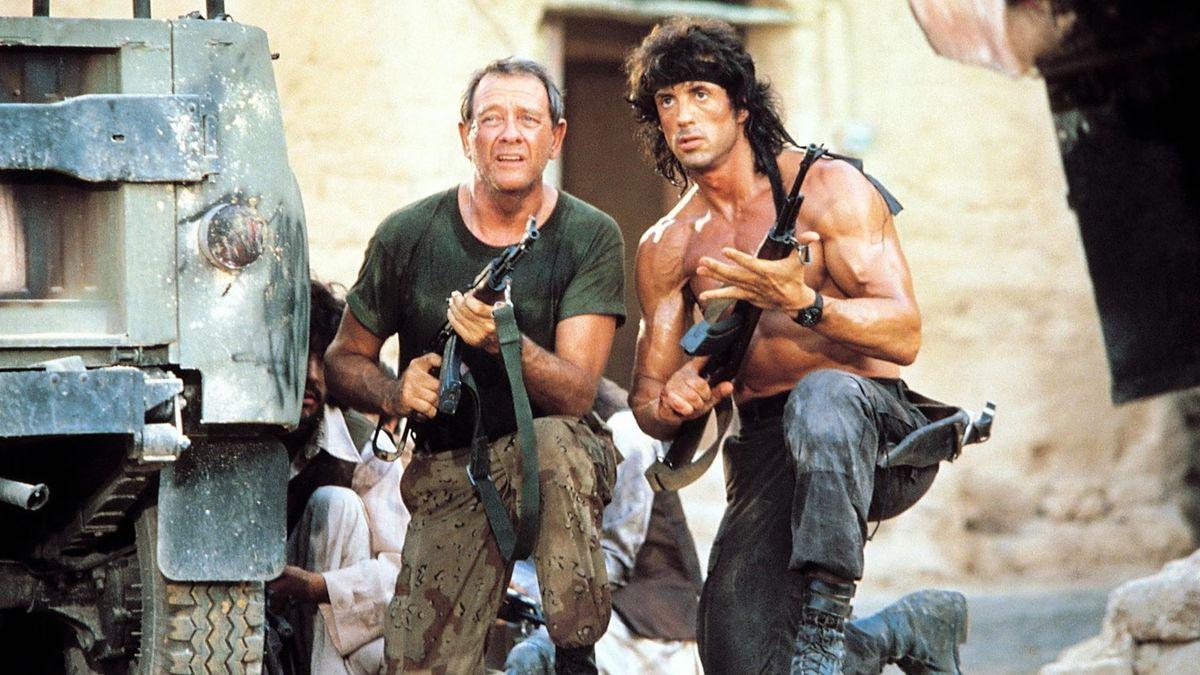
John Rambo and Colonel Sam Trautman (Letterboxd)
Rambo 3 explores themes of individual heroism, loyalty, the destructiveness of war, and political conflict. The film uses the Soviet-Afghan War as a backdrop to reflect the ideological struggles of the Cold War era, presenting the conflict from an American perspective. The character of Rambo embodies the archetype of the American hero capable of single-handedly defeating an entire army.
The film is set during the Soviet Union’s occupation of Afghanistan from 1979 to 1989. In the film, the Afghan mujahideen are portrayed as freedom fighters resisting Soviet occupation. This portrayal aligns with American foreign policy of the time. The film has drawn both praise and criticism for its propaganda elements within the context of the Cold War.
Rambo 3 was a box office success but was considered by critics to be weaker than its predecessors. The film was criticized for its simplistic dialogue, superficial screenplay, and lack of character depth. Nevertheless, its action sequences and visual effects received technical praise.
Over time, the film has become controversial due to shifting political perspectives. In particular, the positive depiction of the mujahideen, some of whom were later associated with radical groups, has altered public perception of the film.
The film has become one of the defining symbols of 1980s action cinema. It solidified the cult status of the Rambo character. Rambo is no longer merely a cinematic figure but has come to symbolize militaristic individualism and the American ideal of heroism. The closing text, “This film is dedicated to the people of Afghanistan,” resurfaced in public discourse after 2001 and has been discussed ironically in various media outlets.
Rambo 3 is regarded as one of the grand examples of action cinema. Despite its technical achievements, the film has been criticized for its script and ideological approach, serving as a to understand example of how 1980s geopolitics and Hollywood’s ideological reflections were important in cinema.

Plot Summary
Production
Characters and Cast
Themes
Political Context
Reception and Criticism
Cultural Impact and Legacy