


This article was automatically translated from the original Turkish version.
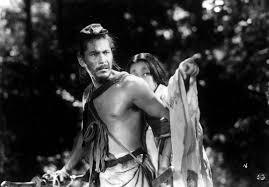
Rashomon (film)
Original Name(s) | Rashōmon | ||||||||
|---|---|---|---|---|---|---|---|---|---|
Rashōmon | Akira Kurosawa | ||||||||
Screenplay(s) | Akira Kurosawa Shinobu Hashimoto | ||||||||
Producer(s) | Minoru Jingo | ||||||||
Cinematographer(s) | Kazuo Miyagawa | ||||||||
Fiction | Akira Kurosawa | ||||||||
Music(s) | Fumio Hayasaka | ||||||||
Duration | Duration | ||||||||
Language(s) | Japanese | ||||||||
Country | Japan | ||||||||
Genre | Drama Crime Mystery | ||||||||
Release Date(s) | 25 August 1950 (Japan) | ||||||||
Rashōmon, Japanese director Akira Kurosawa’s landmark film that brought him international acclaim. Released in 1950, the film is adapted from two short stories by Ryūnosuke Akutagawa: “Rashōmon” and “Yabu no Naka”. Renowned for its multiple perspectives narrative, the film occupies a unique place in cinema history and revolves around themes of truth, memory, and moral decay. It is widely regarded as one of the turning points not only in Japanese cinema but also in world cinema history.
Rashōmon begins with a frame story set in 12th-century Japan at the dilapidated Rashōmon Gate. Under a torrential downpour, a priest, a woodcutter, and a commoner discuss a recent crime involving murder and rape. The events took place in a forest: a samurai was killed and his wife was assaulted by a bandit. The incident is recounted from four different perspectives, as testified in court: the bandit Tajōmaru, the samurai’s wife, the deceased samurai’s words conveyed through a medium, and the woodcutter’s eyewitness account.
These four narratives differ significantly from one another, making it impossible for the viewer to arrive at a definitive conclusion about what truly happened. While questioning the reliability of each testimony, the film examines how personal interests, guilt, and shame can distort the truth.
Rashōmon centers on the concept of subjective reality. Its narrative structure is grounded in the idea of the impossibility of absolute truth. The contradictions among the testimonies reveal the unreliability of memory and demonstrate how each individual interprets events through the lens of their own inner world. This structure draws attention to the epistemological challenges in establishing justice. At the same time, the film symbolizes the moral collapse and erosion of values experienced by postwar Japanese society: the ruined temple gate, the relentless rain, and the characters’ selfish attitudes become metaphors for societal decay. Rather than offering a definitive conclusion, the film embraces a narrative built on uncertainty and skepticism.
Rashōmon film trailer (YouTube)
The film was produced by Daiei Film, with Akira Kurosawa serving as director and screenwriter. The screenplay was co-written by Kurosawa and Shinobu Hashimoto. Cinematographer Kazuo Miyagawa and composer Fumio Hayasaka contributed to its distinctive style. Rashōmon employed pioneering techniques for its time, including minimalist sets, scenes shot with natural light, and innovative camera angles. Elements such as shooting toward the sun, rapid editing transitions, and characters directly addressing the camera enriched the cinematic language. In the forest sequences, handheld camera work and intricate play of light and shadow were carefully used to reflect the characters’ inner conflicts.
Rashōmon was released in Japan in 1950. Its win of the Golden Lion at the 1951 Venice Film Festival sparked increased Western interest in Japanese cinema. The film further earned international acclaim by winning the 1952 Academy Honorary Award for Best Foreign Language Film.
The multiple-perspective narrative technique has since become known in film theory as the Rashōmon effect, a term used to describe situations in which the same event is recounted differently by different witnesses.
IMDb. "Rashomon (1950) – Awards." Accessed June 25, 2025. https://www.imdb.com/title/tt0042876/awards
IMDb. "Rashomon (1950) – Full Cast & Crew." IMDb. Accessed June 25, 2025. https://www.imdb.com/title/tt0042876/
IMDb. "Rashomon (1950) – Media Index." Accessed June 25, 2025. https://www.imdb.com/title/tt0042876/mediaindex/?ref_=tt_ov_at_pop_ph
IMDb. "Rashomon (1950) – Plot Summary." Accessed June 25, 2025. https://www.imdb.com/title/tt0042876/plotsummary/?ref_=tt_ov_at_pl_pl
IMDb. “Rashomon (1950) – Locations.” Accessed June 25, 2025. https://www.imdb.com/title/tt0042876/locations/?ref_=tt_ov_at_dt_flmg
IMDb. “Rashomon (1950) – Release Info.” Accessed June 25, 2025. https://www.imdb.com/title/tt0042876/releaseinfo/?ref_=tt_ov_at_dt_rdat
Janus Films. "Rashomon (1950) | Trailer." YouTube video, 3:16. Date Published: May 29, 2012. Accessed June 25, 2025. https://www.youtube.com/watch?v=RbKJAc5tOB8
MUBI. *Rashomon (1950)*. Accessed June 25, 2025. https://mubi.com/tr/tr/films/rashomon

Rashomon (film)
Original Name(s) | Rashōmon | ||||||||
|---|---|---|---|---|---|---|---|---|---|
Rashōmon | Akira Kurosawa | ||||||||
Screenplay(s) | Akira Kurosawa Shinobu Hashimoto | ||||||||
Producer(s) | Minoru Jingo | ||||||||
Cinematographer(s) | Kazuo Miyagawa | ||||||||
Fiction | Akira Kurosawa | ||||||||
Music(s) | Fumio Hayasaka | ||||||||
Duration | Duration | ||||||||
Language(s) | Japanese | ||||||||
Country | Japan | ||||||||
Genre | Drama Crime Mystery | ||||||||
Release Date(s) | 25 August 1950 (Japan) | ||||||||
Plot
Theme
Production and Release Information
Cast
Release and International Impact
Awards and Nominations
Awards Won:
Nominations: