


This article was automatically translated from the original Turkish version.
Realism Theory is a paradigm that explains international relations in terms of states’ struggle for power and argues that in an anarchic international system, every state prioritizes its own security and interests. According to this approach, conflict on the international stage is inevitable and states act as rational actors driven by the goal of survival. Realism, one of the major paradigms of International Relations, stands out due to the depth of its historical origins, theoretical consistency, and explanatory capacity. This theoretical framework posits that sovereign states are the fundamental and rational actors in the international system.【1】 According to Realism, the ontological priority of these actors is to consolidate their national security, protect their vital interests, and maximize their relative power. From a realist perspective, states operate within an anarchic international structure devoid of any overarching authority. This structural condition necessitates a self-help system, which by its very nature transforms international politics into a domain of perpetual competition, unpredictability, and potential conflict.【2】
The realist paradigm interprets not only the modern international system but also historical processes stretching from Thucydides’ account of the Peloponnesian War to the present through its conceptual apparatus.【3】 Phenomena such as the formation and dissolution of alliances, the outbreak of wars, diplomatic crises, mercantilist policies, and struggles for hegemony are interpreted as historical manifestations of power politics, central to realist theory. Classical Realism, grounded in a pessimistic anthropological assumption about human nature—the Hobbesian view that “man is a wolf to man”—argues that states, like individuals, are by nature selfish (egoistic) and driven by the pursuit of power.【4】
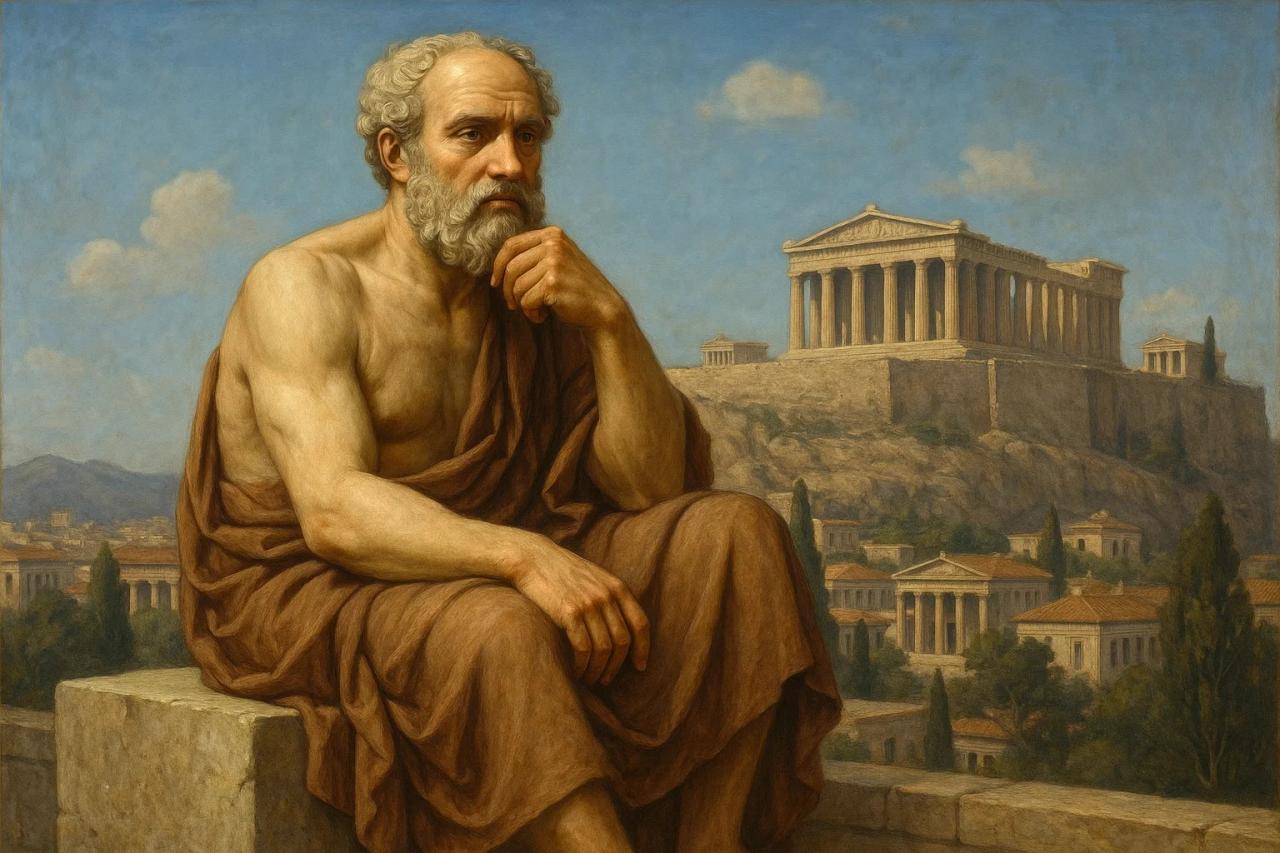
Thucydides, one of the early thinkers of Realist Theory (Generated by Artificial Intelligence).
In the twentieth century, the hegemonic position of realism within the discipline was solidified by the historical failure of the idealist paradigm that dominated the period after World War I. Idealism, shaped by the vision of Woodrow Wilson to construct a peaceful world order through international law, collective security, and moral norms, lost its predictive and explanatory power in the 1930s amid rising aggression and the outbreak of World War II. The devastation caused by the war demonstrated that state behavior could not be constrained solely by normative and legal frameworks and that an analytical framework centered on power was necessary to understand the dynamics of international politics. At this historical turning point, thinkers such as E.H. Carr positioned Realism as a “realistic” alternative to the “utopianism” of Idealism, gaining academic and political credibility.
Realist thinkers viewed idealist approaches as lacking a scientific foundation and inadequate for understanding the nature of international politics. Modern Realism, built upon this critical foundation, was systematized particularly through Hans J. Morgenthau’s work Politics Among Nations. Morgenthau formulated Realism around six fundamental principles. According to his formulation, international politics is subject to objective and universal laws rooted in the unchanging characteristics of human nature.
The six core principles of Morgenthau’s Classical Realism theory can be summarized as follows:【5】
According to these principles, Realism envisions the international system as a scene of unchanging power struggles throughout human history. In this struggle, the most rational behavior for states is to prioritize national interests and effectively employ all military, diplomatic, and economic means to achieve them. According to Realism, history is not a record of peaceful ideals but of the pursuit of power and the inevitable conflicts it generates.
Over time, realist theory has diversified internally into various sub-schools. A fundamental distinction has emerged based on levels of analysis:
Realism aims to be one of the major traditions developed to explain the fundamental dynamics of international relations. It provides a robust analytical framework for understanding state foreign policy strategies, great power competition, the causes of war, and the logic of alliance systems. By placing core concepts such as power, interest, security, anarchy, and sovereignty at its center, it claims to reveal the “is” rather than the “ought” of international politics. Although challenged today by liberalism, constructivism, and other critical theories, Realism continues to preserve its intellectual and theoretical legacy in comprehending the fundamental structure and logic of the international system, despite changes in actors and instruments.
Düzgün, Dursun Murat. “Realizm Teorisinin Ortaya Çıkışı ve Gelişme Evreleri.” *Karadeniz Uluslararası Bilimsel Dergi* 1, no. 47 (2020): 256–276. https://dergipark.org.tr/tr/pub/kdeniz/issue/56450/759320
Ersoy, Eyüp. "Realizm." Uluslararası İlişkiler Teorileri. İstanbul: İletişim Yayınları, 2016.
Glaser, Charles L. “Realists as Optimists: Cooperation as Self-Help.” *International Security* 19, no. 3 (Winter 1994–1995): 50–90. https://www.rochelleterman.com/ir/sites/default/files/glaser1994.pdf
Morgenthau, Hans J. Politics among Nations: The Struggle for Power and Peace. New York: Alfred A. Knopf, 1949.
Vasquez, John A. The Power of Power Politics: From Classical Realism to Neotraditionalism. Cambridge: Cambridge University Press, 1998.
[1]
Eyüp Ersoy, “Realizm,” içinde Uluslararası İlişkiler Teorileri, der. Ramazan Gözen (İstanbul: İletişim Yayınları, 2016), 159.
[2]
Charles L. Glaser, “Realists as Optimists: Cooperation as Self-Help,” International Security 19, no. 3 (Winter 1994–1995): 54, http://www.jstor.org/stable/2539079
[3]
Dursun Murat Düzgün, “Realizm Teorisinin Ortaya Çıkışı ve Gelişme Evreleri,” Karadeniz Uluslararası Bilimsel Dergi 1, no. 47 (2020): 277
[4]
John A. Vasquez, The Power of Power Politics: From Classical Realism to Neotraditionalism (Cambridge: Cambridge University Press, 1998), 63.
[5]
Hans J. Morgenthau, Politics among Nations: The Struggle for Power and Peace (New York: Alfred A. Knopf, 1949), 38

Historical Background
Principles of Realism Theory
Modern Development of Realism Theory