


This article was automatically translated from the original Turkish version.
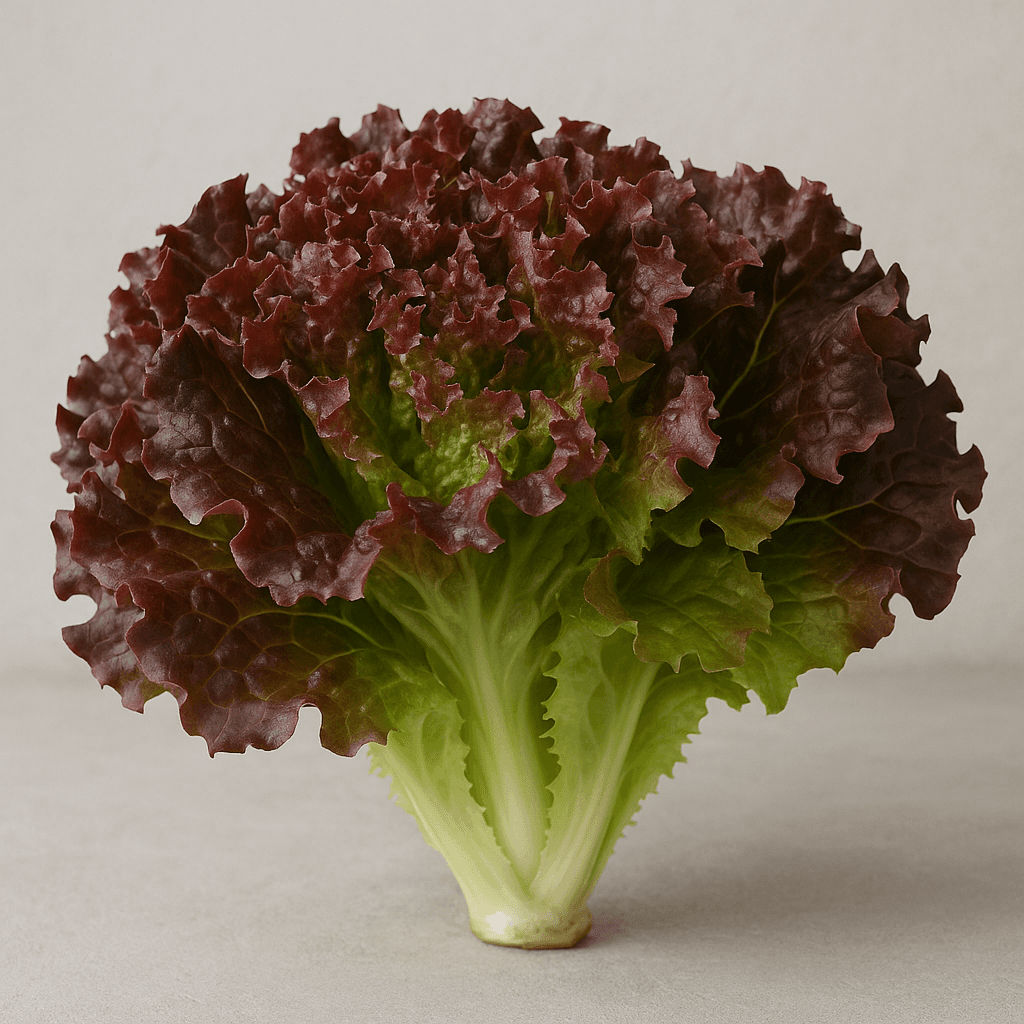
Generated with Artificial Intelligence
Red Curly Lettuce
Kingdom (Regnum) | Plantae (Plants) | ||||||||
|---|---|---|---|---|---|---|---|---|---|
Division (Divisio) | Magnoliophyta (Flowering plants) | ||||||||
Class (Classis) | Magnoliopsida (Dicotyledons) | ||||||||
Order (Ordo) | Asterales | ||||||||
Family (Familia) | Asteraceae (Daisy family) | ||||||||
Genus (Genus) | Lactuca | ||||||||
Species (Species) | Lactuca sativa L. | ||||||||
Variety (Varietas) | Lactuca sativa var. crispa | ||||||||
Red Crisp Lettuce (Lactuca sativa L. var. crispa) is a variety of lettuce belonging to the Asteraceae family, characterized by loose, ruffled leaves typically colored red or purplish. This vegetable, consumed fresh, is especially used in salads and attracts attention due to its visual appeal. Its high content of anthocyanins, vitamin C, and phenolic compounds gives it considerable nutritional value. Red crisp lettuce thrives in cool climatic conditions and can be cultivated both in open fields and under protected systems, demonstrating good adaptability to modern production techniques such as soilless farming and artificial lighting.
Red crisp lettuce is a loose-leaf (leaf lettuce) form. Its leaves are deeply curled, finely edged, and generally exhibit reddish-purple hues due to anthocyanin accumulation. The plant has a stemless or short-stemmed structure and achieves economic yield primarily through leaf formation during its vegetative growth phase.
Red crisp lettuce prefers cool climatic conditions. The optimal growth temperature ranges between 15–20°C, as higher temperatures can negatively affect quality. This variety is suitable for both field and protected cultivation and favors well-drained, organic-rich, slightly acidic to neutral soils. The period from seed sowing to harvest typically lasts 55–70 days, depending on climatic conditions and management practices. Agronomic practices such as soil preparation, seeding density, irrigation, fertilization, and pest control directly influence product quality.

Red Crisp Lettuce Garden (Hansjanssens. Pixabay)
Studies have demonstrated that different LED light sources significantly influence the growth of red crisp lettuce. Research reports that red-blue LED light combinations yield more favorable results than other light sources in parameters such as fresh weight, leaf width, and anthocyanin content.
Similarly, another study conducted at Süleyman Demirel University found that blue-dominant LED light increased leaf color intensity and anthocyanin concentration, while red LED light promoted biomass accumulation. These findings highlight the potential of optimizing light composition in controlled environment agriculture to enhance product quality.
The impact of microalgae (Chlorella vulgaris)-based biofertilizer applications on yield and quality of Lactuca sativa species has been evaluated. Research findings indicate that microalgae application significantly increased the number of leaves, fresh weight, and dry matter content in a statistically significant manner. It has also been reported that this application enhances the lettuce’s antioxidant capacity. This finding is significant for promoting sustainable and organic farming methods. The use of microalgae also contributes to reducing environmental impacts by decreasing reliance on chemical fertilizers.
The nutritional profile of red crisp lettuce is particularly rich in anthocyanins, vitamin C, and phenolic compounds. The colored leaves positively influence consumer preference and enable its classification as a functional food. Factors such as light source, irrigation regime, and fertilization during growth significantly affect these quality parameters.
Red crisp lettuce is an important agricultural product both for its visual appeal and nutritional value. In modern agriculture, integration of LED technologies, microalgae applications, and climate-controlled production systems enables optimization of its yield and quality parameters. Research demonstrates that higher quality and more sustainable lettuce production is achievable for both producers and consumers.
Acun, Mert, and Bozokalfa, Mehmet Kadri. “Mikroalg Uygulamalarının Salata (Lactuca sativa L. var. crispa) ve Marul Çeşitlerinin (Lactuca sativa L. var. longifolia) Verim ve Kalite Özelliklerine Etkisi.” Ege Üniversitesi Ziraat Fakültesi Dergisi 57, no. 4 (2020): 555–562. https://doi.org/10.20289/zfdergi.687824.
Okudur, Esra. “Durgun Su Kültüründe Kırmızı Kıvırcık Marul Yetiştiriciliğinde Üç Farklı Şekilde Verilen Gübrelemenin Verim ve Kalite Parametrelerinin Araştırılması.” *Ziraat Fakültesi Dergisi* (2018): 394–399. https://dergipark.org.tr/tr/pub/sduzfd/issue/40528/451654
Sönmez, İbrahim. *Marul Yetiştiriciliği: Ders Notları*. Antalya İl Tarım ve Orman Müdürlüğü, 47 pp. Accessed June 25, 2025. https://antalya.tarimorman.gov.tr/Belgeler/Marul%20Yeti%C5%9Ftiricili%C4%9Fi%20Ders%20Notlar%C4%B1.pdf
Şahin, Ahmet, Boyar, İsmail, Torun, Mehmet, Çağlayan, Nuri, and Ertekin Can. “Kırmızı Kıvırcık Yaprak Salatanın Farklı LED Işık Kaynaklarındaki Gelişim Parametrelerinin İncelenmesi.” *Tarım Makinaları Bilimi Dergisi* 18, no. 1 (2022): 9–24. https://www.academia.edu/100736207/K%C4%B1rm%C4%B1z%C4%B1_K%C4%B1v%C4%B1rc%C4%B1k_Yaprak_Salatan%C4%B1n_Farkl%C4%B1_LED_I%C5%9F%C4%B1k_Kaynaklar%C4%B1ndaki_Geli%C5%9Fim_Parametrelerinin_%C4%B0ncelenmesi#loswp-work-container

Generated with Artificial Intelligence
Red Curly Lettuce
Kingdom (Regnum) | Plantae (Plants) | ||||||||
|---|---|---|---|---|---|---|---|---|---|
Division (Divisio) | Magnoliophyta (Flowering plants) | ||||||||
Class (Classis) | Magnoliopsida (Dicotyledons) | ||||||||
Order (Ordo) | Asterales | ||||||||
Family (Familia) | Asteraceae (Daisy family) | ||||||||
Genus (Genus) | Lactuca | ||||||||
Species (Species) | Lactuca sativa L. | ||||||||
Variety (Varietas) | Lactuca sativa var. crispa | ||||||||
No Discussion Added Yet
Start discussion for "Red Curly Lettuce (Lactuca sativa L. var. crispa)" article
Morphological and Botanical Characteristics
Cultivation Conditions
Effect of Light Sources on Plant Development
Microalgae Applications and Their Effects on Yield
Quality Characteristics and Nutritional Value