


This article was automatically translated from the original Turkish version.
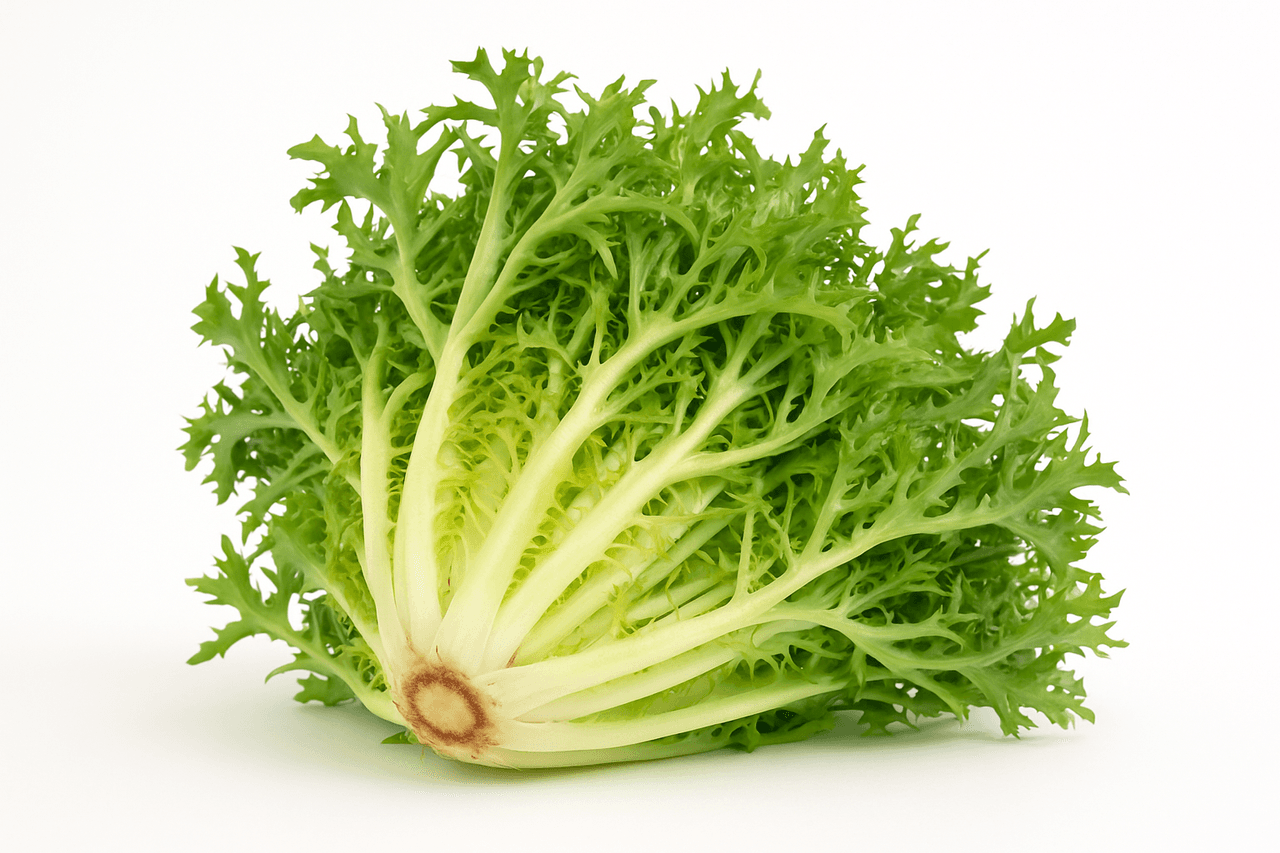
Generated with Artificial Intelligence
Endive Lettuce
Plant Species | Cichorium endivia (Asteraceae) | ||||||||
|---|---|---|---|---|---|---|---|---|---|
Climate(s) | Cool optimum 15–18 °C moist | ||||||||
Soil | Sandy-loam / clay-loam, pH 6.0–7.0 | ||||||||
Fertilizer Application | Organic + balanced NPK | ||||||||
Growth Duration | 6–8 weeks from seedling to mature plant | ||||||||
Harvest Time | 30–35 days later | ||||||||
Usage Area | Salad, Ornamental, Gastronomy | ||||||||
Endive (Cichorium endivia) is a cultivated vegetable belonging to the Asteraceae (daisy) family, characterized by curly and segmented leaves. Its leaves are typically light green in color and exhibit a fine-toothed, deeply indented morphology. The pronounced bitterness of the leaves originates from compounds such as inulin, lactones, and other secondary metabolites.
The plant exhibits partial tolerance to cold climates and achieves optimal growth in cool, moist environments. While it is not highly selective regarding soil type, endive thrives best in well-drained soils rich in organic matter with a pH range of 6.0–7.0. Cultivation is typically carried out using seedlings, under either open-field or protected cultivation conditions.
Endive is primarily consumed fresh in salads. Some varieties are also used in cooking and processed food production. Its cultivation and commercial use vary depending on the production region, climatic conditions, and market demand.
According to research, the highest marketable yield (approximately 3 927 kg/ha) was achieved with the “Amigos” variety planted on 10 June. In the “Eros” variety, levels of vitamin C and dry matter significantly increased during the second and third planting periods. This study demonstrates that planting timing is critical for both yield and quality.
Studies conducted in various regions of Türkiye indicate that endive thrives under cool and moist climate conditions (optimum 15–18 °C) and performs well in sandy-loam or clay-loam soils. Furthermore, a pH range of 6.0–7.0 has been emphasized as particularly effective in optimizing nutrient uptake.
According to documents and projects from the Ministry of Agriculture, following soil analysis, recommended fertilizer combinations include organic fertilization (composted farmyard manure) alongside a balanced N–P–K ratio (e.g., 10–20 kg/ha N, 10–12 kg/ha P₂O₅, 18–20 kg/ha K₂O). In a joint project between Malatya Turgut Özal University and the Ministry, applications of biofertilizer (microalgae/organic-based) were reported to positively influence endive yield and quality; pilot studies have been conducted in this area.

Endive (generated by Artificial Intelligence)
Research conducted at Uludağ University found that the leaves of curly endive are rich in phenolic compounds with high antioxidant capacity, particularly the red chicory variety (A Palla Rossa), which showed the highest phenolic content. These compounds include chlorogenic acid, anthocyanins, and flavonoids, all of which hold significant health benefits.
In endive cultivation, the following factors must be considered together:
Officially supported pilot projects and academic studies by the Ministry of Agriculture can serve as guiding references for producers in these areas. In particular, the widespread adoption of biofertilizers and the development of planting timing prediction models will play a pivotal role in sustainable production.
Akarca, Merve. “Erzurum Koşullarında Farklı Yetiştirme Dönemlerinin Endivyen (Cichorium endivia L.) Çeşitlerinde Bitki Gelişimi, Verim ve Mineral Madde İçeriği Üzerine Etkileri.” Master's thesis,Atatürk Üniversitesi, Institute of Natural Sciences, 2015. Thesis No. 380519. PDF, Accessed June 22, 2025. https://tez.yok.gov.tr/UlusalTezMerkezi/tezDetay.jsp?id=9hglsAzskJJE_vIbgXfsOw&no=hCx71z78Yj-kFLzOhCGDEw
Malatya TurgutÖzal Üniversitesi – Ministry of Agriculture and Forestry. "Endivyen Marulda (Cichorium endivia L. var. crispum) Biyogübrelerin Kullanılmasının Verim ve Kaliteye Etkisi." Project report, July 27, 2021. Malatya Turgut Özal University Administrative Activity Report 2021, PDF, Accessed June 22, 2025.
Ministry of Agriculture and Forestry. "Bahçe Bitkileri Dergisi: Marul Bitkisinin Gelişimi ile Bazı Bitki Besin Maddesi İçerikleri Üzerine … Endivyen (Cichorium endivia L.) Çeşitlerinde." Bahçe, no. 45–1 (2016). PDF, Accessed June 22, 2025. https://arastirma.tarimorman.gov.tr/yalovabahce/Belgeler/bahce/sayilar/Bahce.45-1ozel2%282016%29.pdf

Generated with Artificial Intelligence
Endive Lettuce
Plant Species | Cichorium endivia (Asteraceae) | ||||||||
|---|---|---|---|---|---|---|---|---|---|
Climate(s) | Cool optimum 15–18 °C moist | ||||||||
Soil | Sandy-loam / clay-loam, pH 6.0–7.0 | ||||||||
Fertilizer Application | Organic + balanced NPK | ||||||||
Growth Duration | 6–8 weeks from seedling to mature plant | ||||||||
Harvest Time | 30–35 days later | ||||||||
Usage Area | Salad, Ornamental, Gastronomy | ||||||||
No Discussion Added Yet
Start discussion for "Endive Lettuce (Cichorium endivia var. crispum)" article
Growth Periods and Yield Data
Soil and Climate Conditions
Fertilization and Organic Approaches
Phenolic Compounds and Antioxidant Content
Yield and Harvest Efficiency
Officially Supported Projects and Regional Applications