


This article was automatically translated from the original Turkish version.
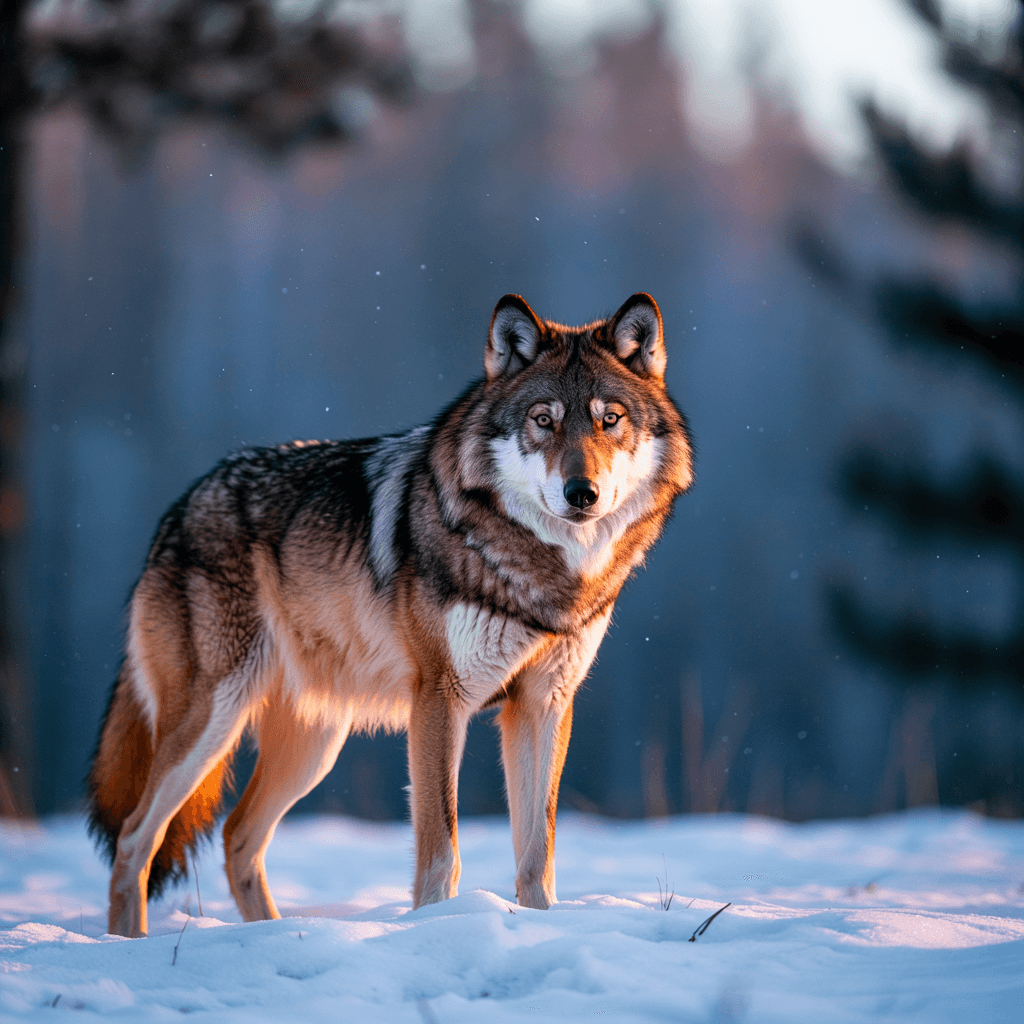
Red Wolf (Generated with Artificial Intelligence.)
Scientific Name(s) | Canis rufus | ||||||||
|---|---|---|---|---|---|---|---|---|---|
Kingdom(s) | Animalia | ||||||||
Phylum | Chordata | ||||||||
Class | Mammalia | ||||||||
Order | Carnivora | ||||||||
Family | Canidae | ||||||||
Genus | Canis | ||||||||
Specie(s) | C. rufus | ||||||||
Conservation Status | Critically Endangered (IUCN) | ||||||||
Red wolf (Canis rufus) is one of two wolf species native to North America, alongside the gray wolf (Canis lupus). It is currently considered one of the most endangered wild canids in the world and is classified by the International Union for Conservation of Nature (IUCN) as “critically endangered”.
The red wolf is smaller than the gray wolf but larger than the coyote. Its body length ranges from 100 to 130 cm, tail length from 30 to 42 cm, and shoulder height from 66 to 79 cm. Weights vary between 20 and 36 kg (45–80 pounds). Males are typically about 10 percent larger than females.
The head is broad, ears are long and erect, and legs are slender and long. The fur is predominantly brown and light brown, with black markings along the back. Reddish tones are prominent on the ears, neck, and legs, and this reddish coloration is more pronounced in winter. The tip of the tail is usually black. An annual molt occurs during summer months.
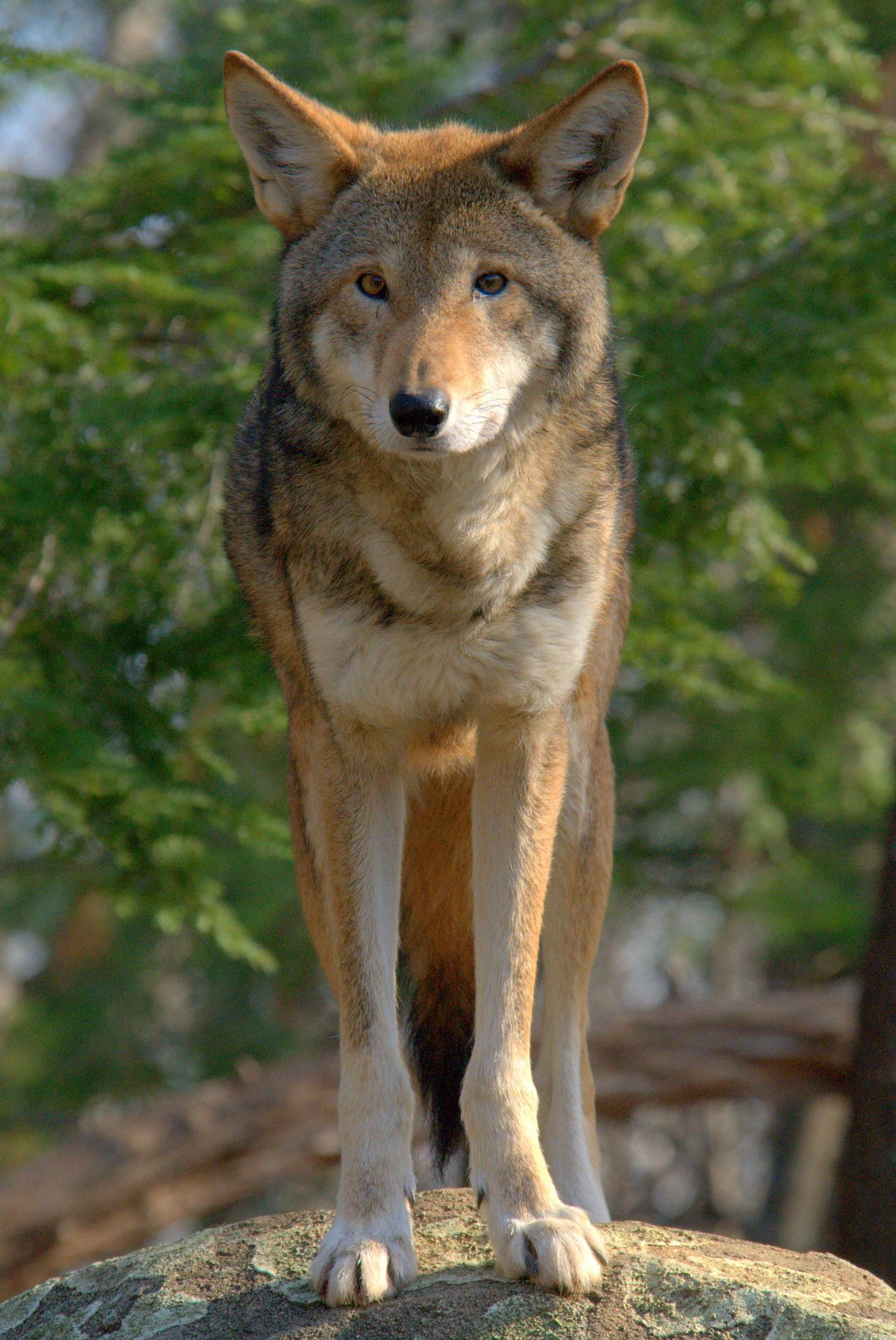
Red wolf (Valerie, flickr)
Historically, the red wolf’s range extended from Texas to New York, covering much of the southeastern United States. By the mid-20th century, intensive hunting, habitat loss, and hybridization pressure had reduced its distribution to only the coastal prairies and swamps of southeastern Texas and southwestern Louisiana.
Today, the only natural population exists in eastern North Carolina, where reintroduction efforts are underway around the Alligator River National Wildlife Refuge. The species has also been reintroduced in limited numbers to the Great Smoky Mountains of Tennessee and North Carolina. Suitable habitats include forests, wetlands, swamps, and temperate terrestrial ecosystems with abundant prey.
The territory used by a pack can vary from approximately 50 to 200 km², depending on prey availability.
Red wolves are social animals that live in packs. A typical pack consists of a breeding adult pair and offspring of various ages, usually numbering 5 to 8 individuals. Young wolves assist their parents in raising pups. Most pups leave the pack by the age of one or two years.
Mating occurs in February, gestation lasts 60 to 63 days, and litters of 3 to 6 pups are typically born in April or May (rarely up to 12). Dens are located near creek banks, sand dunes, hollow trees, or around fallen logs. Less than half of pups born in the wild survive to adulthood.
Red wolves are primarily nocturnal and most active during twilight and dawn. They mark their territories using scent markings and vocalizations and defend them against other canids. Communication involves body language, tactile contact, vocalizations, and chemical signals.
Red wolves are carnivorous and opportunistic hunters. Their diet includes white-tailed deer, raccoons, marsh and cotton-tailed rabbits, beavers, other rodents, small mammals, birds, and occasionally carrion. They can consume 2 to 5 kg of meat per day and travel more than 30 km in search of food.
They play a vital predatory role in regulating populations of medium-sized prey within their ecosystems.
By the mid-20th century, red wolves were on the brink of extinction. In 1967, they were listed under the U.S. Endangered Species Act and declared extinct in the wild by 1980. The remaining 14 individuals became the founders of a captive breeding program.
Starting in 1987, captive-bred individuals were released into eastern North Carolina. Although the wild population exceeded 130 individuals by 2006, it declined in subsequent years due to illegal hunting, habitat loss, and management challenges.
As of the early 2020s, the wild population in North Carolina is limited to approximately 15 to 20 individuals. In captivity, more than 200 individuals are maintained in breeding programs across the United States.
Historically, red wolves were perceived as a threat to livestock and were heavily persecuted. In reality, livestock losses attributed to red wolves are minimal. Moreover, by controlling rodent populations, they provide ecological and economic benefits.
Animal Diversity Web. "Canis rufus." ADW. Accessed August 16, 2025. https://animaldiversity.org/accounts/Canis_rufus/.
Flickr. "Red wolf (Canis rufus) JPG." Accessed August 16, 2025. https://flic.kr/p/2eYeyGf
U.S. Fish and Wildlife Service. "Red Wolf." fws.gov. Accessed August 16, 2025. https://www.fws.gov/species/red-wolf-canis-rufus.
Wolf Conservation Center. "Red Wolf." nywolf.org. Accessed August 16, 2025. https://nywolf.org/learn/red-wolf/.

Red Wolf (Generated with Artificial Intelligence.)
Scientific Name(s) | Canis rufus | ||||||||
|---|---|---|---|---|---|---|---|---|---|
Kingdom(s) | Animalia | ||||||||
Phylum | Chordata | ||||||||
Class | Mammalia | ||||||||
Order | Carnivora | ||||||||
Family | Canidae | ||||||||
Genus | Canis | ||||||||
Specie(s) | C. rufus | ||||||||
Conservation Status | Critically Endangered (IUCN) | ||||||||
No Discussion Added Yet
Start discussion for "Red Wolf (Canis rufus)" article
Physical Characteristics
Distribution and Habitat
Behavior and Ecology
Diet
Conservation Status
Relationships with Humans