

This article was automatically translated from the original Turkish version.
+2 More
Length(s) | 47 m | ||||||||
|---|---|---|---|---|---|---|---|---|---|
Feature(s) | Central Pedestrian Corridor Shops on Sides Single-Arch Stone Bridge | ||||||||
Width | 22 m | ||||||||
Architectural Style(s) | Italian Renaissance | ||||||||
Material(s) | Istrian Stone Wooden Elements | ||||||||
Regions Connected | San Polo San Marco | ||||||||
Location | Italy Venice | ||||||||
Cultural Significance | Tourist and Historical Structure Renaissance Architectural Example Symbol of Venice | ||||||||
Construction Year | 1588–1591 | ||||||||
River | Grand Canal | ||||||||
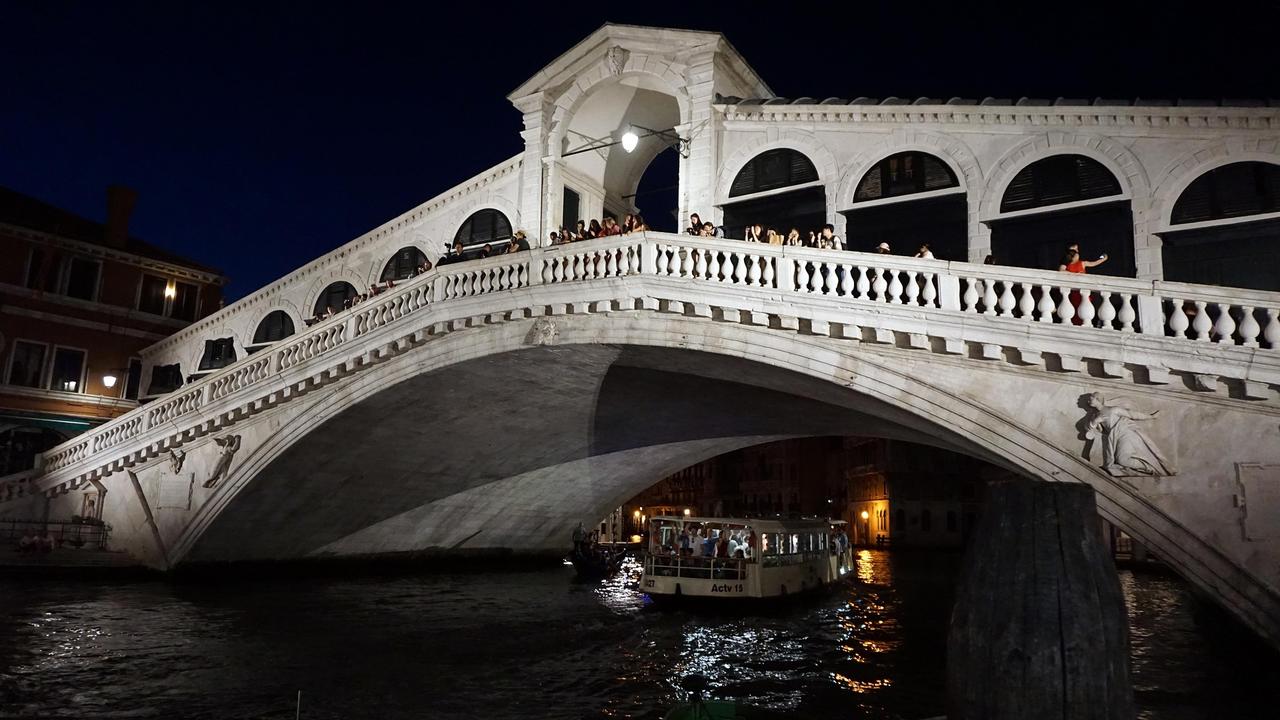
Rialto Bridge is a historic stone bridge located across the Grand Canal in the city of Venice, Italy. Constructed between 1588 and 1591, it serves as one of the four main bridges in the city, connecting the San Marco and San Polo districts for pedestrian traffic. Structurally, it is a single-arch stone bridge with two rows of commercial shops arranged along its length. Designed to support both pedestrian movement and canal traffic, it stands out as a structure harmoniously integrated into the city’s architectural fabric.

Rialto Bridge (Pixabay)
The first structure of the Rialto Bridge was built in the 12th century as a wooden bridge to facilitate crossing over the Grand Canal. This initial bridge was temporary and mobile; over time, increasing pedestrian and commercial traffic revealed its inadequacy in terms of strength and durability. In the 13th century, a new wooden bridge was constructed to accommodate the expansion of the market area on the eastern bank. The central section of this bridge was designed with a removable system to allow passage for large vessels, directly linking the structure to the city’s commercial vitality. Over time, two rows of shops added to the bridge contributed to its maintenance through market revenues.【1】
During the 15th and 16th centuries, the wooden bridge suffered various damages due to fires and excessive loads. This led to proposals for its reconstruction in stone, with designs from multiple architects being evaluated. Ultimately, the single-arch stone bridge design by Antonio da Ponte was accepted and construction was completed at the end of the 16th century. The bridge’s current form retains two inclined ramps, a central arch, and two rows of shops, similar to its earlier wooden predecessor, and is regarded as one of the most important examples of Venetian Renaissance architecture.【2】
The Rialto Bridge is a single-arch stone structure spanning the Grand Canal and strategically linking its two banks. The stone blocks used in its construction were arranged to enhance durability, and the overall form was designed to ensure the continuous flow of water and pedestrian traffic. The foundation system was adapted to the ground conditions, with the bridge’s piers and arch structure evenly distributing its weight and environmental loads. The stone arch and superstructure are positioned to optimize the transfer of loads across the canal. This design ensures both the bridge’s functional role and its integration within the urban landscape.
The foundation of the Rialto Bridge was designed to suit the characteristic soil conditions of the Venetian lagoon. The area on which the bridge rests is covered by a layer of dense alluvial and lagoon sediments. To support the heavy structure, wooden piles were driven into the ground, extending down to a denser and more stable clay layer known as “caranto”. Over time, these wooden piles underwent mineralization, gaining durability and safely bearing the bridge’s load without direct exposure to water and air. Double-layered wooden platforms were placed atop the piles, forming the foundation plinth, which was then reinforced with masonry walls to complete the base. Thus, the foundation system effectively transfers the structure’s weight to the ground in the lagoon environment and ensures long-term stability.

Rialto Bridge (Pixabay)
The main arch of the Rialto Bridge is designed as a single-span stone arch and serves as the primary element transferring the structure’s load to both sides. The arch is constructed from Istrian stone, with stone blocks placed on a specialized wooden scaffold; lifting operations during construction were likely powered by horse power. The arch’s inclined form provides a wide span and sufficient height to allow vessels to pass underneath. The arch’s angle requires horizontal forces to be transferred to the abutments, which is why the bridge’s side piers are broadly designed to ensure stability through interaction with the ground. The opening beneath the arch contributes to the structure’s light and open appearance, while its connection to the superstructure preserves the bridge’s integrity. The architectural design balances structural durability with functional efficiency, creating a long-lasting load-bearing system suited to lagoon conditions.
The Rialto Bridge was constructed using a strategic combination of stone and wood. The primary load-bearing arch and side abutments are made of Istrian stone, whose durability and resistance to water ensure the bridge’s longevity in the lagoon environment. The shops and galleries on the superstructure, however, use lighter materials, particularly wood; this choice reduces the overall weight and controls the load on the arch and foundation. Aesthetically, the finishing of the stone blocks, the symmetrical arrangement on the arch and side walls, and the domed passageways support the visual unity of the structure. The side balustrades and stone details create visual rhythm and depth beyond their structural function, defining the bridge’s functional and aesthetic character. The selection of materials and form ensures optimal performance in terms of both durability and identity within the urban landscape.
The Rialto Bridge is a single-arch stone structure measuring 47 meters in length and 22 meters in width. The arch rises approximately 6.40 meters, designed to provide sufficient clearance for vessels passing beneath.【3】 The superstructure contains two parallel rows of shops and galleries, with a central passageway directing pedestrian traffic. Pedestrian pathways are bordered by stone paving and balustrades, offering visitors views of the canal. The arrangement between the arch and superstructure allows the structure to maintain both its durability and visual lightness. The opening beneath the arch and the covered passageways support the bridge’s functional use while creating aesthetic unity within the urban panorama.
The balustrades along the Rialto Bridge are designed to provide both safety and visual order along its edges. The balustrades are supported by columns placed at regular intervals and square stone blocks, imparting vertical continuity to the structure. The spaces between the columns emphasize the bridge’s architectural rhythm and present an aesthetic appearance integrated with the stone masonry. Stone details on the lower and upper parts of the arch add visual depth without compromising the structure’s integrity.

Rialto Bridge (Flickr)
Among the bridge’s decorative elements, religious and civic symbols stand out. On the southern side, the Annunciation scene features figures of the Archangel Gabriel, the Virgin Mary, and a dove, while the northern side displays representations of St. Mark and St. Theodore. These iconographic elements reinforce the bridge’s historical and cultural context, drawing the attention of passersby to both architectural details and symbolic motifs. The stone carving and geometric arrangements used in the decorations reflect the aesthetics of the Renaissance period and harmonize with the overall structure.
The superstructure of the Rialto Bridge is composed of two parallel rows of stone porticoes with shops situated above. The shops are supported by wooden floor slabs and barrel-vaulted roofs, while their exterior facades are limited to stone cladding, allowing lighter materials to be used internally. At the center of the bridge, a wide corridor is dedicated to pedestrian passage and is covered by a cylindrical barrel vault to provide protection from weather conditions. The ramps on either side offer views of the Grand Canal, with stone railings ensuring a balance between safety and visual appeal. The superstructure of the shops and the central passageway are positioned in harmony with the arch’s load-bearing system, supporting the bridge’s overall light and balanced appearance.
The Rialto Bridge has undergone various restoration and conservation interventions over time to preserve its structural integrity. Injections have been used to fill and reinforce cracks and erosion in the stone arches. Erosion and material loss in brick and mortar joints have been repaired using appropriate filling materials and binders. The stone surfaces have been cleaned using chemical and mechanical methods to remove biological and chemical contaminants, as well as unwanted corrosion and vegetation.
The stone and brick connections in the bridge’s superstructure have been reassembled and reinforced to enhance structural stability. The durability of the stone railings and stair treads has been strengthened using stainless steel reinforcements and specialized anchoring techniques. Damaged or decayed wooden elements have been replaced with suitable materials and treated with protective agents. The waterproofing applied to the bridge’s surface was designed to accommodate its natural movements, and all interventions were carried out in a manner that preserves the bridge’s historical and aesthetic values.

Rialto Bridge (Pixabay)
The Rialto Bridge is situated at the heart of Venice’s urban fabric, connecting two major districts and ensuring the continuity of pedestrian movement. Due to its location along the Grand Canal, the bridge contributes significantly to the city’s commercial activity. The shops on its surface form a spatial component of economic life and reflect the diversity of urban usage. Its structural and spatial characteristics establish the bridge as a defining focal point within the urban landscape as an exemplary work of Renaissance architecture. In this regard, the Rialto Bridge occupies an important position in the context of Venice’s urban planning and spatial organization.
Acquaviva, Claudia. "Modal Updating of Ancient Heritage Structures: The Rialto Bridge Case." Politecnico diTorino Yüksek thesis, 2018: 1-92. Accessed March 22, 2026. https://webthesis.biblio.polito.it/8937/1/tesi.pdf
Bernabei, Mauro, Nicola Macchioni, Benedetto Pizzo, Lorena Sozzi, Simona Lazzeri, Luigi Fiorentino, Elisa Pecoraro, Gianluca Quarta, and Lucio Calcagnile. “The Wooden Foundations of Rialto Bridge (Ponte di Rialto) in Venice: Technological Characterisation and Dating.” *Journal of Cultural Heritage.* (2019): 1-9. Accessed March 22, 2026. https://www.academia.edu/102985500/The_wooden_foundations_of_Rialto_Bridge_Ponte_di_Rialto_in_Venice_Technological_characterisation_and_dating
Huebistar. “İtalya, Venedik, Rialto köprüsü görseli.” Pixabay. Accessed March 22, 2026. https://pixabay.com/tr/photos/italya-venedik-rialto-k%c3%b6pr%c3%bcs%c3%bc-74477/
Italia.it. "Rialto Bridge." Italia.it. Accessed March 22, 2026. https://www.italia.it/en/veneto/venice/rialto-bridge
JoelleLC. “Italya, Venedik, Rialto köprüsü görseli.” Pixabay. Accessed March 22, 2026. https://pixabay.com/tr/photos/italya-venedik-rialto-k%c3%b6pr%c3%bcs%c3%bc-4577431/
Mfoddo. “Venedik, Canale grande, Rialto köprüsü görseli.” Pixabay. Accessed March 22, 2026. https://pixabay.com/tr/photos/venedik-canale-grande-rialto-k%c3%b6pr%c3%bcs%c3%bc-1721988/
Russo, Salvatore. 2016. “Integrated Assessment of Monumental Structures through Ambient Vibrations and ND Tests: The Case of Rialto Bridge.” *Journal of Cultural Heritage* 19 (2016): 402–414. Accessed March 22, 2026. https://www.sciencedirect.com/science/article/pii/S129620741600025X
Schlappohr. “Rialto Köprüsü, Köprü, Venedik görseli.” Pixabay. Accessed March 22, 2026. https://pixabay.com/tr/photos/rialto-k%c3%b6pr%c3%bcs%c3%bc-k%c3%b6pr%c3%bc-venedik-kanal-2662447/
Steph684. “Rialto köprüsü, Rialto, Italya görseli.” Pixabay. Accessed March 22, 2026. https://pixabay.com/tr/photos/rialto-k%c3%b6pr%c3%bcs%c3%bc-rialto-italya-457724/
Vörös, Zoltán. “Rialto bridge blue hour.” Flickr. Accessed March 22, 2026. https://www.flickr.com/photos/v923z/
[1]
Claudia Acquaviva, "Modal Updating of Ancient Heritage Structures: The Rialto Bridge Case," Politecnico di Torino Master’s Thesis, (2018): 25-26, Last Access: 22 March 2026, https://webthesis.biblio.polito.it/8937/1/tesi.pdf
[2]
A.e., p. 25-26
[3]
A.e., p. 27-28

Length(s) | 47 m | ||||||||
|---|---|---|---|---|---|---|---|---|---|
Feature(s) | Central Pedestrian Corridor Shops on Sides Single-Arch Stone Bridge | ||||||||
Width | 22 m | ||||||||
Architectural Style(s) | Italian Renaissance | ||||||||
Material(s) | Istrian Stone Wooden Elements | ||||||||
Regions Connected | San Polo San Marco | ||||||||
Location | Italy Venice | ||||||||
Cultural Significance | Tourist and Historical Structure Renaissance Architectural Example Symbol of Venice | ||||||||
Construction Year | 1588–1591 | ||||||||
River | Grand Canal | ||||||||
History
Structure and Construction Features
Foundation and Substructure
Main Arch
Material Use and Aesthetic Choices
Architectural Features
Balustrades and Decorations
Superstructure and Shop Layout
Restoration and Conservation Efforts
Cultural Significance