


This article was automatically translated from the original Turkish version.
+2 More
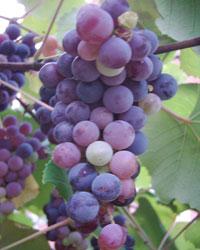
Rize Fragrant Grape
Registration Number | 1721 | ||||||||
|---|---|---|---|---|---|---|---|---|---|
Registration Date | 14.04.2025 | ||||||||
Application Number | C2022/000258 | ||||||||
Application Date | 16.08.2022 | ||||||||
Name of the Geographical Indication | Rize Fragrant Grape | ||||||||
Product / Product Group(s) | Grape / Processed and Unprocessed Fruits and Vegetables | ||||||||
Type of Geographical Indication | Geographical Indication | ||||||||
Applicant/Registrant(s) | Rize Provincial Directorate of Agriculture and Forestry | ||||||||
Address of the Registrant | Gülbahar Neighborhood, Atatürk Street, Center RİZE | ||||||||
Geographical Boundary | Rize Province | ||||||||
Rize Kokulu Üzümü is a table grape variety belonging to the species Vitis labrusca L. and native to the province of Rize. It was officially registered as a geographical indication with the Republic of Türkiye on 14 April 2025; the application was submitted on 16 August 2022 under application number C2022/000258. The owner of the geographical indication is the Rize Provincial Directorate of Agriculture and Forestry.

Rize Kokulu Üzümü (Generated by Artificial Intelligence)
Rize Kokulu Üzümü is a round-grained, thick-skinned grape with a bluish-black color. Its distinctive "foxy" aroma is the primary sensory characteristic that distinguishes it from other varieties. Each berry contains 2 to 3 seeds. The physical dimensions and chemical composition of the product are standardized within defined limits:
The grape is suitable for fresh consumption only for a limited period and requires prompt processing after harvest.
The vines used for producing Rize Kokulu Üzümü belong to the species Vitis labrusca L. and are propagated through cuttings made from pruning waste or by grafting. Vineyards are established in soils that have been tilled to a depth of 50–60 cm and enriched with organic matter. Planting is carried out at the end of autumn or the beginning of spring. Seedlings are kept in a moist environment prior to planting and placed in holes 30–40 cm wide and 50–60 cm deep, with the graft union positioned 3–5 cm above soil level.
Soil preparation is performed twice annually in vineyards—during autumn and spring. Weed control during summer is achieved through physical methods. No chemical substances or hormones are used during cultivation. Irrigation is not applied except for natural rainfall; water requirements are met through soil tillage.
Pruning is conducted in two phases: winter pruning in autumn and summer pruning in summer. Pruning is performed to enhance bud development and fruit quality. Harvesting takes place in August, September and October and is carried out manually using knives or shears. Harvested grapes are transported in baskets or flat containers.
Rize Kokulu Üzümü is typically consumed after processing rather than fresh. It is primarily used as a raw material in the production of pekmiz, grape juice and Rize pepeçurasının, a locally distinctive product registered with geographical indication number 703. Daily harvested grapes are sold in local markets in baskets.
The production of Rize Kokulu Üzümü is restricted exclusively within the boundaries of Rize Province.
With the registration of the geographical indication, the term "Rize Kokulu Üzümü" and the official emblem must appear on the product itself or its packaging. If this is not feasible on the product or packaging, the term and emblem must be displayed in a clearly visible location at the production site.
Compliance monitoring of Rize Kokulu Üzümü with the geographical indication is carried out by a minimum three-member monitoring body coordinated by the Rize Provincial Directorate of Agriculture and Forestry, comprising experts from the Faculty of Horticulture at Rize Recep Tayyip Erdoğan University, the Rize Chamber of Agriculture and other relevant specialists. Inspections are conducted twice annually—in spring (soil preparation and pruning) and autumn (harvest)—and additional ad hoc inspections may be carried out as needed.
During inspections, compliance with the production method, the authenticity of the grape variety used, and the correctness of the labeling and emblem on the product are verified. In cases deemed necessary, the physical and chemical properties of the product are analyzed. The monitoring body may obtain services from public or private institutions as required. The registering authority is responsible for initiating and managing any legal proceedings to protect rights related to the product.
Turk Patent and Trademark Office. "Coğrafi İşaret Detayı: Rize Kokulu Üzümü." Accessed May 20, 2025. https://ci.turkpatent.gov.tr/cografi-isaretler/detay/7344.
Turkish Patent and Trademark Office. "Rize Kokulu Üzümü Coğrafi İşaret Tescil Belgesi (C2022/000258)." Accessed May 20, 2025. https://ci.turkpatent.gov.tr/Files/GeographicalSigns/1643410f-79dc-4eff-910d-0536a11cd202.pdf.

Rize Fragrant Grape
Registration Number | 1721 | ||||||||
|---|---|---|---|---|---|---|---|---|---|
Registration Date | 14.04.2025 | ||||||||
Application Number | C2022/000258 | ||||||||
Application Date | 16.08.2022 | ||||||||
Name of the Geographical Indication | Rize Fragrant Grape | ||||||||
Product / Product Group(s) | Grape / Processed and Unprocessed Fruits and Vegetables | ||||||||
Type of Geographical Indication | Geographical Indication | ||||||||
Applicant/Registrant(s) | Rize Provincial Directorate of Agriculture and Forestry | ||||||||
Address of the Registrant | Gülbahar Neighborhood, Atatürk Street, Center RİZE | ||||||||
Geographical Boundary | Rize Province | ||||||||
No Discussion Added Yet
Start discussion for "Rize Fragrant Grape" article
Physical and Chemical Properties
Cultivation and Production Method
Processing and Consumption
Geographical Boundary
Usage Format
Monitoring Mechanism