


This article was automatically translated from the original Turkish version.
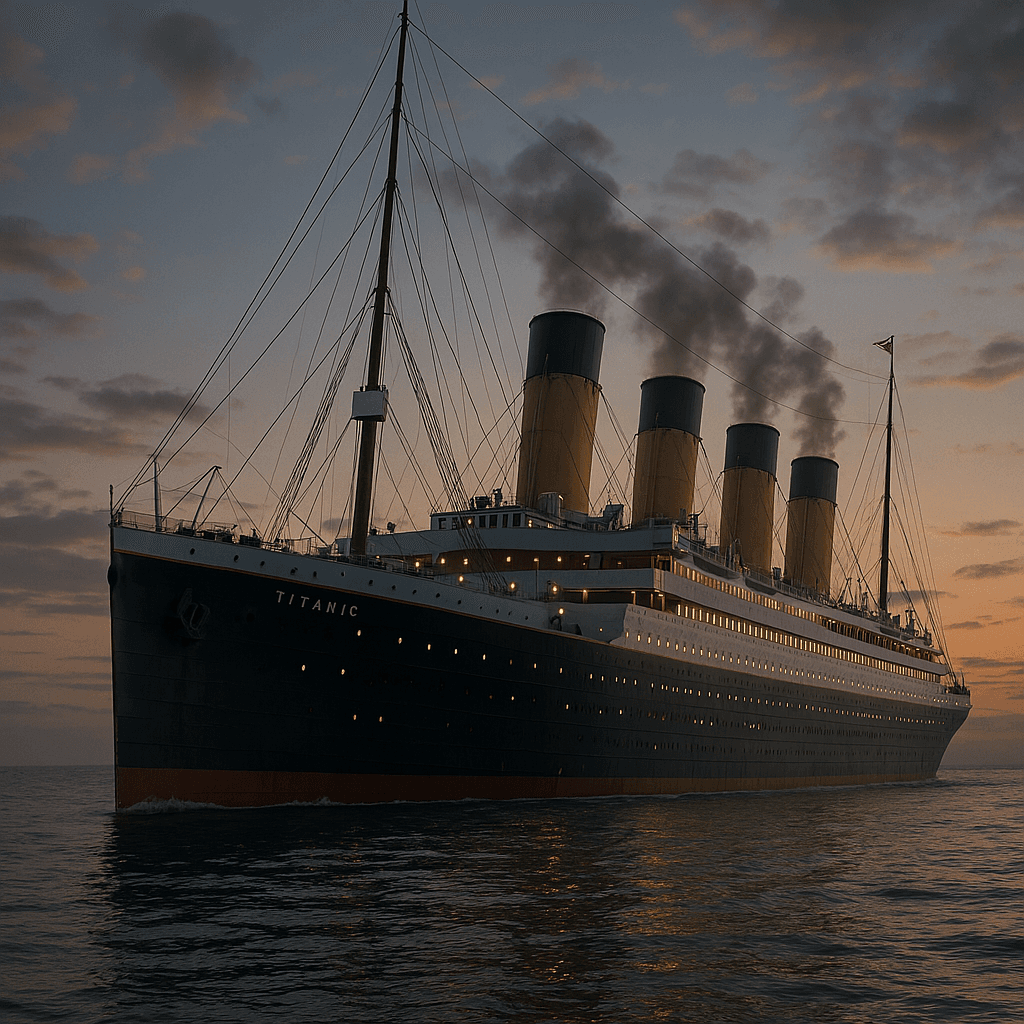
RMS Titanic
Ship Type | Transatlantic passenger ship | ||||||||
|---|---|---|---|---|---|---|---|---|---|
Affiliated Company | White Star Line | ||||||||
Builder | Harland and Wolff (Belfast, Northern Ireland) | ||||||||
Construction Start Date | 31 March 1909 | ||||||||
Launch Date | 31 May 1911 | ||||||||
Completion Date | 2 April 1912 | ||||||||
Maiden Voyage Date | 10 April 1912 | ||||||||
Sinking Date | 15 April 1912 | ||||||||
Wreck Location | North Atlantic Ocean | ||||||||
Cause of Sinking | Hull damage due to collision with an iceberg | ||||||||
Historical Significance | Turning point in modern maritime safety | ||||||||
International Consequences | Adoption of the SOLAS (1914) Convention | ||||||||
RMS Titanic is an ocean liner built at the beginning of the 20th century and regarded as the largest and most luxurious passenger ship of its time. Departing from England in 1912 to cross the Atlantic Ocean and reach New York, the Titanic became the site of one of the most tragic maritime disasters in human history.
The ship attracted attention due to its massive size, advanced technological interior, and the luxury amenities it offered. However, its sinking on 15 April 1912 not only resulted in the loss of hundreds of lives but also brought to the forefront issues such as maritime safety, technological limitations, and human vulnerability in the face of nature.
The sinking of the Titanic generated widespread global反响 and influenced the social structure, economic order, and transportation industry of the era. The event marked a turning point in maritime safety, leading to significant changes in ship safety measures and international maritime regulations. The tragic voyage of the Titanic has inspired numerous books, films, and academic studies throughout history, and its story has become a symbol with multiple meanings in modern culture.
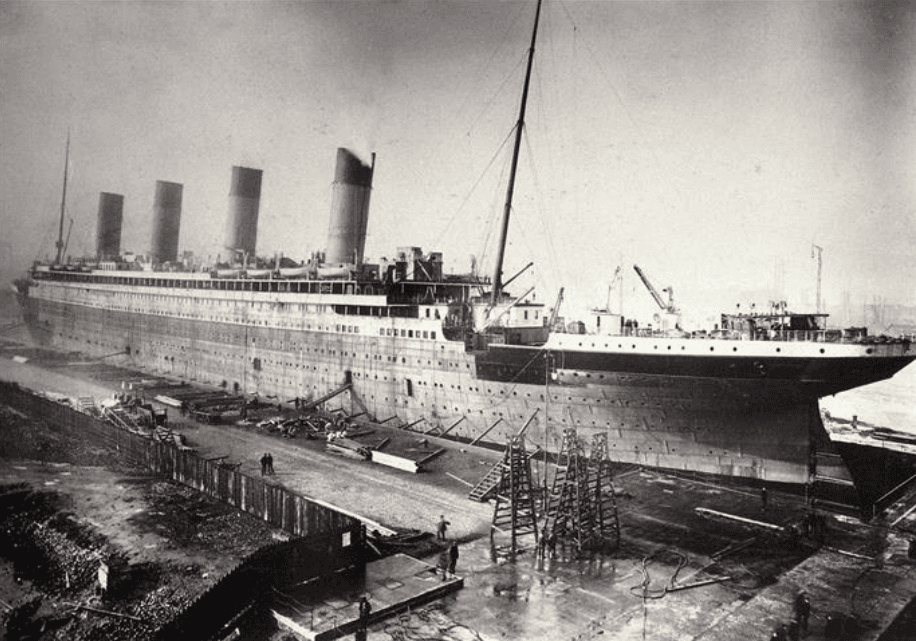
Titanic Image (AA)
RMS Titanic was built by Harland and Wolff, one of the leading shipbuilding companies of the United Kingdom. Construction began in 1909 at the shipyard in Belfast, Northern Ireland, and was completed in 1912. The Titanic was designed as the largest, most luxurious, and technologically advanced passenger ship of its era. Although built using Harland and Wolff’s engineering expertise, the primary responsibility for the design rested with chief engineer Thomas Andrews, who meticulously planned every detail and shaped the vessel as an engineering achievement.
The design of the Titanic prioritized both modern maritime requirements and passenger comfort and luxury. Measuring approximately 269 metres in length and 28 metres in width, the ship was the largest passenger vessel of its time. It was constructed to accommodate a total of 2,435 passengers and 900 crew members.
The materials used in its construction were among the highest quality and most durable available at the time. The hull was made of steel, and the interior spaces were adorned with rich decorative elements. The ship featured the “watertight compartments” system, one of the most advanced technologies of the era, designed to limit the spread of water in case of damage. However, critical weaknesses in this system became evident during the Titanic’s sinking.
Exceptional luxury amenities were provided for first-class passengers. Interior spaces were arranged to resemble a high-end hotel and equipped with facilities such as swimming pools, restaurants, reading rooms, and a squash court. These features enhanced the ship’s prestige and generated great interest among the upper classes of the era. While certain levels of comfort were also provided for second- and third-class passengers, these amenities were significantly inferior to those available to first-class travelers.
The engineering achievements and luxurious design of the Titanic symbolized the technological progress of the era. However, certain structural flaws in its design contributed to the disaster. The sinking of the Titanic revealed not only shortcomings in ship design but also the inadequacies of maritime safety practices at the time.
RMS Titanic began its maiden voyage on 10 April 1912 from Southampton, England, bound for the United States. The planned route included three stops: departure from Southampton, followed by calls at Cherbourg, France, and Queenstown (now Cobh), Ireland, before crossing the Atlantic Ocean to reach New York. The voyage attracted widespread public interest, as the Titanic was perceived as the most prestigious and best-equipped passenger ship of its age.
Onboard the ship, which carried approximately 2,200 passengers and crew, travelers were accommodated in separate sections according to class. First-class passengers enjoyed the ship’s luxurious facilities, while third-class passengers traveled under much more modest conditions. The journey proceeded as planned during the first few days. However, on the night of 14 April 1912, the ship encountered a serious maritime accident.
At approximately 23:40, the Titanic collided with an iceberg in the North Atlantic. Despite warnings from the crew, the ship continued at high speed and sustained significant damage along its starboard side. Due to the limited effectiveness of the watertight compartments, the flooding could not be contained. This was one of the primary factors leading to the ship’s sinking. The compartment system, theoretically considered safe, failed to prevent the sinking even when only a few compartments were breached.
During the sinking, a large proportion of the passengers and crew lost their lives. The ship was equipped with only a limited number of lifebelts and lifeboats. This deficiency severely hampered rescue efforts and led to a high death toll. The sinking of the Titanic is remembered not only as a maritime disaster but also as a historical event that exposed the severe consequences of inadequate safety measures.
The Titanic sank completely at 02:20 on 15 April 1912, resulting in the loss of more than 1,500 lives. This tragedy had a profound impact worldwide and is regarded as one of the greatest disasters in maritime history. The event paved the way for fundamental reforms in maritime transport safety and regulations.
The sinking of RMS Titanic left lasting impacts on maritime history and led to numerous significant outcomes. The disaster was not merely a maritime accident; it also marked a crucial turning point in maritime safety, international law, and public awareness. The Titanic tragedy contained numerous lessons at both technological and human levels and laid the foundation for prolonged debates.
The sinking of the Titanic exposed the inadequacies of existing maritime safety practices. Although regulations at the time required ships to carry lifeboats and lifebelts proportional to their passenger capacity, the Titanic failed to meet these requirements. The ship, capable of carrying over 1,500 passengers, had lifeboats with a total capacity of only 1,178 people. This shortfall significantly increased the scale of the loss of life and led to serious consequences.
In the aftermath of this tragedy, the International Convention for the Safety of Life at Sea (SOLAS) came into effect in 1914. This agreement introduced numerous new regulations concerning maritime safety and imposed stricter standards for safety equipment on all commercial vessels. The Titanic disaster triggered comprehensive changes in the maritime industry and led to the adoption of more systematic approaches to safety in this field.
Anadolu Ajansı. “Yeni Titanic Geliyor.” *AA*, April 30, 2012. https://www.aa.com.tr/tr/dunya/yeni-titanic-geliyor/370842. Accessed May 16, 2025.
Butler, Daniel Allen. Unsinkable: The Full Story of the RMS Titanic. Mechanicsburg, PA: Stackpole Books, 1998.
Cartwright, Mark. “RMS Titanic.” *World History Encyclopedia*. Trans. Burak Yıldız. May 19, 2021. https://www.worldhistory.org/trans/tr/1-19812/rms-titanic/. Accessed May 16, 2025.


RMS Titanic
Ship Type | Transatlantic passenger ship | ||||||||
|---|---|---|---|---|---|---|---|---|---|
Affiliated Company | White Star Line | ||||||||
Builder | Harland and Wolff (Belfast, Northern Ireland) | ||||||||
Construction Start Date | 31 March 1909 | ||||||||
Launch Date | 31 May 1911 | ||||||||
Completion Date | 2 April 1912 | ||||||||
Maiden Voyage Date | 10 April 1912 | ||||||||
Sinking Date | 15 April 1912 | ||||||||
Wreck Location | North Atlantic Ocean | ||||||||
Cause of Sinking | Hull damage due to collision with an iceberg | ||||||||
Historical Significance | Turning point in modern maritime safety | ||||||||
International Consequences | Adoption of the SOLAS (1914) Convention | ||||||||
Ship Design and Construction
First Voyage and Sinking
Consequences and Impacts of the Sinking
Impacts on Maritime Safety