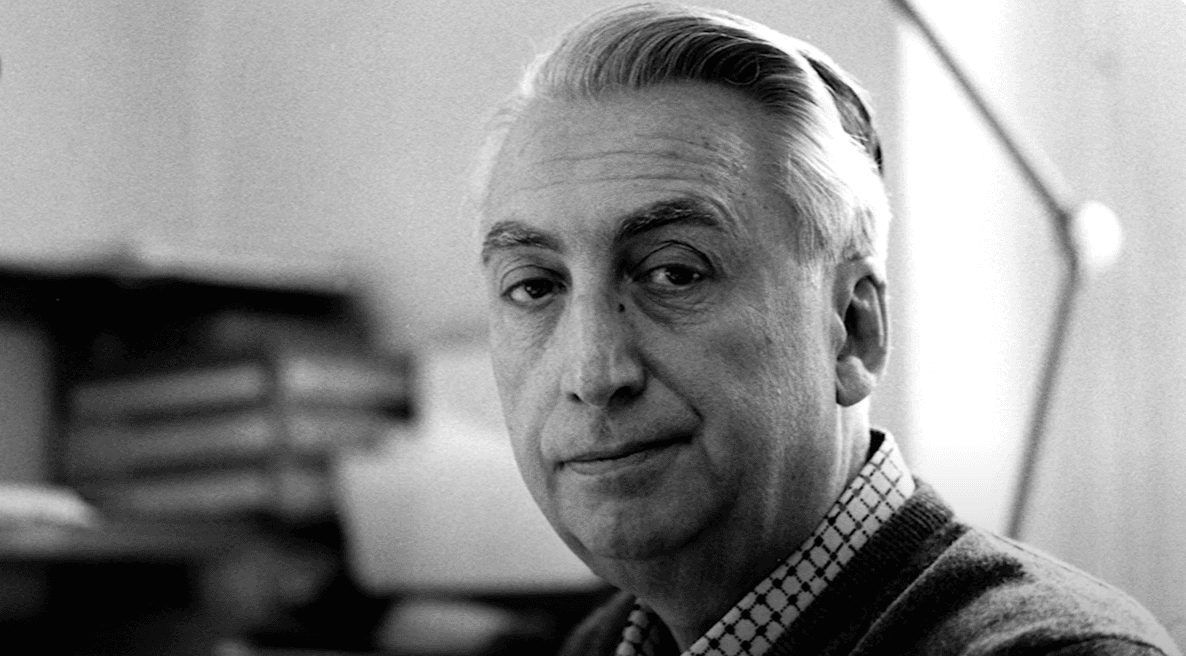
Birth Year | 1915 | ||||||||
|---|---|---|---|---|---|---|---|---|---|
Death Year | 1980 | ||||||||
Nationality | French | ||||||||
Profession(s) | Thinker Critic Semiotician Literary Theorist | ||||||||
Movements | Structuralism, Post-Structuralism | ||||||||
Influenced by | Ferdinand de Saussure, Charles Sanders Peirce | ||||||||
Roland Barthes (1915–1980) is a major figure in 20th-century literary and cultural theory, recognized as a French thinker, literary theorist, semiotician, and critic.
Barthes was born in 1915. During his youth he faced health problems; during World War II he was treated for tuberculosis in a sanatorium from 1942 to 1945. This experience profoundly shaped his intellectual development and directed him toward a life of writing. In his academic years he focused on classical philology and literature, cultivating his intellectual foundation through art, linguistics and philosophy.
In the 1950s Barthes gained attention for his critical writings on French society. He was associated with structuralism and was influenced by the linguistic work of Ferdinand de Saussure. In the 1960s he sought to develop a scientific method for literary analysis and interpreted cultural phenomena as ideological constructs. In the 1970s he became one of the leading post-structuralist thinkers and turned toward text-centered studies.
His intellectual journey is commonly divided into three key phases: the “phase of admiration,” the “phase of science,” and the “phase of the text.” In the first phase he examined the relationship between language and myth; in the second he shifted from linguistics to semiotics; in the third he concentrated on textual analysis.
An Interview with Roland Barthes (YouTube)
Barthes’s intellectual contributions began with Writing Degree Zero (1953). In his work Mythologies (1957) he subjected everyday objects and cultural phenomena to semiotic analysis. In his 1968 essay “The Death of the Author” he rejected the authority of the author and argued that meaning is produced by the reader and the text. In his 1973 book The Pleasure of the Text (Le Plaisir du Texte) he emphasized the reader’s experience and the pleasure derived from reading. His final major work, Camera Lucida (La Chambre Claire), published in 1980, contains his reflections on photography.
Barthes’s intellectual journey extended beyond his published works. He participated in intellectual debates during the events of 1968; his interest in China and Japan also informed his cross-cultural observations.
Barthes analyzed cultural phenomena as ideological constructs within semiotics and argued that literature could be studied through scientific methods. In his intellectual trajectory from structuralism to post-structuralism he challenged the role of the author and developed a new reader- and text-centered understanding of meaning. His concept of “the death of the author” became a pivotal turning point in modern literary criticism.
In his final years Barthes delivered seminars at the Collège de France. During this period his lectures titled “The Neutral” and “The Preparation of the Novel” introduced a new direction in academic thought. He died in 1980 following injuries sustained in a traffic accident in Paris.
Barthes is regarded as a pivotal figure in the history of literary criticism for his concept of “the death of the author,” his reader- and text-centered approaches, and his contributions to semiotics. Posthumously published works including his journals (Mourning Diary, 2012) and travel notes (Travels in China, 2013) have offered new perspectives on his thought.
Akay, Mehmet. "Roland Barthes: Yapısalcılıktan Postyapısılcılığa Bir Serüven." Master's thesis, Dicle Üniversitesi, Sosyal Bilimler Enstitüsü, 2018. Accessed September 30, 2025. https://tez.yok.gov.tr/UlusalTezMerkezi/tezDetay.jsp?id=5r626-idSNogI5oKJFmVBQ
Aydınalp, Esra Başak. "Roland Barthes’ta Metin ve Eleştiri Dinamiği." *Edebi Eleştiri Dergisi* Volume V, no. I, Year 5 (March 2021): 203-214. Accessed September 30, 2025. https://dergipark.org.tr/tr/download/article-file/1282988
Barthes, Roland. "The Death of the Author." The Rustle of Language. Trans. Richard Howard. Hill and Wang. New York. 2nd ed. (1986): 49-55.
Kısakürek, Ali Fuat. "Edebi Haz ve Roland Barthes." Master's thesis, İstanbul Bilgi Üniversitesi, Sosyal Bilimler Enstitüsü, 2015. Accessed September 30, 2025. https://tez.yok.gov.tr/UlusalTezMerkezi/tezDetay.jsp?id=aUv2ppT1fUTvx2vqKwHmsg&no=Sa2QrQ-nX6HTWN9dCxhNTQ
Samoyault, Tiphaine, and Sunil Manghani. "On Barthes' Biography: A Dialogue." *Theory, Culture & Society* 37, no. 4 (2020): 43-63. Accessed September 30, 2025. https://www.researchgate.net/publication/340947293_On_Barthes'_Biography_A_Dialogue
Sümbül, Yiğit. "Özne Felsefesi Bağlamında Edebi Metinlerde Köken ve Anlam Sorunu: Barthes, Derrida ve Lacan." Master's thesis, Ankara Hacı Bayram Veli Üniversitesi, Lisansüstü Eğitim Enstitüsü, 2021. Accessed September 30, 2025. https://www.academia.edu/51508677/%C3%96ZNE_FELSEFES%C4%B0_BA%C4%9ELAMINDA_EDEB%C4%B0_MET%C4%B0NLERDE_K%C3%96KEN_VE_ANLAM_SORUNU_BARTHES_DERRIDA_VE_LACAN
Çeviri Konuşmalar. "Roland Barthes: 'Bugün hâlâ Marx ve Freud'un diliyle konuşuyoruz'." YouTube Video, 19:26. Accessed September 30, 2025. https://www.youtube.com/watch?v=qeZoxYlxoVM
Ünal, Mehmet Fatih. "Roland Barthes'da Mitlerin Okunuşu." Master's thesis, Gazi Üniversitesi, Sosyal Bilimler Enstitüsü, 2012. Accessed September 30, 2025. https://tez.yok.gov.tr/UlusalTezMerkezi/tezDetay.jsp?id=LlxImtoAmwD9mJ6h-PIwOA&no=qq4aAzaqrEAAMfrgl7JSkA

Birth Year | 1915 | ||||||||
|---|---|---|---|---|---|---|---|---|---|
Death Year | 1980 | ||||||||
Nationality | French | ||||||||
Profession(s) | Thinker Critic Semiotician Literary Theorist | ||||||||
Movements | Structuralism, Post-Structuralism | ||||||||
Influenced by | Ferdinand de Saussure, Charles Sanders Peirce | ||||||||
Youth and Education
Career and Works
Contributions
Final Years and Death
Legacy