+1 More

Death | 16 April 1958, London, United Kingdom | ||||||||
|---|---|---|---|---|---|---|---|---|---|
Nationality | British | ||||||||
Birth | 25 July 1920, London, United Kingdom | ||||||||
Notable Works | structural analysis of the tobacco mosaic virus and other viruses the X-ray diffraction image 'Photo 51' obtained in 1952 Determination of the A and B forms of DNA | ||||||||
Field of Work | Physical chemistry, X-ray crystallography, structural biology | ||||||||
Full Name | Rosalind Elsie Franklin | ||||||||
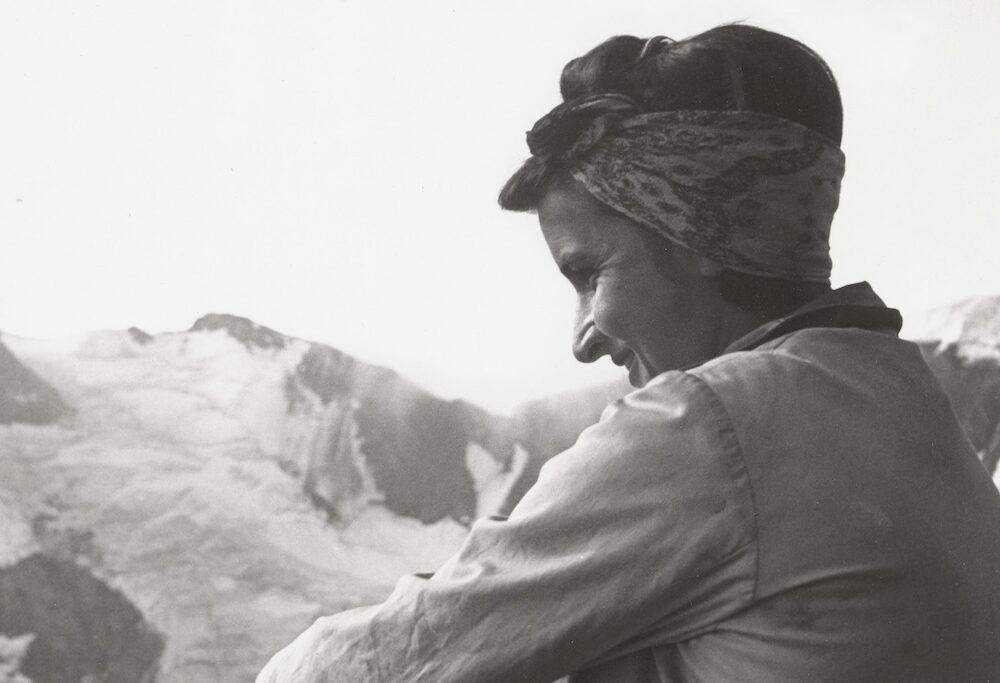
Rosalind Elsie Franklin, an English scientist born in London on 25 July 1920, conducted research in physical chemistry and X-ray crystallography. Following her studies on coal and carbon structures, she contributed to investigations into the molecular structure of DNA, and the data obtained through X-ray diffraction were used in the development of the double helix model of DNA. In the later stages of her career, Franklin researched the structure of viruses and continued her scientific work in laboratories at Cambridge, Paris, King’s College London and Birkbeck College.
Rosalind Elsie Franklin was born on 25 July 1920 in London to Muriel Waley Franklin and the merchant banker Ellis Franklin. Her parents belonged to educated and respected Jewish families who fostered an environment that emphasized education and social responsibility. The close-knit Anglo-Jewish community centered in west London played a significant role throughout Franklin’s life; although she displayed agnostic tendencies, she maintained a connection to her Jewish identity.
Growing up in a household marked by lively debates and intellectual exchange, Franklin developed from an early age the habit of defending her views and engaging in discussion. Her interest in scientific topics became evident at a young age; as an academically successful student she won numerous awards and expressed a clear desire to pursue a career in science. Family members and close associates described her as possessing strong intellectual curiosity alongside an interest in sports, travel and outdoor activities.
Rosalind Franklin completed her early education at private preparatory and boarding schools in London before attending St. Paul’s Girls’ School. During this period she developed a particular interest in physics and chemistry and distinguished herself through academic excellence. The school’s disciplined and intensive curriculum played a significant role in steering her toward a scientific career.
Franklin continued her higher education at Newnham College, part of the University of Cambridge, where she studied physical chemistry. She earned her bachelor’s degree in natural sciences in 1941 and soon turned to research. While completing her studies during the Second World War, Franklin secured a postgraduate research scholarship due to her academic achievements.【1】
In 1942 Franklin began work at the British Coal Utilisation Research Association, where she conducted research on the microstructure of coal and carbon. She designed and carried out experiments to examine crystalline structures.【2】Her research on the porous nature of coal and its structural changes at high temperatures was linked to wartime applications such as predicting fuel performance and developing gas masks.【3】
In 1945 Franklin received her PhD in physical chemistry from Cambridge University. Her doctoral thesis, titled “The Physical Chemistry of Solid Organic Colloids with Special Reference to Coal and Related Materials”, focused on the physical chemistry of carbon structures associated with coal. This period laid the foundation for her expertise in crystallography and structural analysis of solids.【4】
Following her graduate studies, Rosalind Franklin began work in 1942 at the British Coal Utilisation Research Association, where she investigated the physical and chemical properties of coal and carbon. Her research focused on understanding the microstructure of these materials and examining their transformations under different conditions. She conducted experiments on coal porosity, structural changes due to heat and permeability to gas and water. Her findings were linked to applications such as predicting fuel performance and developing materials used during the war.
After earning her PhD in physical chemistry from Cambridge University in 1945, Franklin took up a position at the Laboratoire Central des Services Chimiques de l’Etat in Paris to continue her research. Between 1947 and 1950, she worked closely with Jacques Mering to focus on X-ray crystallography techniques and applied them to the study of disordered carbon structures. Franklin developed methods for determining the structure of non-crystalline materials, investigating the processes by which coal transforms into graphite and the structural properties of different carbon forms.
Her work in Paris produced both theoretical and practical results on carbon and graphite structures and led to the publication of numerous scientific papers. The expertise in X-ray crystallography she gained during this period formed the technical foundation for her later research on DNA and virus structures.
In 1951 Franklin joined King’s College London on a research fellowship. Although initially invited to study the molecular structure of protein and lipid solutions, she soon shifted her focus to investigating the structure of DNA fibers, working alongside her doctoral student Raymond Gosling. During her time at King’s College, she identified that DNA existed in two distinct forms depending on humidity levels, which she named A and B forms. By controlling the water content of DNA fibers, she produced clearer diffraction images and carried out detailed measurements of DNA’s structural properties using X-ray diffraction techniques.
Franklin and Gosling developed specialized camera setups and long-exposure techniques to obtain high-resolution diffraction images of DNA fibers. The image obtained in 1952 and later known as “Photo 51”, a X-ray diffraction image of the B form of DNA, revealed data indicating a regular helical structure. Franklin mathematically analyzed the diffraction patterns from these images to make precise measurements of DNA’s structure and evaluated her findings in scientific publications.

DNA X-ray Diffraction Pattern Photographic Print, Photo 51 (Science History Institute)
In a 1953 paper published in Nature, Franklin and Gosling presented X-ray diffraction data on DNA’s structure. The same issue also published the double helix model developed by James Watson and Francis Crick. It was later revealed that some of Franklin’s unpublished measurements and data had been shown to Watson and Crick without her knowledge, via Maurice Wilkins, and were used in developing their model. Franklin’s research at King’s College formed part of the body of experimental work that provided the essential data for understanding DNA’s structure.【5】
Rosalind Franklin’s tenure at King’s College London was marked by a tense work environment due to ambiguities regarding roles and responsibilities within the laboratory. The head of the biophysics unit at King’s College, John Randall, had assigned Franklin to DNA research because of her expertise in X-ray diffraction; however, this assignment lacked a clear framework for how her collaboration with Maurice Wilkins should be conducted. Randall did not clearly inform Wilkins that responsibility for X-ray studies of DNA fibers had been transferred to Franklin, leading to disagreements between the two researchers over duties and authority.
Communication and collaboration within the laboratory during Franklin’s time at King’s College remained limited. Her ambiguous academic status and position within the institutional hierarchy affected her working conditions. It also occurred during this period that portions of Franklin’s data on DNA research were shown without her knowledge to James Watson and Francis Crick, who were working in Cambridge, through Maurice Wilkins. Despite these tensions, Franklin continued her DNA research but decided to leave King’s College.【6】
In early 1953 Franklin left King’s College and began working at Birkbeck College, part of the University of London. At Birkbeck she continued her research in the laboratory led by John Desmond Bernal, shifting her focus to research topics beyond DNA, particularly the structure of viruses.
In early 1953, after leaving King’s College London, Rosalind Franklin joined the Laboratory of Biophysical Research at Birkbeck College, part of the University of London, under the direction of John Desmond Bernal. There she redirected her research away from DNA and focused particularly on examining the structure of viruses. Using her expertise in X-ray crystallography, she investigated the molecular organization of viruses and initiated new research in this field.
During her time at Birkbeck College, Franklin concentrated on the tobacco mosaic virus (TMV) and conducted research demonstrating that the virus had a regular and specific molecular organization. She collaborated with various researchers, notably Aaron Klug, to investigate the structural properties of viruses. Her findings on the length and organization of virus particles contributed to discussions on understanding viral structure.
While at Birkbeck, Franklin established contacts with laboratories in Europe and the United States to exchange scientific knowledge and secure research support for projects on virus structure. She continued her work on the structural organization of viruses and the relationship between proteins and nucleic acids, and also initiated research on the live poliovirus. These studies formed part of her contributions to the investigation of viral molecular structure in the final years of her career.
In 1956, after a research trip to the United States, Rosalind Franklin was diagnosed with ovarian cancer and underwent surgery. Despite treatment, she continued her research, occasionally resuming work and travel during periods of recovery. She persisted in efforts to secure funding for her research group at Birkbeck College and contributed to projects developing virus models for the Brussels World’s Fair.
During this period she expanded her virus research and secured a three-year research grant from the United States, one of the largest research funds ever awarded to Birkbeck College. She also initiated research on the live poliovirus; however, her deteriorating health prevented her from completing these studies. As her illness progressed, she became physically weakened and spent her final months with her family.【7】
Franklin died on 16 April 1958, one day before the opening of the Brussels World’s Fair. She was 37 years old. Shortly before her death, she had begun work with Aaron Klug on poliovirus research.
Rosalind Franklin’s scientific work focused on three main areas: coal and carbon structures, DNA and viruses. In the early phase of her career she conducted research on the microstructure of coal and carbon; her studies on porosity, structural transformation and graphitization processes contributed to understanding the physical and chemical properties of these materials. During her time in Paris she developed X-ray crystallography techniques to study disordered carbon structures and published numerous scientific papers in this field.
During her tenure at King’s College London she carried out research on the structure of DNA. Using X-ray diffraction, she analyzed the structural properties of DNA fibers, identified the A and B forms of DNA and obtained particularly clear diffraction images of the B form. The measurements and diffraction data she obtained formed part of the experimental evidence used in establishing the double helix structure of DNA. The findings by Franklin and Raymond Gosling on DNA were published in Nature in 1953.
After 1953, at Birkbeck College, she conducted research on the structure of viruses. She studied the molecular organization of the tobacco mosaic virus and other viruses, investigating the structural properties of virus particles and the relationship between nucleic acids and proteins. During this period she collaborated with various researchers, notably Aaron Klug, to develop projects on viral structure.
Throughout her scientific career, Franklin published 19 research papers on coal and carbon, 5 on DNA and 21 on viruses. These works were evaluated within the context of research in physical chemistry, crystallography and molecular biology.【8】
Rosalind Franklin died in 1958 and therefore was not eligible for the Nobel Prize in Physiology or Medicine awarded in 1962 for the discovery and elucidation of DNA’s structure. The prize was awarded to James Watson, Francis Crick and Maurice Wilkins. Since the Nobel Prize is not awarded posthumously, Franklin was not considered for the award.【9】
It was later revealed that portions of Franklin’s measurements and data on DNA structure had been shown to Watson and Crick without her knowledge, via Maurice Wilkins, and were used in developing the DNA model. This situation prompted scientific and historical assessments of the relationship between Franklin’s work and the elucidation of DNA’s structure.
Rosalind Franklin’s work contributed to the development of research in physical chemistry, X-ray crystallography and molecular biology. Her studies on coal and carbon structures were recognized as significant contributions to understanding the physical properties of these materials. Her research on DNA and virus structures formed part of the pioneering efforts that enabled widespread structural investigations at the molecular level.
Franklin’s scientific contributions have been examined in biographies, histories of science and academic evaluations published after her death. Her role in DNA research and her experience at King’s College London have become subjects of study in the history of science literature. Her publications on coal, DNA and viruses continue to be assessed within the context of interdisciplinary research.
Franklin’s name is commemorated in various academic institutions and scientific events; her work is cited as an example in studies of the development of molecular structure research in the mid-20th century. In this context, Franklin’s scientific output and research areas are included in studies on the history of physical chemistry and structural biology.
Accessed November 26, 2025.
Fara, Patricia. "Dr. Rosalind Franklin." The Rosalind Franklin Institue. Accessed February 11, 2026.
Rosalind Franklin University. "Dr. Rosalind Franklin." rosalindfranklin.edu. Accessed February 11, 2026.
Science History Institute. "DNA X-ray diffraction image known as Photo 51, Annotated by Rosalind Franklin and Aaron Klug." digital.sciencehistory.org. Accessed February 11, 2026.
Science History Institute. "Francis Crick, Rosalind Franklin, James Watson, and Maurice Wilkins." sciencehistory.org. Accessed February 11, 2026.
Screen, Silver. "Rosalind Franklin." Flickr. Accessed February 12, 2026. https://www.flickr.com/photos/123723459@N07/26007651946/
Uberoi, C. "Rosalind Franklin: The Woman Scientist of DNA." Indian Academy of Sciences. Accessed February 11, 2026.
[1]
Rosalind Franklin University, ''Dr. Rosalind Franklin,'' rosalindfranklin.edu, Erişim tarihi: 11 Şubat 2026,
https://www.rosalindfranklin.edu/about/facts-figures/dr-rosalind-franklin/
[2]
Fara, Patricia, ''Dr. Rosalind Franklin,'' The Rosalind Franklin Institue, Erişim tarihi: 11 Şubat 2026,
https://www.rfi.ac.uk/discover-learn/rosalind-franklins-life/
[3]
Fara, Patricia, ''Dr. Rosalind Franklin,'' The Rosalind Franklin Institue, Erişim tarihi: 11 Şubat 2026,
https://www.rfi.ac.uk/discover-learn/rosalind-franklins-life/
[4]
Rosalind Franklin University, ''Dr. Rosalind Franklin,'' rosalindfranklin.edu, Erişim tarihi: 11 Şubat 2026,
https://www.rosalindfranklin.edu/about/facts-figures/dr-rosalind-franklin/
[5]
Uberoi, C, ''Rosalind Franklin: The Woman Scientist of DNA,'' Indian Academy of Sciences. Erişim tarihi: 11 Şubat 2026,
https://www.ias.ac.in/public/Resources/Initiatives/Women_in_Science/Franklin.pdf
[6]
Uberoi, C, ''Rosalind Franklin: The Woman Scientist of DNA,'' Indian Academy of Sciences. Erişim tarihi: 11 Şubat 2026,
https://www.ias.ac.in/public/Resources/Initiatives/Women_in_Science/Franklin.pdf
[7]
Fara, Patricia, ''Dr. Rosalind Franklin,'' The Rosalind Franklin Institue, Erişim tarihi: 11 Şubat 2026,
https://www.rfi.ac.uk/discover-learn/rosalind-franklins-life/
[8]
Fara, Patricia, ''Dr. Rosalind Franklin,'' The Rosalind Franklin Institue, Erişim tarihi: 11 Şubat 2026,
https://www.rfi.ac.uk/discover-learn/rosalind-franklins-life/
[9]
Rosalind Franklin University, ''Dr. Rosalind Franklin,'' rosalindfranklin.edu, Erişim tarihi: 11 Şubat 2026,
https://www.rosalindfranklin.edu/about/facts-figures/dr-rosalind-franklin/

Death | 16 April 1958, London, United Kingdom | ||||||||
|---|---|---|---|---|---|---|---|---|---|
Nationality | British | ||||||||
Birth | 25 July 1920, London, United Kingdom | ||||||||
Notable Works | structural analysis of the tobacco mosaic virus and other viruses the X-ray diffraction image 'Photo 51' obtained in 1952 Determination of the A and B forms of DNA | ||||||||
Field of Work | Physical chemistry, X-ray crystallography, structural biology | ||||||||
Full Name | Rosalind Elsie Franklin | ||||||||
Early Life and Family Background
Education and Academic Development
Coal and Carbon Research
DNA Research and Photo 51
Work Environment at King’s College and Departure
Birkbeck College and Virus Research
Death
Scientific Legacy
Posthumous Recognition and the Nobel Prize
Place in the History of Science