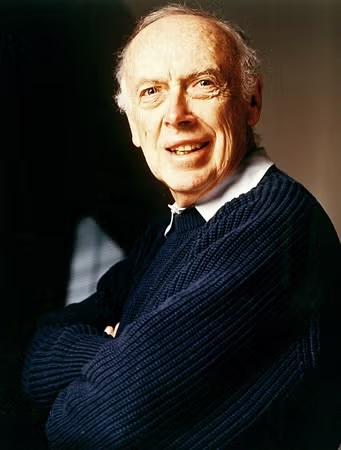


+2 More

Doğum tarihi | 1928-04-06 | ||||||||
|---|---|---|---|---|---|---|---|---|---|
Eş | Elizabeth Lewis | ||||||||
Place of Birth | Chicago / USA | ||||||||
Ölüm tarihi | 2025-11-06 | ||||||||
Profession(s) | Academician Geneticist Biologist | ||||||||
Scientific Contribution | Discovery of the double helix structure of DNA (1953) | ||||||||
Main Awards | Presidential Medal of Freedom (1977) Nobel Prize in Physiology or Medicine (1962) Albert Lasker Award (1960) Eli Lilly Award in Biochemistry (1960) John Collins Warren Prize (1959) | ||||||||
Çocuk | Duncan Watson Rufus Watson | ||||||||
Annesi | Jean Mitchell | ||||||||
Babası | James D. Watson | ||||||||
James Dewey Watson is an American biologist and geneticist who, together with Francis Crick, discovered the double helix structure of DNA. This discovery, published in 1953, laid the foundation for modern genetics by explaining the chemical structure of hereditary information. In 1962, he shared the Nobel Prize in Physiology or Medicine with Maurice Wilkins.
Throughout his career, Watson held positions at Harvard University, the California Institute of Technology, and the Cold Spring Harbor Laboratory, and as one of the first directors of the Human Genome Project, he contributed significantly to the mapping of genetic knowledge.

James Dewey Watson – (Anadolu Ajansı)
James Dewey Watson was born on 6 April 1928 in Chicago, Illinois. His father, James D. Watson, was a businessman and his mother was Jean Mitchell. Watson’s paternal family was of British origin and had lived for several generations in the Midwestern United States. His maternal grandfather was born in Scotland.
Watson spent his childhood in Chicago. He attended Horace Mann Elementary School for eight years and South Shore High School for two years. As a child, he developed an interest in observing nature and birdwatching. He regularly went birdwatching with his father, and this interest gradually became a serious pursuit.
Watson was known from an early age as a curious and eager learner. He won $100 on a radio quiz show called “Quiz Kid” and used the money to buy a birdwatching telescope. His family placed great importance on books and education.
Watson was raised as a Catholic but later abandoned religious beliefs. His father’s interest in science and birdwatching strongly influenced Watson’s attraction to the natural sciences. During the Great Depression, his family faced economic hardship, and Watson shared a small room with his sister during his childhood.
James Dewey Watson began university studies at an early age. At 15, he received a scholarship and was admitted to the University of Chicago. He completed a four-year experimental undergraduate program in zoology and earned his Bachelor of Science degree in Zoology in 1947.
While studying at the University of Chicago, Watson continued his interest in natural history and ornithology. Initially, he aimed to become an ornithologist and work as a curator at the Museum of Natural History. However, after reading Erwin Schrödinger’s book What Is Life? The Physical Aspect of the Living Cell during his final year, he turned his focus to genetics.
After completing his undergraduate studies, Watson began graduate and doctoral research in Zoology at Indiana University. At Indiana University, he conducted research on bacteriophages in the laboratory of Salvador Luria. Luria was a member of the “Phage Group,” scientists who used bacteriophages as tools to study genes. Watson’s doctoral thesis examined the effects of X-rays on bacteriophage reproduction.
Watson received his Ph.D. in Zoology from Indiana University in 1950. During his doctoral studies, his interest in genetics became permanent, and he began applying biophysical and chemical methods to genetic problems.
After completing his doctoral studies at Indiana University in 1950, James D. Watson traveled to Europe. In September 1950, he began his research in Copenhagen, Denmark, under a Merck fellowship from the National Research Council. For one year, he worked with biochemist Herman Kalckar and microbiologist Ole Maaløe on bacterial viruses. His research focused on the behavior of viral DNA inside infected cells.
In the spring of 1951, Watson traveled with Kalckar to the Zoological Station in Naples, Italy. There, at a symposium, he met Maurice Wilkins and saw for the first time Wilkins’s X-ray diffraction pattern of DNA crystals. This observation shifted Watson’s research focus from genetics to the chemistry of molecular structure.
In August 1951, Salvador Luria arranged for Watson to work at the Cavendish Laboratory in Cambridge, England, through John Kendrew. Watson began working at the Cavendish Laboratory in October 1951, where he met Francis Crick. The two shared a common interest in solving the structure of DNA.
Watson and Crick adopted a model-building approach to understand the structure of DNA. X-ray diffraction data obtained by Rosalind Franklin and Maurice Wilkins at King’s College London proved decisive in this process. Their initial models were found to be incorrect. Franklin noted that the phosphate groups must lie on the outside of the molecule and that the model was inconsistent with its water content. As a result, Sir Lawrence Bragg, head of the Cavendish Laboratory, ordered Watson and Crick to cease their DNA research.
In 1952, a summary report containing Franklin’s data was seen by Crick’s advisor Max Perutz at Cavendish. These data showed that DNA had a double helical form. Watson and Crick determined that adenine pairs with thymine (A–T) and guanine with cytosine (G–C). This finding was consistent with Erwin Chargaff’s experimental ratios. They demonstrated that the two strands of DNA are antiparallel and that the paired bases are held together by hydrogen bonds.
In 1953, the double helical structure of DNA was published in the journal Nature in an article titled “Molecular Structure of Nucleic Acids: A Structure for Deoxyribose Nucleic Acid.” This model proposed a fundamental structure explaining how genetic information is copied.
The discovery of DNA’s double helical structure explained how genetic material is replicated within the cell. James D. Watson and Francis Crick showed that the two strands of the DNA molecule are arranged antiparallel to each other and contain a specific mechanism of replication through base pairing. Their work revealed that the structure of deoxyribonucleic acid enables the transmission of genetic information.
Watson and Crick’s findings were published in April 1953 in Nature as two articles. The first presented their three-dimensional model of DNA’s structure; the second explained the importance of base sequence in the transmission of genetic information.
The understanding of DNA’s double helical structure clarified the chemical basis of heredity. The X-ray diffraction studies conducted by Maurice Wilkins and Rosalind Franklin at King’s College London played a crucial role in confirming the model. Franklin’s death in 1958 meant her name was not included in the recognition of these findings.
The 1962 Nobel Prize in Physiology or Medicine was awarded jointly to James Watson, Francis Crick, and Maurice Wilkins for their discoveries concerning the molecular structure of nucleic acids and its significance for information transfer in living material.
The prize was presented at a ceremony in Stockholm. Watson was 24 years old when he received the award. The Nobel Foundation stated that the discovery of DNA’s structure was a “turning point in our understanding of the chemical basis of life.”
After this period, Watson shifted his focus from the structural solution of DNA to the role of RNA in protein synthesis and returned to the United States to continue his scientific work.
Following the elucidation of DNA’s structure, James D. Watson served as a Senior Research Fellow in the Department of Biology at the California Institute of Technology (Caltech) from 1953 to 1955. During this time, he worked with Alexander Rich on X-ray diffraction studies of RNA.
In 1955, he returned to the Cavendish Laboratory at the University of Cambridge to continue working with Francis Crick. During this period, he published several papers on the structure of small viruses.
In 1956, Watson joined the Department of Biology at Harvard University. He initially became an assistant professor, was promoted to associate professor in 1958, and became a professor in 1961. His research at Harvard focused on the role of RNA in protein synthesis.
While at Harvard, Watson collaborated with researchers such as Alfred Tissières, François Gros, and Walter Gilbert. These collaborations yielded experimental evidence supporting the concept of messenger RNA (mRNA).
His tenure at Harvard University lasted until 1976. During this period, his research centered on the function of RNA in protein synthesis and the fundamental mechanisms of molecular biology.
While holding a faculty position at Harvard, Watson was also active in science policy and education. During these years, he began writing scientific textbooks and published “Molecular Biology of the Gene” in 1965, which became a widely used resource at the university level.
The 1950s and 1960s were a period during which Watson’s experimental biology and teaching activities progressed simultaneously. While at Harvard University, he maintained his connection with the Cold Spring Harbor Laboratory, participating in research courses there during the summer months.
In 1968, James D. Watson was appointed director of the Cold Spring Harbor Laboratory (CSHL). Upon assuming this role, he continued his professorship at Harvard University and began working full-time at CSHL in 1976 after leaving Harvard.
During his leadership of CSHL, Watson oversaw the laboratory’s reorganization. Under his direction, the laboratory focused on tumor virology research, leading to significant discoveries regarding oncogenes (cancer genes) and the molecular basis of cancer.
Throughout his tenure at CSHL, Watson held various administrative positions:
During his time at CSHL, Watson expanded scientific meetings and training programs and secured funding for the laboratory from both private and public sources.
In 2001, Watson donated a major portion of his personal and scientific papers to the Cold Spring Harbor Laboratory Archives. The archival collection is divided into three main sections:
Watson’s Nobel medal was sold at auction in 2014 and subsequently returned to him by the buyer. Under his leadership at CSHL, the laboratory has focused on research in cancer, neurobiology, and fundamental genetics.
In 1988, James D. Watson was appointed as Associate Director for Human Genome Research within the National Institutes of Health (NIH). In 1989, he assumed directorship of the National Center for Human Genome Research (NCHGR).
Watson played a pioneering role in establishing the Human Genome Project under NIH. The project’s goal was to map the entire human genome and determine the sequence of all genes.
Under Watson’s leadership, the project evolved into a broad international collaboration involving numerous research institutions worldwide. Efforts concentrated on developing DNA sequencing technologies, sharing genomic data, and defining the functions of genes.
In 1992, Watson stepped down as director of NCHGR. His departure was significantly influenced by his opposition to the patenting of gene sequences. Watson argued that gene sequences should be considered part of the “laws of nature” and therefore should not be patentable.
The Human Genome Project, organized internationally during Watson’s tenure, established a foundational framework for the comprehensive study of genetic information. Watson continued his position at the Cold Spring Harbor Laboratory throughout the project’s execution.
In 2007, Watson received a complete copy of his own genome sequence. This work was among the first instances of a single individual’s genome being fully sequenced.
James D. Watson’s first book, The Molecular Biology of the Gene, was published in 1965 and later updated in new editions in 1970, 1976, and 1987.
After the discovery of DNA’s structure in 1953, Watson published The Double Helix: A Personal Account of the Discovery of the Structure of DNA in 1968, recounting the process from his own perspective. The book was one of the first to describe the personal experiences of scientists in their research.
From the 1980s onward, Watson authored numerous works in both textbooks and popular science. These include:
Watson’s books The Molecular Biology of the Gene, Molecular Biology of the Cell, and Recombinant DNA have been used as foundational textbooks in universities. The 1968 publication The Double Helix generated controversy due to its portrayal of Rosalind Franklin and other scientists.
Watson has also been active in the field of science education. He led the development of the multimedia-based educational project “DNA from the Beginning” within the Cold Spring Harbor Laboratory DNA Learning Center. These efforts are among the initiatives promoting the use of visual and digital methods in teaching molecular biology.
James D. Watson received numerous scientific awards and honorary titles throughout his career. Some of these honors recognize his contributions to the understanding of DNA structure and molecular biology.
The major awards Watson received include:
Watson has also been elected a member of various scientific academies and institutions, including:
Watson has also received 35 honorary doctorates from universities.
James D. Watson married Elizabeth Lewis in 1968. They had two sons: Rufus Watson and Duncan Watson. After his son Rufus was diagnosed with schizophrenia at a young age, Watson developed a special interest in research on genetic diseases and the human genome. He has stated that genetic factors may play a role in the development of such conditions.
His hobbies included birdwatching and nature walking, pursuits documented as having been maintained since childhood.
In the 2000s, Watson’s public statements on social issues drew significant criticism. In a 2000 speech, remarks he made about melanin and sexuality were controversial. In 2007, following comments he made to The Sunday Times regarding race and intelligence, he was removed from his position at the Cold Spring Harbor Laboratory. He resigned from all administrative roles at the laboratory that same year.
Watson faced criticism from the scientific community for these statements. In 2007 and 2019, after public remarks, the Cold Spring Harbor Laboratory revoked his honorary titles of Chancellor Emeritus, Professor Emeritus, and Honorary Trustee.
In 2014, Watson put his Nobel medal up for auction. It sold for $4.1 million but was subsequently returned to him by the Russian businessman who purchased it.
In 2019, after repeating his earlier views on race and intelligence in a documentary, the management of Cold Spring Harbor Laboratory rescinded all remaining honorary titles awarded to him.
During this period, Watson’s personal archives have continued to be preserved by the Cold Spring Harbor Laboratory Archives. The archives contain letters, manuscripts, articles, financial documents, speech texts and scientific notes.
Following a traffic accident in 2019, it was reported that he experienced a decline in cognitive abilities. Watson died on 6 November 2025 in East Northport, New York at the age of 97. His death was announced by the Cold Spring Harbor Laboratory, where he had served for many years.
James D. Watson has secured a lasting place in the field of molecular biology through his research and publications throughout his scientific career. Together with Francis Crick, he described the double helix structure of DNA in 1953, which defined the mechanism of hereditary information transfer in living organisms. This model established the fundamental research priorities of genetics.
Watson conducted research at Harvard University and the Cold Spring Harbor Laboratory on the role of RNA in protein synthesis and the molecular basis of cancer. These studies contributed to the understanding of cellular processes at the laboratory level.
His leadership of the Human Genome Project from 1988 to 1992 constituted the first international effort to comprehensively map genetic information. Watson established the initial guidelines for sequencing the human genome and for the open sharing of data under this project.
His books have been used for many years as standard textbooks in molecular biology and genetics education. The works “The Molecular Biology of the Gene”, “Molecular Biology of the Cell” and “Recombinant DNA” are among the foundational texts in biological education.
AP News. “James Watson, co-discoverer of the double-helix shape of DNA, has died at age 97.” Associated Press. Accessed November 10, 2025. https://apnews.com/article/james-watson-obituary-dna-double-helix-nobel-c1f6d589f2d0d4751859168f9fae295c
Academy of Achievement. “James D. Watson.” Academy of Achievement. Accessed November 10, 2025. https://achievement.org/achiever/james-d-watson/
BBC News. “DNA pioneer James Watson dies at 97.” BBC News. Accessed November 10, 2025. https://www.bbc.com/news/articles/cn8xdypnz32o
BBC News. “James Watson: Controversial discoverer of 'the secret of life'.” BBC News. Accessed November 10, 2025. https://www.bbc.com/news/articles/cyr70zznpjxo
Cold Spring Harbor Laboratory. “James D. Watson.” CSHL.edu. Accessed November 10, 2025. https://www.cshl.edu/personal-collections/james-d-watson/
DNA from the Beginning. "James Watson (1928-2025)." DNA from the Beginning. Accessed November 10, 2025. https://www.dnaftb.org/19/bio.html
Medical Research Council Laboratory of Molecular Biology. “James Watson (1928–2025).” MRC Laboratory of Molecular Biology. Accessed November 10, 2025. https://www2.mrc-lmb.cam.ac.uk/james-watson-1928-2025/#:~:text=Watson%20was%20born%20on%206,group%20at%20Indiana%20University%2C%20Bloomington
National Center for Biotechnology Information. “James Dewey Watson: The Pioneer of Molecular Biology.” *National Center for Biotechnology Information (NCBI).* Accessed November 10, 2025. https://pmc.ncbi.nlm.nih.gov/articles/PMC7930307/
Nobel Prize. "James D. Watson – Biographical." The Nobel Prize Organization. Accessed November 10, 2025. https://www.nobelprize.org/prizes/medicine/1962/watson/biographical/

Doğum tarihi | 1928-04-06 | ||||||||
|---|---|---|---|---|---|---|---|---|---|
Eş | Elizabeth Lewis | ||||||||
Place of Birth | Chicago / USA | ||||||||
Ölüm tarihi | 2025-11-06 | ||||||||
Profession(s) | Academician Geneticist Biologist | ||||||||
Scientific Contribution | Discovery of the double helix structure of DNA (1953) | ||||||||
Main Awards | Presidential Medal of Freedom (1977) Nobel Prize in Physiology or Medicine (1962) Albert Lasker Award (1960) Eli Lilly Award in Biochemistry (1960) John Collins Warren Prize (1959) | ||||||||
Çocuk | Duncan Watson Rufus Watson | ||||||||
Annesi | Jean Mitchell | ||||||||
Babası | James D. Watson | ||||||||
Family and Childhood
Educational Years
European Research and the Path to the Discovery of DNA’s Structure
Consequences of the Discovery of DNA and the Nobel Prize
Years at Harvard and Caltech (1953–1976)
Cold Spring Harbor Laboratory (CSHL) Period
The Human Genome Project (1988–1992)
Publications and Writing Activities
Awards and Honors
Personal Life
Legacy and Scientific Impact