


This article was automatically translated from the original Turkish version.
Rosemary (Rosmarinus officinalis L.)
Family | Lamiaceae (Lamiaceae) | ||||||||
|---|---|---|---|---|---|---|---|---|---|
Plant Species | Evergreen aromatic shrub | ||||||||
Height(s) | 90–200 cm | ||||||||
Leaf | Thin, needle-like; upper surface green, lower surface white-hairy | ||||||||
Flower | Blue or purple, small spikes | ||||||||
Distribution(s) | Mediterranean origin Tunisia and China Morocco Spain common in Türkiye | ||||||||
Growth Area | Temperate and warm climates, sea level – 1500 m | ||||||||
Uses | Spice, Tea, Essential oil, Medicine, Cosmetics | ||||||||
Active Compounds | Rosmarinic acid, Carnosic acid, Camphor, 1.8-cineole | ||||||||
Rosemary (Rosmarinus officinalis L.) is an evergreen aromatic shrub belonging to the Lamiaceae family. Its Latin name, Rosmarinus, derives from the words for “sea dew.” This species is native to the Mediterranean region and naturally thrives in warm and temperate climates.
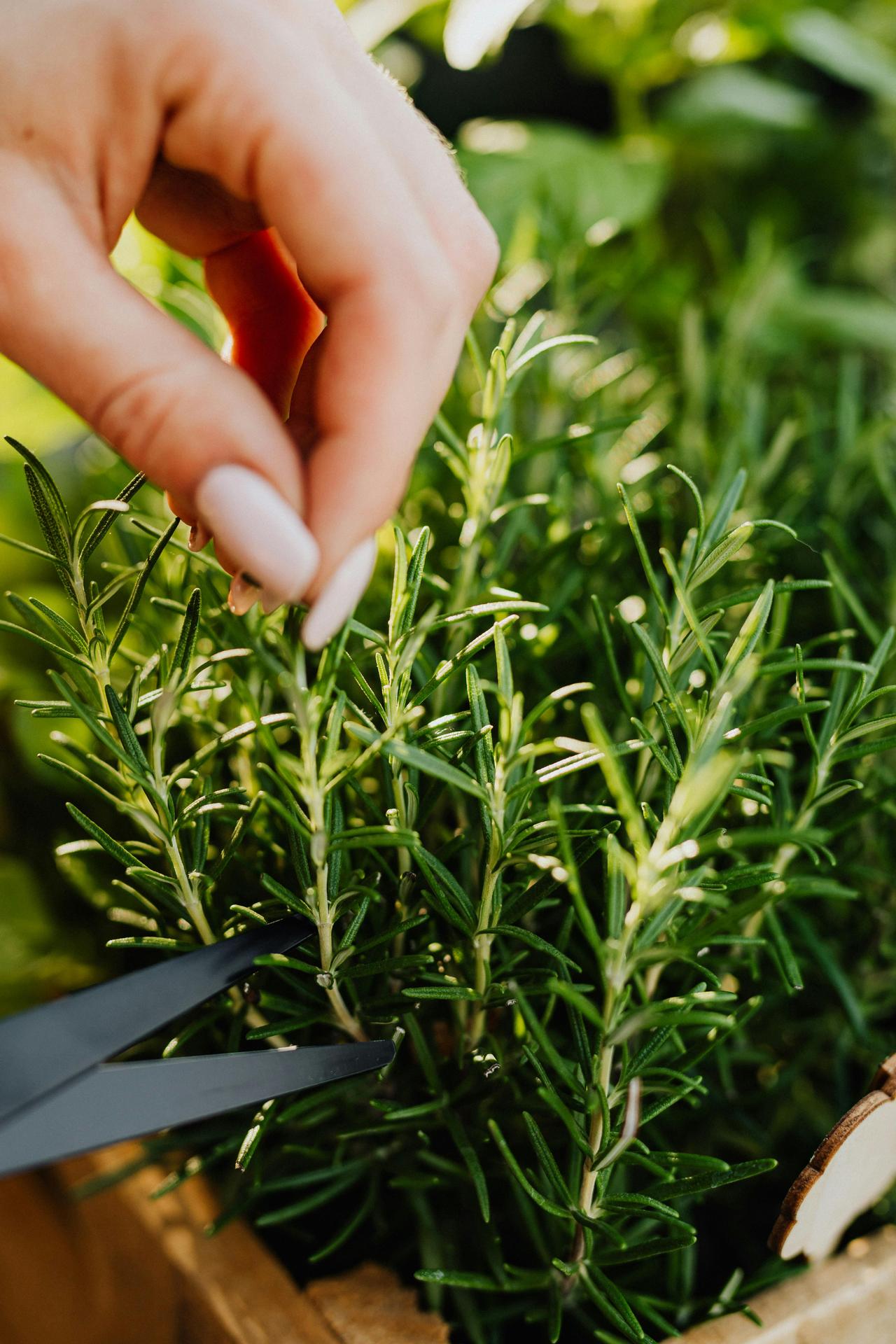
Rosemary is a woody, upright, highly branched shrub with a fibrous root system. It can grow to a height of 90–200 cm. The stems are brown and angular. The leaves are narrow, short (2–4 cm), oppositely arranged, with a glossy green upper surface and a whitish hairy lower surface. The flowers are small, purple or bluish, and arranged in spikes at the tips of the upper shoots. Both the leaves and flowers are known for their strong aromatic scent.

Rosemary (Pexels)
Rosemary is not selective about soil type but grows best in well-drained, calcareous and sandy soils. Sunlight exposure increases the production of volatile oils. Its natural range extends up to 1500 meters above sea level, with the Western Mediterranean basin serving as its primary genetic center.
Today, it is cultivated in countries such as France, Tunisia, Morocco, Spain, California, and China. In Türkiye, the most extensive natural distribution occurs along the Mediterranean and Aegean coasts, particularly in the provinces of Mersin, Adana, Antalya, and Muğla. The district of Tarsus in Mersin accounts for approximately 75% of Türkiye’s rosemary production.
Throughout history, rosemary has been used both in culinary applications and traditional medicine as a spice, tea, and flavoring agent. Its essential oil is preferred in soap, perfume, and cosmetic production. Traditional uses include aiding digestion, relaxing muscles, and enhancing mental alertness. Modern research supports its effects in strengthening memory, reducing mental fatigue, and inhibiting the growth of certain tumor cells.
The leaves and essential oil of R. officinalis L. contain phytochemicals such as rosmarinic acid, carnosic acid, carnosol, eucalyptol (1,8-cineole), camphor, alpha-pinene, ursolic acid, and luteolin. These compounds confer antioxidant, antimicrobial, anti-inflammatory, antitumor, neuroprotective, and hepatoprotective properties. Rosmarinic acid particularly provides protective effects against oxidative stress. Carnosic acid and carnosol exhibit the capacity to protect nerve cells, inhibit tumor proliferation, and reduce lipid peroxidation.
Rosemary cultivation is primarily carried out through cuttings rather than seeds. Cuttings taken from suitable shoots are planted in a rooting medium to produce seedlings, which are then transplanted to fields. Planting typically occurs in March–April. Rosemary is a low-maintenance plant with minimal requirements for fertilization and irrigation. Weed control and pest management are generally straightforward. Harvesting is conducted at the onset of flowering during summer months when essential oil content is highest.
In processing, rosemary is dried for use as a spice or subjected to distillation and extraction to obtain essential oils and phenolic compounds. Drying is usually performed in shade or at low temperatures. Steam distillation systems are used for essential oil production, while solvent extraction is employed for phenolic compounds. The final products are marketed domestically and internationally as tea, spice, cosmetic raw material, or medicinal preparations.
Rosemary is a high-value medicinal and aromatic plant in both domestic and international markets. In Türkiye, rosemary is primarily harvested from wild populations or cultivated on a limited scale, and exported mainly as spice, tea, or essential oil. In 2021, approximately 860,000 kg of rosemary products were exported from Türkiye with a value of approximately 3.17 million US dollars. That same year, rosemary oil exports reached 28,500 US dollars.
Although rosemary cultivation and processing represent a low-cost investment, they offer high added value, particularly in essential oil and spice production. For example, approximately 625 kg of essential oil can be obtained from 50 tons of raw rosemary material, and the average payback period for distillation facilities is estimated at 4–5 years. In this regard, rosemary holds significant economic potential as a strategic crop that supports rural development and generates export revenue.
Rosemary has high future potential both agriculturally and industrially, driven by increasing global demand for natural and plant-based products. Particularly in the food, pharmaceutical, cosmetic, and aromatherapy sectors, rosemary is a sought-after commodity due to its essential oil and antioxidant components. In countries with a Mediterranean climate such as Türkiye, its economic value is enhanced through the utilization of natural habitats and promotion of agricultural production as a high-yield medicinal-aromatic plant.
Nevertheless, certain risks remain. Uncontrolled harvesting from natural areas can disrupt plant populations. Additionally, environmental factors such as global climate change and drought may negatively affect yield and quality. Non-standard agricultural practices and inadequate infrastructure can lead to reduced product quality. Therefore, sustainable production, certified farming, and the development of value-added products are essential for ensuring rosemary’s future success.
Batı Akdeniz Kalkınma Ajansı. *Biberiye (Rosmarinus officinalis L.) Tarımı ve Endüstrisi: Fizibilite Raporu*. Baka, 2021. Accessed May 31, 2025. https://baka.gov.tr/assets/upload/dosyalar/tab-biberiye_opt.pdf
Oliveira, Jonatas Rafael, Samira Esteves Afonso Camargo, and Luciane Dias de Oliveira. "Rosmarinus officinalis L. (rosemary) as therapeutic and prophylactic agent." *Journal of Biomedical Science* 26, no. 1 (2019): 5. Accessed May 31, 2025. https://doi.org/10.1186/s12929-019-0499-8.
Pexels. "El Fabrika Tesis Bitki JPG." Accessed May 31, 2025. https://www.pexels.com/tr-tr/fotograf/el-fabrika-tesis-bitki-4750363/.
Pexels. "Sokak Tarım Ziraat Fabrika JPG." Pexels. Accessed May 31, 2025. https://www.pexels.com/tr-tr/fotograf/sokak-tarim-ziraat-fabrika-6280436/.

Rosemary (Rosmarinus officinalis L.)
Family | Lamiaceae (Lamiaceae) | ||||||||
|---|---|---|---|---|---|---|---|---|---|
Plant Species | Evergreen aromatic shrub | ||||||||
Height(s) | 90–200 cm | ||||||||
Leaf | Thin, needle-like; upper surface green, lower surface white-hairy | ||||||||
Flower | Blue or purple, small spikes | ||||||||
Distribution(s) | Mediterranean origin Tunisia and China Morocco Spain common in Türkiye | ||||||||
Growth Area | Temperate and warm climates, sea level – 1500 m | ||||||||
Uses | Spice, Tea, Essential oil, Medicine, Cosmetics | ||||||||
Active Compounds | Rosmarinic acid, Carnosic acid, Camphor, 1.8-cineole | ||||||||
No Discussion Added Yet
Start discussion for "Rosemary (Rosmarinus officinalis L.)" article
Botanical Characteristics
Growth Environment and Geographic Distribution
Uses
Chemical Composition and Pharmacological Effects
Agricultural Production and Processing Methods
Trade and Economic Value
Future Potential and Risks