


This article was automatically translated from the original Turkish version.
+1 More
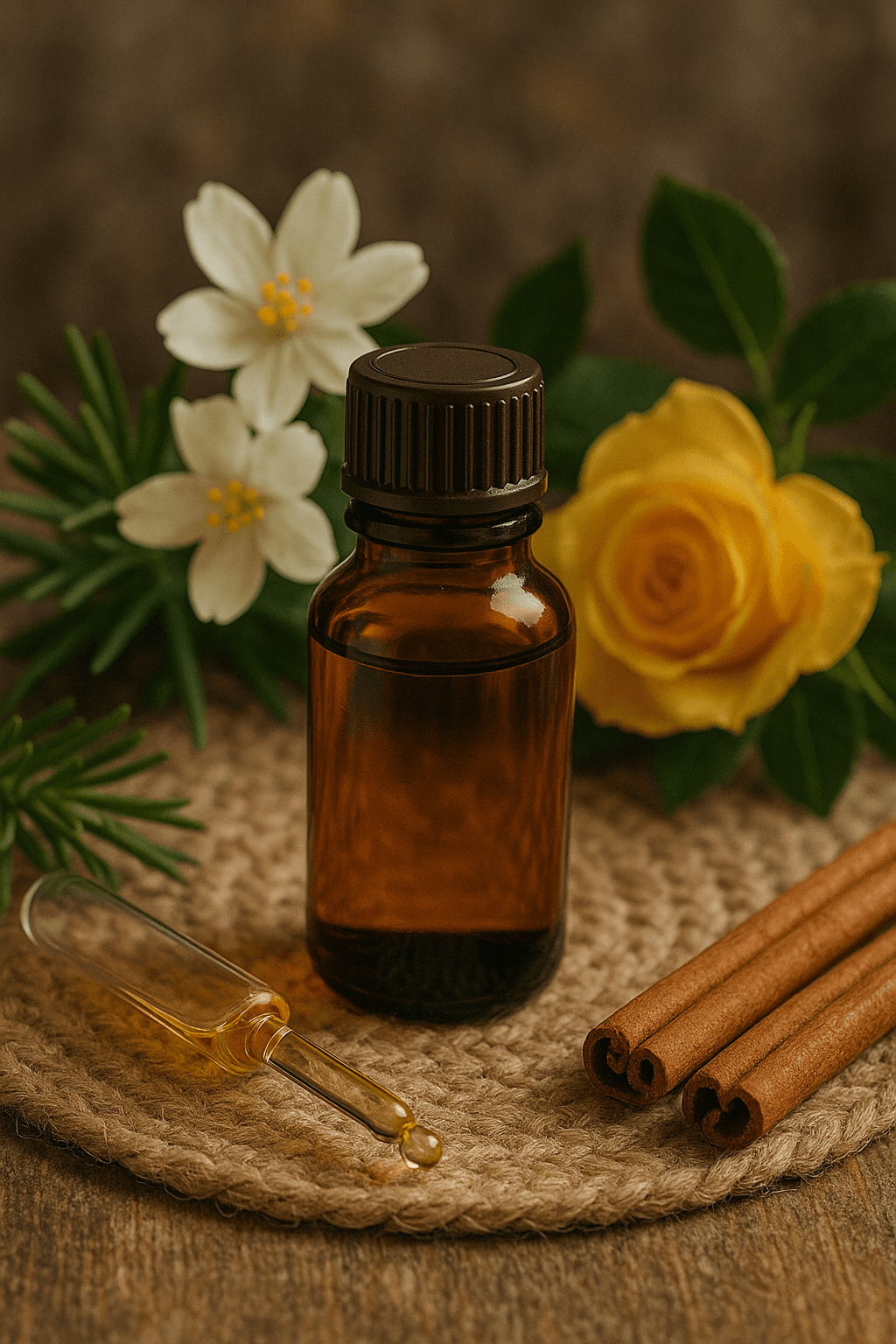
Essence
Area(s) of Use | Food Industry Aromatherapy Cleaning Products Cosmetics Perfumery | ||||||||
|---|---|---|---|---|---|---|---|---|---|
Use in Aromatherapy | Focus Enhancement Spiritual Relaxation Stress Reduction | ||||||||
Essence refers to substances obtained naturally from plants or through synthetic methods, characterized by pleasant fragrances and intense aromatic properties. The term “essence” derives from the Latin word “essentia,” which generally means “essence” or “core.” Today it is also used synonymously with “essential oil” or “aromatic oil.” However, the term “essential oil” can cause confusion; because it may also refer to certain fatty acids that cannot be synthesized by the body such as linoleic and linolenic acid such as.
The use of essences dates back to ancient times. In Mesopotamian, Ancient Egyptian, Chinese and Indian civilizations, essences were used in religious rituals, mummification, medical treatments and beauty practices. Today, essences are employed in various fields including food, pharmaceuticals, cosmetics, perfumery, cleaning products, animal feed, preservation and water products.
Essences typically contain a complex mixture of chemicals and are predominantly composed of volatile components. These include substances such as terpenes, alcohols, aldehydes, ketones, esters and phenols. Essences in liquid form at Room temperature are sensitive to light and heat; therefore, they are recommended to be stored in opaque and cool environments.
Essences are obtained through various extraction techniques applied naturally. The most common methods include distillation (especially steam distillation), cold pressing, solvent extraction and supercritical fluid extraction place. Essences can be extracted from different parts of plants such as leaf, flower, bark, root, fruit and seeds. For example, essences are commonly obtained from lavender flowers, lemon peel or cinnamon rind.
Essences derived from aromatic plants hold significant economic value in the international market. Approximately 10,000 plant species worldwide are used for this purpose, of which about 5,000 are commercially exploited. Türkiye, with its diverse range of species, possesses considerable potential in this field. In recent years, initiatives to utilize this biodiversity have increased in Türkiye, which is home to over 12,000 plant taxa house.
In Türkiye, essences are produced from plants such as oregano, sage, lavender, mint, anise, caraway and cumin, and are largely exported. In particular, Türkiye is among the leading countries in the trade of thyme essence, accounting for approximately 70–80 percent of global production. According to 2018 data, more than 100,000 tons of medicinal and aromatic plants were produced in Türkiye, with this figure showing an upward trend.
The growing demand for natural products has increased the use of essences across various sectors. Antibiotic resistance, environmental concerns and the pursuit of clean ingredients have led to the recognition of essences as natural alternatives in health, hygiene and food applications. For instance, in the poultry industry, essential oils are increasingly used as alternatives to synthetic additives due to their growth-promoting, antioxidant and antimicrobial properties.
Ataman Chemicals. "Esans; Bitkilerden çıkarılan veya kimya yoluyla elde edilen kokulu madde." Accessed April 18, 2025. https://www.atamanchemicals.com/fragrance_u23990/?lang=TR.
Öztürk, Ergin, and Ahmet Tekeli, ed. Esans Yağlar: Üretimi, Gıdada ve Hayvan Beslemede Kullanımı. Ankara: İksad Yayıncılık, 2021.

Essence
Area(s) of Use | Food Industry Aromatherapy Cleaning Products Cosmetics Perfumery | ||||||||
|---|---|---|---|---|---|---|---|---|---|
Use in Aromatherapy | Focus Enhancement Spiritual Relaxation Stress Reduction | ||||||||
Definition and Origin
Historical Development and Applications
Chemical and Physical Properties
Production Methods
Economic and Ecological Importance of Aromatic Plants
Essence Production and Trade in Türkiye
Current Role and Future Perspective