


This article was automatically translated from the original Turkish version.
+1 More
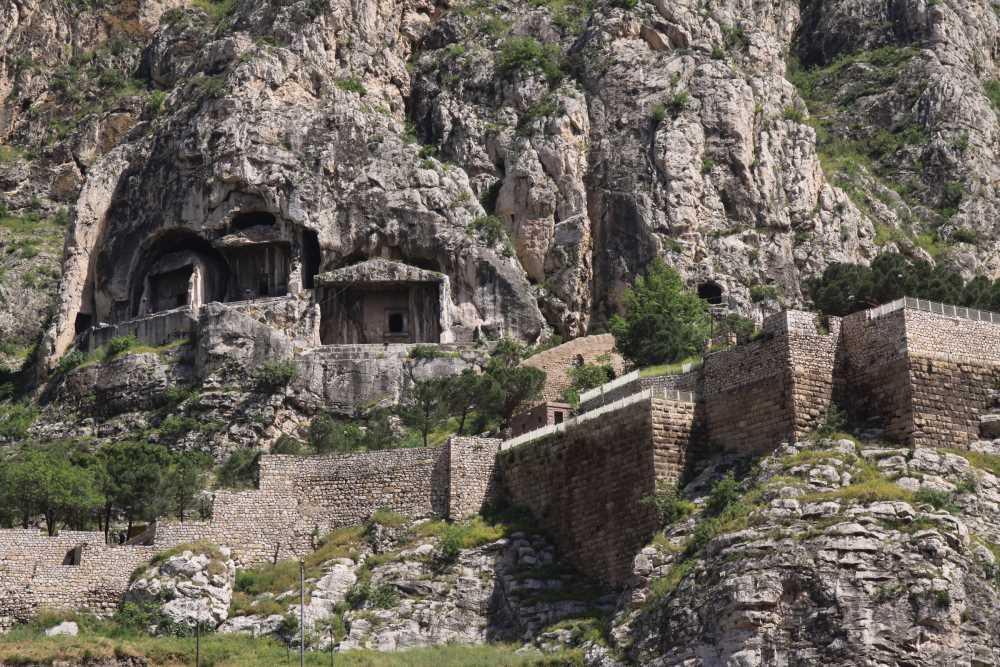
Royal Rock Tombs
Location | Amasya Türkiye | ||||||||
|---|---|---|---|---|---|---|---|---|---|
Period(s) | Hellenistic Period | ||||||||
Feature(s) | Rock tombs of the Kings of Pontus | ||||||||
UNESCO Status | Inscribed on the UNESCO World Heritage Tentative List in 2015 | ||||||||
King Kaya Tombs are monumental rock-cut structures located in the Amasya province of Türkiye, within the place region of Black Sea Region, dating back to the Hellenistic period Period. These tombs, belonging to the Kingdom of Pontus, were carved into the cliffs at the foot of Mount Harşena, commanding a dominant position over the Yeşilırmak valley.

Amasya Provincial Directorate of Culture and Tourism Archive
The King King Kaya Tombs, constructed for the Pontic kings who ruled from Amasya as their capital between 302 and 26 BCE, were carved vertically into the hard limestone cliffs approximately 30 meters above the base of Amasya Castle. As the capital of the Kingdom of Pontus, the southern slope of the city became the site of monumental rock-cut tombs, particularly in the area known as the Kızlar Sarayı of Harşena Castle, where five tombs belonging to Pontic kings—from the founder King Mithridates I Ktistes to King Pharnaces I—have been identified.
These monumental tombs were carved out of the rock in a reverse U-shape, with galleries separating each chamber.
Mount Harşena and the King Kaya Tombs of Pontus are among the natural and cultural sites accepted in 2015 into the UNESCO “Tentative List of World Heritage.” The Pontic Royal Necropolis is the first and only necropolis in the world exclusively associated with this dynasty. Tomb No. V is the last rock-cut tomb constructed during the Kingdom of Pontus. The tradition of rock-cut tomb construction ended in Amasya; it was not continued in the second capital, Sinop (183 BCE), and no second royal burial site for the dynasty has been discovered to date. The King Kaya Tombs are monumental tombs of Anatolia and are regarded among the finest examples of the rock-cut tomb tradition worldwide.
Menç, Hüseyin. Tarih İçinde Amasya. T.C. Amasya Belediyesi Kültür Yayınları, 2014.
“Amasya Harşena Mountain and Pontic Royal Rock Tombs onUNESCO Dünya Heritage Tentative List.” General Directorate of Cultural Heritage and Museums, Ministry of Culture and Tourism of the Republic of Türkiye. Accessed February 18, 2025. https://kvmgm.ktb.gov.tr/TR-137749/amasya-harsena-dagi-ve-pontus-kral-kaya-mezarlari-unesco-dunya-miras-gecici-listesinde.html.
“Kral Kaya Mezarları.” T.C. Kültür ve Turizm Bakanlığı Amasya İl Kültür ve Turizm Müdürlüğü. Accessed February 18, 2025. https://amasya.ktb.gov.tr/TR-59519/kral-kaya-mezarlari.html.
“Tarihî Kral Kaya Mezarları.” Kültür Portalı. T.C. Kültür ve Turizm Bakanlığı. Accessed February 18, 2025. https://www.kulturportali.gov.tr/turkiye/amasya/gezilecekyer/kralkaya-mezarlari.

Royal Rock Tombs
Location | Amasya Türkiye | ||||||||
|---|---|---|---|---|---|---|---|---|---|
Period(s) | Hellenistic Period | ||||||||
Feature(s) | Rock tombs of the Kings of Pontus | ||||||||
UNESCO Status | Inscribed on the UNESCO World Heritage Tentative List in 2015 | ||||||||
History and Architecture
Significance