


Babası | Nazmi Efendi | ||||||||
|---|---|---|---|---|---|---|---|---|---|
Eş | Mehmet Zekeriya Sertel | ||||||||
Annesi | Atiye Hanım | ||||||||
Ölüm tarihi | 1968-02-09 | ||||||||
Doğum tarihi | 1895-03-15 | ||||||||
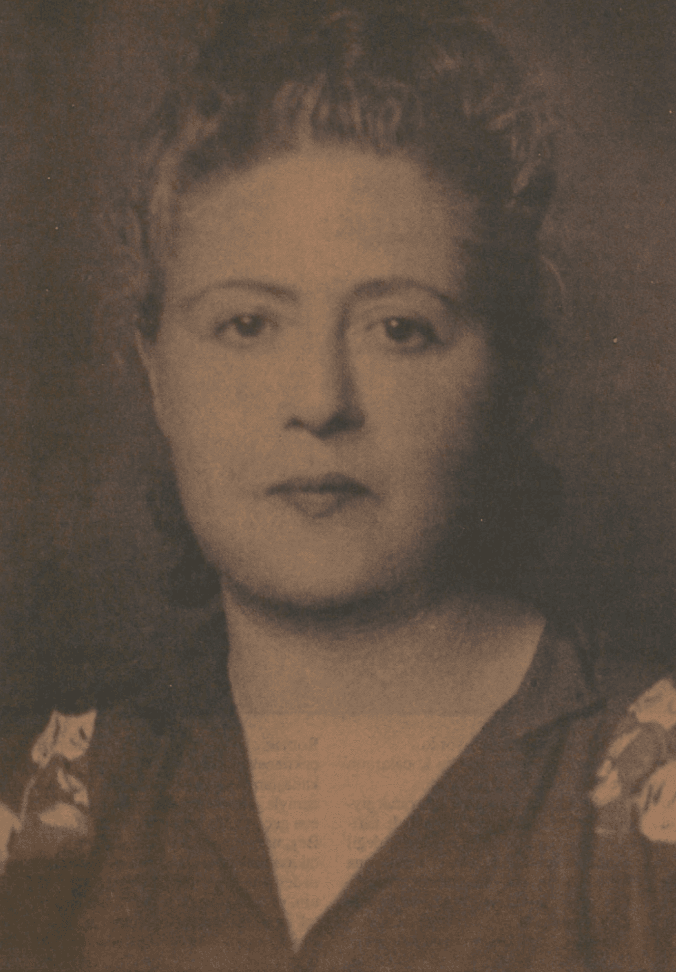
Sabiha Sertel was born in Salonica in 1895. Her family belonged to the Dönme community of Salonica. She began her education in Salonica, attending Terakki School, the French School, and the İttihat ve Terakki İdadisi. In her youth, through the Tefeyyüz Cemiyeti, which she co-founded with friends, she took private lessons to develop her knowledge in fields such as law, sociology, logic, and economics. An article she wrote during this period, titled “Kadın in Ottoman Society,” was selected as the best article of the year. In 1913, Sertel moved with her family to Istanbul, and in 1915 she married journalist Zekeriya Sertel. In 1919, to further her education, she traveled to the United States with her husband and studied sociology and social services at the School of Social Work affiliated with Columbia University.
Sabiha Sertel’s journalism career began while she was still a secondary school student, when she published poems in school magazines. Her first major professional step came in 1919 with the launch of Büyük Mecmua, where she wrote on women’s rights, equality, and social transformation. In 1924, she and her husband began publishing Resimli Ay, where under the pseudonym “Cici Anne” she wrote articles based on letters concerning gender relations, marriage, and social roles. During the same years, she was also involved in publishing activities for magazines such as Sevimli Ay, Resimli Herşey, and Projektör.
Sertel’s writings focused especially on women’s rights, class struggle, and social equality. In publications such as Resimli Ay and the newspaper Tan, she advocated for women’s active participation in political, social, and economic life. Due to political pressure and censorship conditions of the era, she was prosecuted multiple times, particularly facing arrests in the 1930s and 1940s for criticizing the regime. In her 1936 novel Çitra Roy ve Babası, she explored themes of individual and social freedom. In 1945, she was detained again following an attack on the Tan printing press.
In 1950, amid increasing political pressure, Sabiha Sertel left Türkiye and lived in cities including Paris, Rome, Budapest, Leipzig, Prague, and Moscow. During this period, she worked for various radio stations and assumed responsibilities within the overseas organizations of the Communist Party of Türkiye. In the 1960s, she published memoirs titled İlericilik-Gericilik Kavgasında Tevfik Fikret, Nazım Hikmet’ten ve Sabahattin Ali’den Anılar, and Roman Gibi. She also translated key Marxist classics into Turkish, introducing works by Kautsky, Adoratski, Babel, Lenin, and Stalin to Turkish readers. Sertel died of lung cancer in Baku on 2 September 1968.
Books:
Translated Works:
Temizsu, Mustafa. “Sertel Sabiha.” *Türk Edebiyatı İsimler Sözlüğü*. Ahmet Yesevi Üniversitesi, TEİS. Date Published: June 10, 2019, Updated: December 20, 2020. Accessed June 23, 2025. https://teis.yesevi.edu.tr/madde-detay/sertel-sabiha.
Türk, Emine Bilgehan. “Türk Basın Tarihinin İlk Kadın Yüzlerinden: Sabiha Zekeriya Sertel.” *Karadeniz İncelemeleri Dergisi* 14, no. 27 (October 2019): 261–78. https://dergipark.org.tr/tr/pub/kid/issue/49497/633244
Çatal, Barış. “Sabiha Sertel (1895–1968).” Atatürk Ansiklopedisi. Last updated November 14, 2022. Accessed June 21, 2025. https://ataturkansiklopedisi.gov.tr/detay/1755/Sabiha-Sertel-%281895-1968%29.

Babası | Nazmi Efendi | ||||||||
|---|---|---|---|---|---|---|---|---|---|
Eş | Mehmet Zekeriya Sertel | ||||||||
Annesi | Atiye Hanım | ||||||||
Ölüm tarihi | 1968-02-09 | ||||||||
Doğum tarihi | 1895-03-15 | ||||||||
Journalistic Activities and Publishing Work
Political Stance and Contributions to Women’s Rights
Life Abroad and Final Years
Publications and Translations