

M. Sabri Koz, known for his research in ethnology, folklore studies, and literary analysis, has emerged as both a collector and researcher within the history of Turkish culture. Over a career spanning more than fifty years, he has contributed extensively to publications, compilations, and scholarly activities on folk literature, manuscript works, cönks, antiquarian culture, and Ottoman-era handwritten texts. With a career ranging from teaching to publishing consultancy, Koz has taken significant steps toward preserving and documenting Turkish folk culture.
M. Sabri Koz was born on 11 September 1950 in the village of Kırkgöz, district of Divriği, Sivas. He completed his primary and secondary education in Divriği and graduated from Sivas Teacher Training School in 1968. He then earned his degree in Turkish Language from the Istanbul Institute of Education, qualifying as a Turkish language teacher. He completed his undergraduate studies in 1991 at the Department of Turkish Language and Literature at Anadolu University. He worked as a teacher and administrator in Sakarya, Kahramanmaraş, and Istanbul, retiring in 1997.
From the beginning of his teaching career, Koz turned his focus to folk literature and folklore. Throughout his professional life, he conducted research on the Turkish language, culture, and folklore. Between 1990 and 1998, he worked in the field of antiquarian books, specializing in rare and old publications. From 1998 to 1999, he served as a consultant and editor at the Pertev Naili Boratav Archive within the Information and Documentation Center of the Turkish Economic and Social History Foundation. During this period, he contributed to rendering documents related to folk culture into contemporary Turkish. He later worked as a consultant and editor at Yapı Kredi Publications.
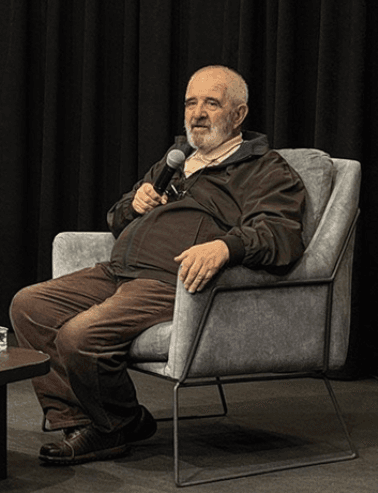
As a guest at the Edebiyat Durağı program organized by Esenler Municipality in 2025, Sabri Koz emphasized that folklore is an indispensable cultural heritage that must not be severed from the nation. He stated that while many assume folk culture consists only of games and folk songs, everything created by the people as part of their culture falls within the scope of folklore. He noted that Turkism movements, which began after the Second Constitutional Era, played a crucial role in shaping national consciousness, and that during the early years of the Republic, teachers were assigned the task of cultural research. He identified himself as one of the second-generation researchers working along this line.
During his student years, Koz studied under teachers such as Behçet Necatigil, Orhan Şaik Gökyay, Cemil Yener, and Enver Naci Gökşen. Guided by Necatigil, he shifted his focus from poetry to the field of folk culture, which led him to prioritize ethnological research.
Sabri Koz has stated that manuscripts and cönks serve as memory elements in the history of Turkish culture. In a 2018 discussion titled “Cönks, Manuscripts, Stories” held in Kadıköy, he noted that despite all forms of destruction and damage, Turkey remains a “paradise of handwritten books.” Although many works have been lost due to fire, flood, deliberate destruction, and removal abroad, he affirmed that old books in Turkey have not disappeared and that undiscovered handwritten manuscripts still exist in various regions of Anatolia.
He defined cönks as notebooks prepared by village communities, cut lengthwise and stitched by hand, and emphasized that these works are among the primary sources documenting the literary production of the people. He noted that the interest in manuscripts developed alongside antiquarian culture and that booksellers serve as vital bridges in cultural transmission.
The “Anadolu Âşıkları” series, edited by Sabri Koz, has been published by Türkiye İş Bankası Kültür Yayınları. The series focuses on publishing texts compiled from the notebooks of folklorist Ahmet Şükrü Esen. Koz stated that Esen’s archive holds the value of a treasure for Turkish folklore and that their work follows the methodologies of Pertev Naili Boratav. The first volume of the series is titled “Karacaoğlan”, prepared by Prof. Dr. İsmail Görkem. This work presents previously unpublished poems and variant versions of known texts, establishing a new source for folk literature research.
Koz also indicated that subsequent volumes of the series will feature folk poets such as Dadaloğlu, Erzurumlu Emrah, Bolulu Dertli, Tokatlı Nûrî, and Develili Seyrânî. The project’s aim is to republish collections made in the 1920s according to modern scholarly standards and make them accessible to contemporary researchers.
Sabri Koz has published numerous books on ethnology, food culture, folk tales, humor, and oral traditions. His works include “Nasreddin Hoca Kitabı,” “Yağmur Duası Kitabı,” “Karacaoğlan Kitabı,” “Köroğlu Kitabı,” “Yemek Kitabı,” “Gül Ağacı Boy Vermez,” “Türk Kahvesi,” and “Geredeli Figanî.”
In the field of children’s literature, he wrote approximately fifty books under the pseudonyms Sayit Sandaş, Ali Güzelbahçeli, and Emre Gülbalı. He has also authored nearly a thousand entries in reference works such as the Türk Dili ve Edebiyatı Ansiklopedisi, AnaBritannica, and Dünden Bugüne İstanbul Ansiklopedisi. He has also contributed to the TDV İslâm Ansiklopedisi.
Sabri Koz has been honored by various institutions for his services to folk culture. He received the İhsan Hınçer Turkish Folklore Service Award in 1986, the TROYA Derneği Pertev Naili Boratav Award in 2003, the Sadi Yaver Ataman Turkish Culture Service Award in 2006, the Hüseyin Gazi Culture and Art Foundation Turkish Folk Culture Service Award in 2008, the UNİMA National Center Award in 2011, the ESKADER Award in 2015, and the 26th Motif Ethnology Award in 2023.
Koz has argued that ethnology is not merely about the past but about understanding living cultural continuity. He emphasized that folklore encompasses all material and spiritual elements created by the people, and that teachers, writers, and researchers bear the responsibility of preserving this heritage. This perspective has extended his work beyond the confines of academia, transforming cultural transmission into a social mission.

Life and Education
Professional Work and Folklore Research
Edebiyat Durağı and Folklore Perspectives
Views on Manuscripts and Cönks
The “Anadolu Âşıkları” Series and the Ahmet Şükrü Esen Archive
Works and Publishing Activities
Awards and Contributions
Concept of Cultural Heritage