



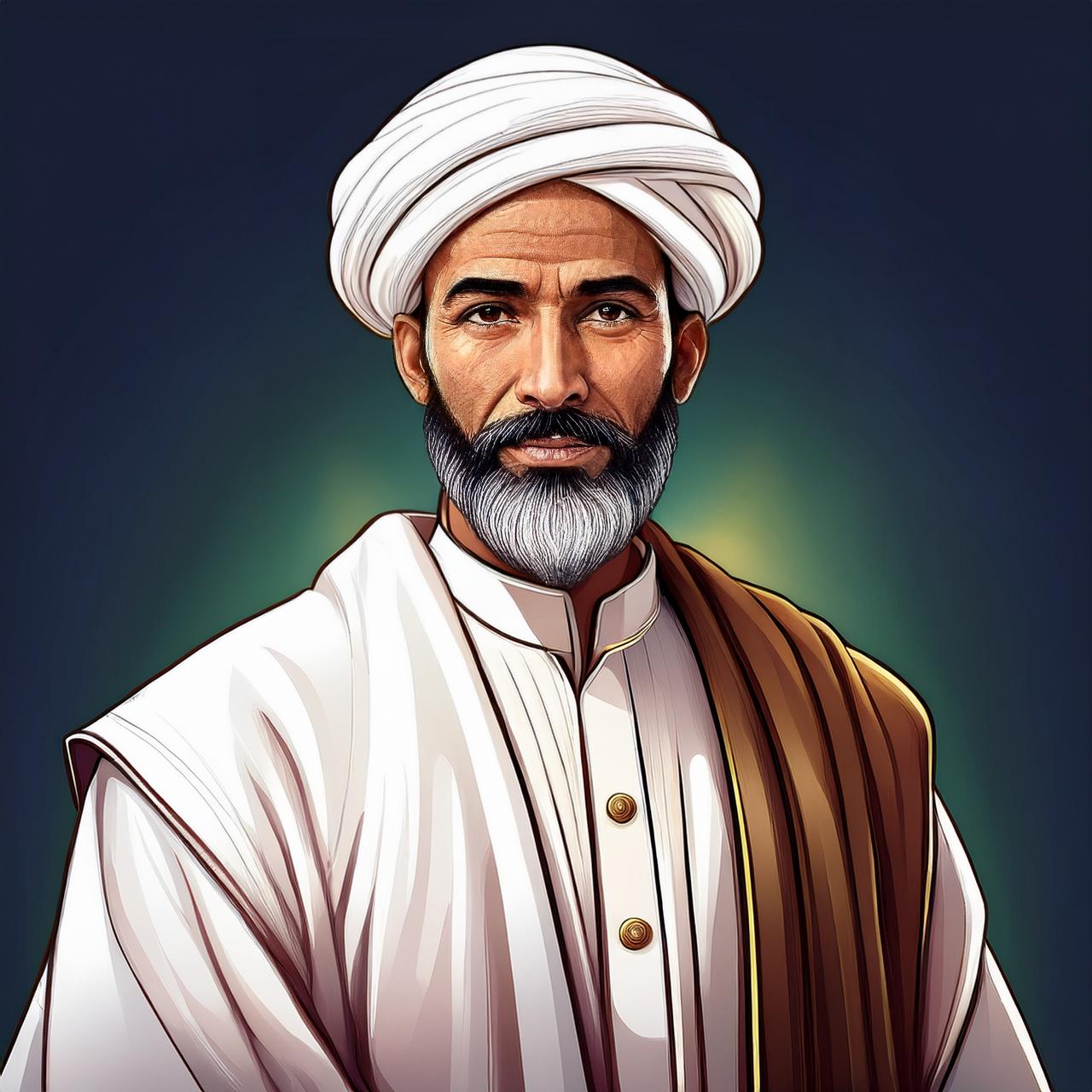
Sadeddin İbrâhim b. Abdülazîz es-Sülemî
Birth | Muharram 583/March 1187 | ||||||||
|---|---|---|---|---|---|---|---|---|---|
Date of Death | Jumada II 644/October-November 1246 | ||||||||
Babası | Muvaffakuddin Abdülazîz | ||||||||
Place of Birth and Death | Damascus | ||||||||
Positions Held | Lecturer, Chief Physician | ||||||||
Monarchs Associated with | al-Malik al-Ashraf Musa | ||||||||
Institution Served | Damascus Hanbali Madrasa, Nuri Bimaristanı (Great Bimaristan) | ||||||||
Abu Ishaq Ibrahim ibn Abd al-Aziz ibn Abd al-Jabbar ibn Abu Muhammad as-Sulami, known by the title Sadeddin, was one of the leading jurists and physicians of the sixth and seventh centuries AH. Like his father, Muvaffaq al-Din as-Sulami, he distinguished himself in scholarship, ethics, and piety, inheriting largely his father’s character, knowledge, and professional expertise.
He was born in Muharram 583/March 1187 in Damascus.
According to sources, Sadeddin was well-versed in jurisprudence and religious sciences. During his time in Damascus, he spent the months of Ramadan in i’tikaf at the mosque, remaining silent throughout this period. He adopted a ascetic and pious lifestyle.
He also received comprehensive and profound training in medicine, mastering both the theoretical foundations and practical applications of the field with great strength. Sadeddin, recognized as one of the most distinguished physicians of his era, consistently maintained his scholarly and professional dedication throughout his life. His intellectual excellence extended beyond the individual level and became institutionalized through public lecture circles that benefited many students.
Sadeddin was the founder of the Hanbali Madrasa built near Suq al-Kama in Damascus. This madrasa was constructed during the reign of al-Malik al-Ashraf Musa (d. 635/1237) by order of the Abbasid caliph al-Mustasim-Billah (d. 656/1258). In addition to his activities at the madrasa, he served in state medical roles: first at the famous Bimaristan built by Nur al-Din Mahmud Zengi, and later in the service of al-Malik al-Ashraf Abu al-Fath Musa ibn Abu Bakr ibn Ayyub, accompanying him to the eastern provinces. He gained great prestige at court and was deemed worthy of generous endowments and a high salary.
When al-Malik al-Ashraf (d. 635/1237) arrived in Damascus in Shawwal 626/June-July 1229 and took over the city from al-Malik al-Nasir Dawud (d. 656/1258), Sadeddin also came to Damascus with him and remained there. He was appointed chief physician by the sultan and held this position until al-Malik al-Ashraf’s death.
In the subsequent period, Sadeddin continued to live in Damascus and established regular lecture circles for those engaged in medical studies. He was widely revered in society for his scholarship and piety. He died in Damascus in Jumada I 644/October or November 1246.
The poet Sharif al-Bakri of his time composed the following lines about him:
"The subtle physician, whose excellence is so refined... Even the healthy would wish to fall ill just to visit him.
İbn Ebî Useybia, Muvaffakuddîn Ebü’l-Abbas Ahmed b. el-Kâsım b. Halîfe b. Yûnus es-Sa’dî el-Hazrecî. Uyûnu’l-Enbâ fî Tabakâti’l-Etıbba. thk. Nizâr Rızâ. Beyrut, 1965.
İsa, Ahmed. Tarihu’l-Bimaristânât fi’l-İslâm. Daru’r-Raidi’l-Arabî. Beyrut 1981.

Sadeddin İbrâhim b. Abdülazîz es-Sülemî
Birth | Muharram 583/March 1187 | ||||||||
|---|---|---|---|---|---|---|---|---|---|
Date of Death | Jumada II 644/October-November 1246 | ||||||||
Babası | Muvaffakuddin Abdülazîz | ||||||||
Place of Birth and Death | Damascus | ||||||||
Positions Held | Lecturer, Chief Physician | ||||||||
Monarchs Associated with | al-Malik al-Ashraf Musa | ||||||||
Institution Served | Damascus Hanbali Madrasa, Nuri Bimaristanı (Great Bimaristan) | ||||||||
Areas of Interest
Positions Held