This article was automatically translated from the original Turkish version.
+1 More
Type of Geographical İndication | Mahreç Sign | ||||||||
|---|---|---|---|---|---|---|---|---|---|
Registration Number | 1391 | ||||||||
Registration Date | 19.06.2023 | ||||||||
Product / Product Group(s) | Handicraft products other than carpets kilims and textiles | ||||||||
Province(s) | Karaman | ||||||||
Applicant/Registrant(s) | Sarıveliler District Directorate of Agriculture and Forestry | ||||||||
Sarıveliler traditional clothing is a traditional attire composed of women’s garments unique to the Sarıveliler district of Karaman Province, shaped within historical and cultural contexts. Registered as a geographical indication under Law No. 6769 on Industrial Property, these garments are produced exclusively within the boundaries of Sarıveliler district and reflect the cultural memory of the local community.
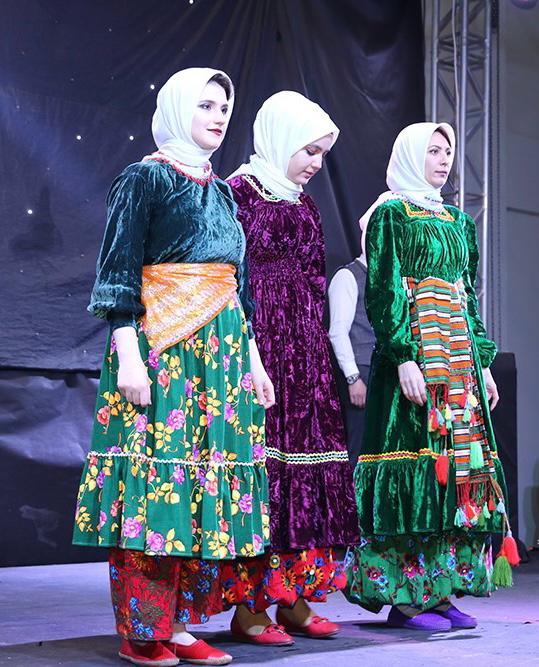
Sarıveliler Traditional Clothing (Karaman Governorate)
Sarıveliler, formerly known as Başdere, is a settlement documented since the 1300s. Information from 1344 endowment records related to the Tol Medrese indicates that the region was established by Turkmen tribes and that the Yöruk way of life continues to this day. Pastoral activities conducted on high plateaus brought about a lifestyle deeply intertwined with the colors of nature, which in turn influenced the palette of Sarıveliler traditional clothing.
Sarıveliler traditional clothing is worn by women on special occasions such as social ceremonies, national celebrations, weddings, and holidays. The outfit consists of the following elements:
These components have been passed down through cultural transmission from the Karamanoğlu Beylik period to the present day and are distinctive features of the region.
The garments are produced on order in Sarıveliler district using skilled traditional techniques. Approximately 100 to 150 sets are sewn annually. The production process includes the following techniques:
Production of Sarıveliler traditional clothing is permitted only within Sarıveliler district. This restriction is legally protected by geographical indication status to preserve the cultural authenticity of the product. Inspections are conducted at least once annually under the coordination of the Sarıveliler District Directorate of Agriculture and Forestry. Inspection criteria include fabric type, color harmony, embellishment style, and verification of production location.
Karaman Valiliği. "Sarıveliler Yöresel Giysileri." Accessed October 19, 2025. http://www.karaman.gov.tr/sariveliler-yoresel-giysileri.
Turk Patent and Trademark Office. "Sarıveliler Traditional Clothing Geographical Indication Registration Certificate." Turk Patent and Trademark Office. Accessed October 19, 2025. https://ci.turkpatent.gov.tr/Files/GeographicalSigns/37df0ccc-0a94-460a-8391-dec701cc8747.pdf.
Turkish Patent and Trademark Office. "Sarıveliler Yöresel Giysileri." *Geographical Indications Portal.* Accessed October 19, 2025. https://ci.turkpatent.gov.tr/cografi-isaretler/detay/7504.

Type of Geographical İndication | Mahreç Sign | ||||||||
|---|---|---|---|---|---|---|---|---|---|
Registration Number | 1391 | ||||||||
Registration Date | 19.06.2023 | ||||||||
Product / Product Group(s) | Handicraft products other than carpets kilims and textiles | ||||||||
Province(s) | Karaman | ||||||||
Applicant/Registrant(s) | Sarıveliler District Directorate of Agriculture and Forestry | ||||||||
No Discussion Added Yet
Start discussion for "Sarıveli Regional Clothing" article
Historical Background
Garment Components
Production Method
Geographical Boundary and Oversight