This article was automatically translated from the original Turkish version.
+1 More
Registration Number | 667 | ||||||||
|---|---|---|---|---|---|---|---|---|---|
Registration Date | 10.02.2021 | ||||||||
Application Number | C2018/224 | ||||||||
Application Date | 03.12.2018 | ||||||||
Name of the Geographical Indication | Sason Strawberry | ||||||||
Product / Product Group(s) | Strawberry / Processed and unprocessed fruits and vegetables and mushrooms | ||||||||
Type of Geographical Indication | Place of origin | ||||||||
Applicant/Registrant(s) | Batman Chamber of Commerce and Industry | ||||||||
Address of the Registrant | GAP Neighborhood Human Rights Boulevard No:3 BATMAN | ||||||||
Geographical Boundary | Sason District Batman Province | ||||||||
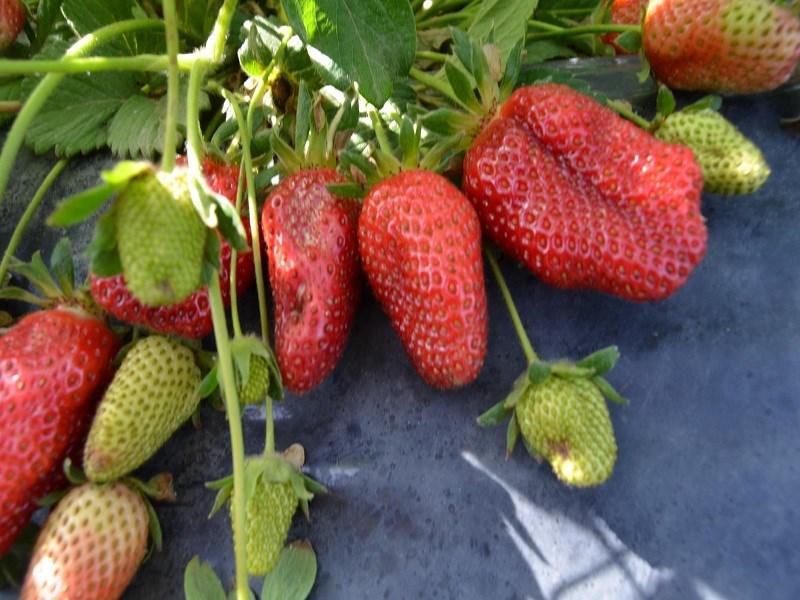
Sason strawberry is a registered specialty strawberry variety cultivated in the Sason district of Batman Province, using the San Andreas, Kabarla, and Albion cultivars. Grown in the region surrounding the Sason Stream, where the well-drained and light soil structure provides ideal conditions for strawberry production, Sason strawberry is distinguished by its mild tart aroma, vivid color, and unique size. The product has a pH value ranging from 3.59 to 3.69; this low pH contributes to an extended shelf life. The soluble solids content, measured at 7.75–8.35 Brix, indicates suitability for industrial processing.
Sason strawberry is produced from three distinct strawberry cultivars in the Sason district: San Andreas, Kabarla, and Albion. Production is concentrated primarily in the well-drained, light-textured soils around the Sason Stream. These soil characteristics provide optimal growing conditions for strawberries. The fruit’s mild tart aroma, color, and size vary slightly among cultivars, forming the defining characteristics of the product.
The physical measurements of Sason strawberry cultivars are as follows:
Color measurements of the strawberries are conducted using a Hunter colorimeter, yielding the following values:
In terms of chemical composition, Sason strawberry has a high phenolic content:
In addition, the pH of the product ranges from 3.59 to 3.69, confirming its low acidity. This low pH enhances suitability for processing and extends shelf life. The soluble solids content, measured at 7.75–8.35 Brix, confirms its suitability for industrial applications.
Sason strawberry production is carried out using two distinct methods: open-field cultivation and protected cultivation. Protected cultivation offers the advantage of early production and minimizes risks from natural factors such as rain or hail. This method is applied in glass or plastic greenhouses, as well as in low or high tunnels.
Before planting, strawberry seedlings are protected against soil-borne diseases using a method called “solarization.” In this process, the soil is moistened during summer months and then covered with transparent plastic sheeting to trap solar energy. This heating treatment reduces populations of harmful organisms.
Seedlings grow during autumn and summer, enter the flowering stage in April, and begin fruiting in May. In the Sason district, black plastic mulch with UV additives is used. This practice controls weed growth, reduces irrigation frequency, and ensures fruit cleanliness and prevention of rot.
Irrigation methods include furrow irrigation, sprinkling, and drip irrigation. Harvesting periods vary by method: January to July for protected cultivation and May to October for open-field cultivation. Harvesting is conducted during the cooler hours of the day. After harvest, the fruit undergoes pre-cooling and is stored in cold storage rooms. Packaging uses containers not exceeding 0.5 kilograms in weight and featuring six perforations. Sason strawberry can be stored for 5–7 days at 0 °C with 90–95% relative humidity.
The Sason strawberry is packaged with its origin emblem, the inscription “Sason Strawberry,” and the relevant logo displayed on the packaging. If these elements cannot be printed on the packaging, they must be clearly displayed at the point of sale.
The production process of Sason strawberry is monitored by a four-member inspection board composed of representatives from Batman University, Batman Chamber of Commerce and Industry, Batman Municipality, and the Batman Provincial Directorate of Agriculture and Forestry, coordinated by the Batman Chamber of Commerce and Industry. Inspections are conducted at least twice annually during production and harvest seasons. Additional inspections may be carried out as needed or upon complaint.
Inspection criteria include cultivar conformity, irrigation techniques, harvest and storage conditions, mulching practices, physical and chemical analyses, and compliance with labeling standards. Consultation or services may be obtained from public institutions or experts during the inspection process. Legal proceedings and protection of registration rights are the responsibility of the registering authority.
Sason Kaymakamlığı. "Meşhur Sason Çileği." Accessed July 18, 2025. http://www.sason.gov.tr/meshur-sason-cilegi.
Turkish Patent and Trademark Office. "Sason Çileği." Accessed July 18, 2025. https://ci.turkpatent.gov.tr/cografi-isaretler/detay/38663.
Turkish Patent and Trademark Office. *Coğrafi İşaret Tescil Belgesi – Sason Çileği*. PDF. Accessed July 18, 2025. https://ci.turkpatent.gov.tr/Files/GeographicalSigns/7e3f1b9b-9233-4872-821f-ca3a689a4a4c.pdf.

Registration Number | 667 | ||||||||
|---|---|---|---|---|---|---|---|---|---|
Registration Date | 10.02.2021 | ||||||||
Application Number | C2018/224 | ||||||||
Application Date | 03.12.2018 | ||||||||
Name of the Geographical Indication | Sason Strawberry | ||||||||
Product / Product Group(s) | Strawberry / Processed and unprocessed fruits and vegetables and mushrooms | ||||||||
Type of Geographical Indication | Place of origin | ||||||||
Applicant/Registrant(s) | Batman Chamber of Commerce and Industry | ||||||||
Address of the Registrant | GAP Neighborhood Human Rights Boulevard No:3 BATMAN | ||||||||
Geographical Boundary | Sason District Batman Province | ||||||||
Cultivars and Geographic Suitability
Physical and Chemical Properties
Production Method
Usage and Packaging
Monitoring and Implementation