

This article was automatically translated from the original Turkish version.
+2 More
Location | Vienna Austria | ||||||||
|---|---|---|---|---|---|---|---|---|---|
Year of Construction | 1642 | ||||||||
Architectural Style(s) | Baroque | ||||||||
UNESCO Status | UNESCO World Heritage List, 1996 | ||||||||
Usage | Museum | ||||||||
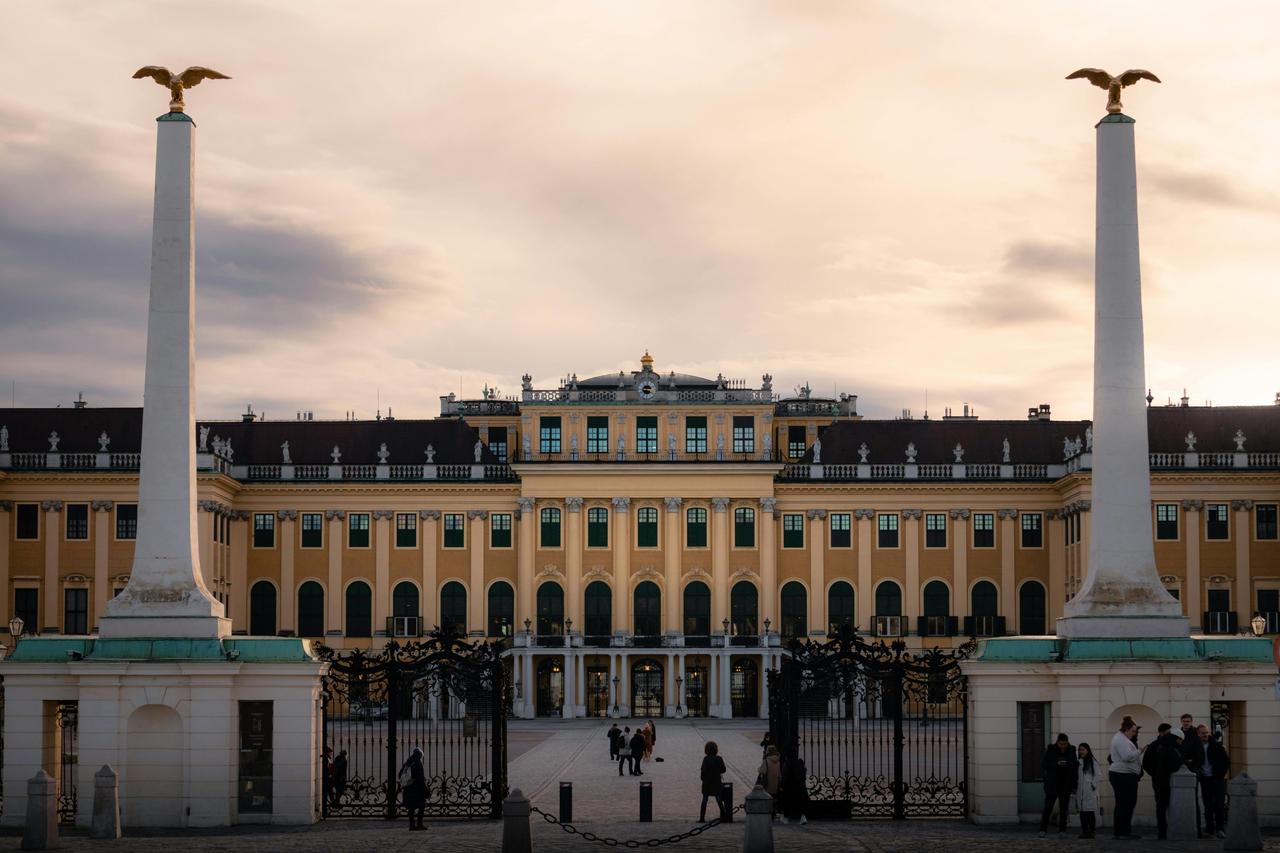
Schönbrunn Palace is a historic palace and garden complex listed on the UNESCO World Heritage List, renowned for its Baroque architecture and expansive landscape design. Originally constructed as the Habsburg dynasty’s summer residence, the site embodies a cultural landscape that reveals the evolving tastes and political representation of successive Habsburg rulers through centuries of transformation. It was inscribed on the UNESCO World Heritage List in 1996. Located in Vienna, the palace is now open to the public as a museum.
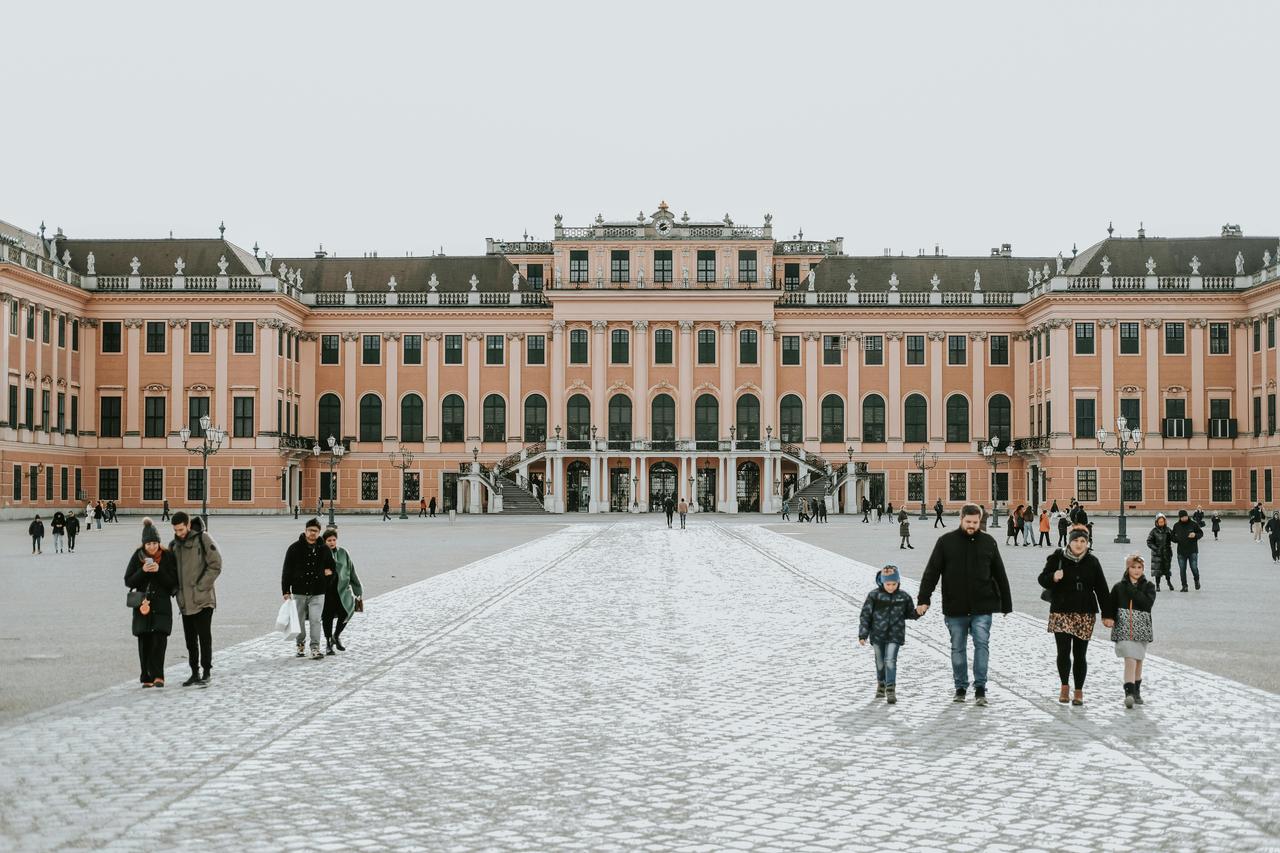
Schönbrunn Palace (Pexels)
The origins of Schönbrunn Palace date back to the 17th century. It was first designed in 1642 as a rural hunting lodge for Empress Eleonora Gonzaga, wife of Holy Roman Emperor Ferdinand III. At that time, the structure was modest in scale and far removed from the grand Baroque appearance it would later assume.
In the 18th century, particularly during the reign of Empress Maria Theresa, Schönbrunn Palace underwent a major transformation. Maria Theresa made Schönbrunn the principal residence of the Habsburg monarchy and commissioned its renovation to reflect the opulence of the Baroque style of the era. During this period, the palace’s architectural character and gardens were expanded and shaped to embody imperial grandeur.
In the 19th century, Schönbrunn continued to serve as the official summer residence of the Habsburg monarchy. Throughout this century, the palace and its surrounding gardens were maintained and restored according to contemporary aesthetic standards, while retaining their symbolic role as representations of imperial power and continuity.
Serving as the Habsburg dynasty’s residence for centuries, Schönbrunn retained its status as an imperial palace until the early 20th century. Today, the palace and its gardens are recognized by UNESCO as one of Europe’s best-preserved historic complexes, celebrated for their Baroque architecture.
During the reign of Maria Theresa in the 18th century, the gardens were laid out according to Baroque landscape principles, with monumental features such as the Great Parterre and the Neptune Fountain at its terminus. During this period, the gardens became not merely a visual arrangement but an integral component of imperial representation.
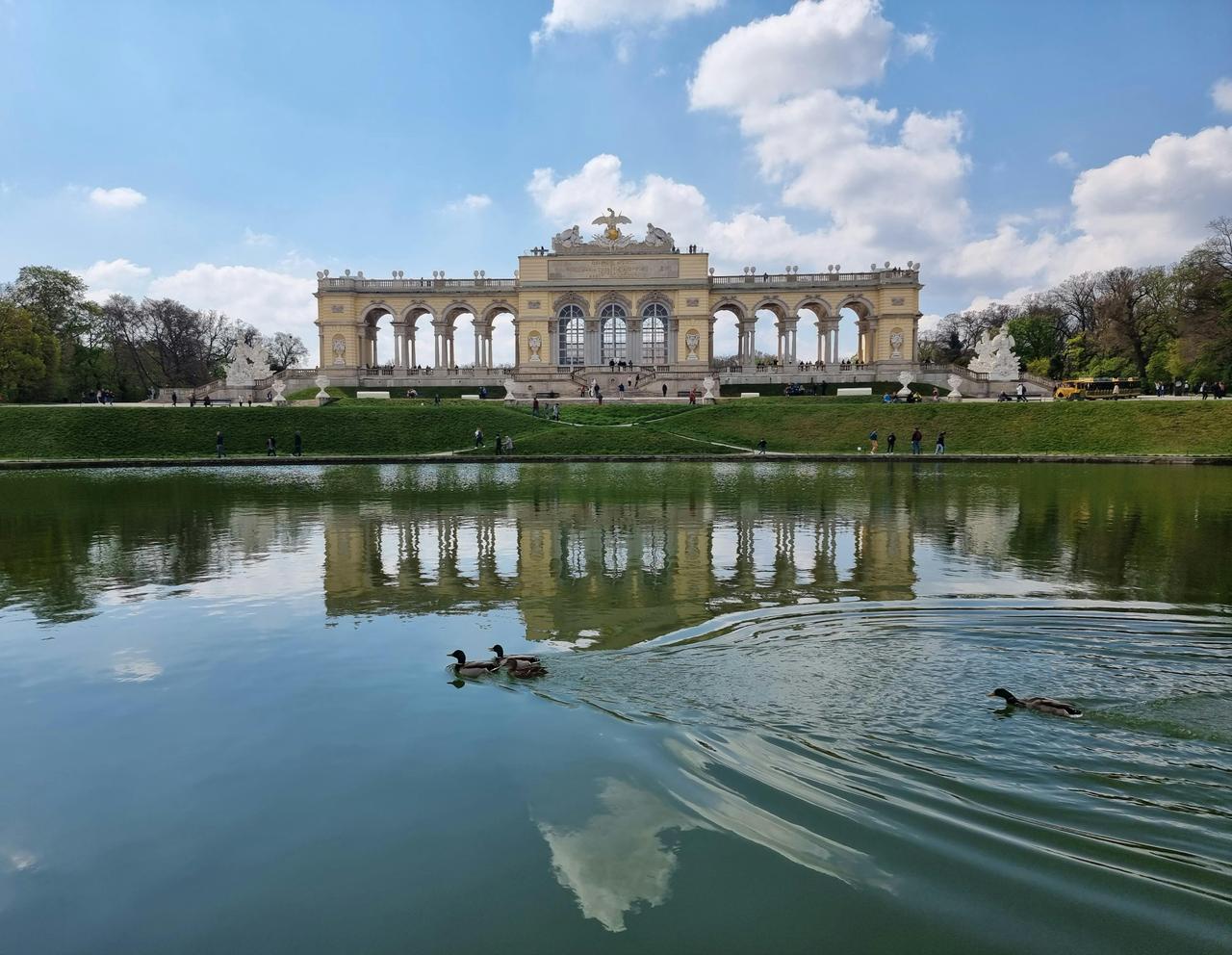
Schönbrunn Palace Gardens (Pexels)
In the 19th century, the gardens were restructured and restored. Changes were made in line with prevailing aesthetic preferences, and the park was opened to the public, transforming it into a space that strengthened the connection between the empire and its people.
Today, the gardens remain open to the public year-round, functioning both as a historic landscape heritage and as a vital recreational area for the people of Vienna.
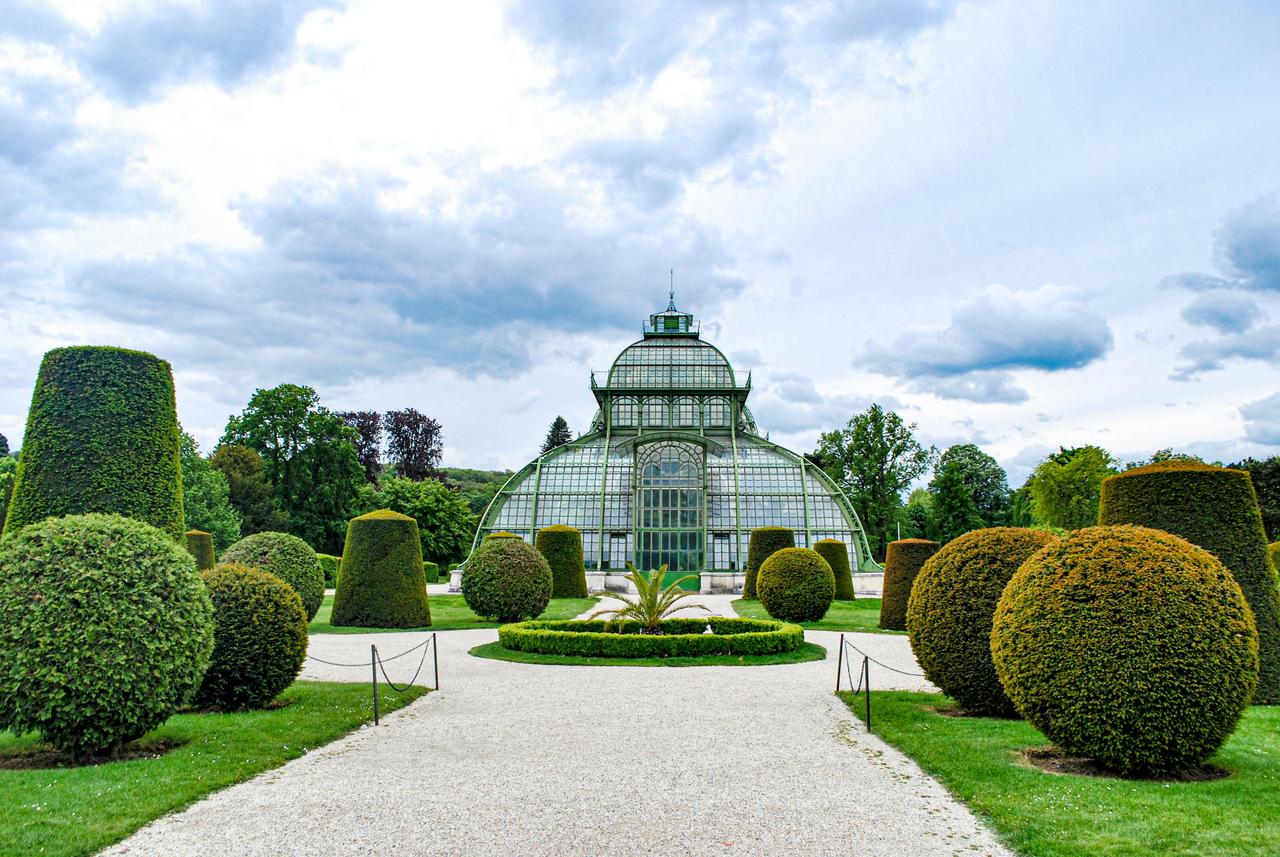
Schönbrunn Palace Gardens (Pexels)
The central axis of Schönbrunn’s garden design is formed by the Great Parterre and the monumental water features that crown it. The main basin of the Neptune Fountain was excavated in 1776, and the work was completed four years later. The composition features a central basin measuring approximately 100 by 50 meters, flanked by cascading pools. The central figure of Neptune, depicted in a shell-shaped chariot, is accompanied by a nymph and the sea goddess Thetis, forming the upper tier; above the cascades, four groups of Tritons represent Neptune’s retinue. The total height from the base of the composition to the top of the Neptune statue is approximately 23 meters.
Within the garden’s overall design, the Neptune Fountain serves as the central element of the Baroque representational language, emphasizing the main axis and the perspective of the parterre. This monumental water feature reinforces the symmetrical flow of the landscape and creates a visual focal point in the relationship between palace and garden.

Neptune Fountain (Pexels)
Ownership and conservation responsibility lie with the Republic of Austria. Operations and daily management are entrusted to Schloß Schönbrunn Kultur- und Betriebsges.m.b.H., a state-owned company fully controlled by the government. Maintenance of the gardens is carried out by the Federal Gardens Service (Bundesgärten). Management is implemented through budgets based on agreements under the supervision of the Federal Monuments Office and the City of Vienna, encompassing staffing and investment plans. Buffer zones around the property, regulated by the City of Vienna, have been established; debates concerning the impact of new construction on the silhouette and visual relationship with the palace have become key issues in the conservation framework. To strengthen institutional capacity, educational activities are also conducted under the name “Schönbrunn Academy.”
Schönbrunn is Austria’s most visited cultural heritage site. The palace section attracts approximately 2.6 million visitors annually; the publicly accessible park, one of Vienna’s primary recreational areas, welcomes around 4 million visitors per year. The zoo, part of the complex, receives approximately 2.4 million visitors, while the Palm House and Desert House together attract about 250,000 visitors, bringing the total annual number of visitors to the entire site to 9 million.
During peak periods (such as mid-August and New Year’s), opening hours are extended; during the low season (January–February), incentive pricing is applied to balance visitor flow. Online ticket purchases are available. To manage crowds, a reservation system called “Autopilot” limits the number of people in exhibition rooms to 800 at any given time; pre-booked groups are admitted at four-minute intervals, and the system balances individual visitors accordingly to prevent capacity overload.
Contemporary methods are being used to document the cultural heritage of Schönbrunn. The Neptune Fountain was scanned over four days in 2011 using a phase-shifting laser scanner from 230 stations, capturing approximately five billion data points. The processed data was documented in 3D using a triangulation model achieving absolute accuracy of less than 5 mm for opaque materials. This project demonstrated the efficient, millimeter-scale documentation of large-scale, highly detailed stone-sculpture compositions.
The park area functions as a publicly accessible recreational space; its expansive green areas and monumental elements positioned along the main axis provide opportunities for learning, relaxation, and cultural engagement for both local residents and visitors. This approach aligns with international frameworks that emphasize the educational and cultural transmission functions of World Heritage sites.
Ahmad, Faheem. "kent-sehir-insanlar-kent-simgesi" Pexels. Accessed October 6, 2025. https://www.pexels.com/tr-tr/fotograf/kent-sehir-insanlar-kent-simgesi-16131863/
Cisternas, Cristian Salinas. "yaz-bina-yapi-bahce" Pexels. Accessed October 6, 2025. https://www.pexels.com/tr-tr/fotograf/yaz-bina-yapi-bahce-6545068/
Dorninger, P., C. Nothegger, and S. Rasztovits. "Efficient 3D Documentation Of Neptune Fountain In The Park Of Schönbrunn Palace At Millimeter Scale." *SPRS Annals of the Photogrammetry, Remote Sensing and Spatial Information Sciences*, Volume II-5/W1, 2013 XXIV International CIPA Symposium, September 2–6, 2013, Strasbourg, France. (2023): 103-108. Accessed October 6, 2025. https://isprs-annals.copernicus.org/articles/II-5-W1/103/2013/isprsannals-II-5-W1-103-2013.pdf
Dražić, Ivan. "kent-sehir-kent-simgesi-gorulecek-yer" Pexels. Accessed October 6, 2025. https://www.pexels.com/tr-tr/fotograf/kent-sehir-kent-simgesi-gorulecek-yer-14162101/
Jeromin, Niklas. "kent-sehir-peyzaj-manzara" Pexels. Accessed October 6, 2025. https://www.pexels.com/tr-tr/fotograf/kent-sehir-peyzaj-manzara-15835435/
Schloss Schönbrunn. "Anasayfa." schoenbrunn. Accessed October 6, 2025. https://www.schoenbrunn.at/en/
Schloss Schönbrunn. "Architectural History: 17th & Early 18th Century." schoenbrunn. Accessed October 6, 2025. https://www.schoenbrunn.at/en/about-schoenbrunn/the-palace/history/architectural-history-17th-and-early-18th-century
Schloss Schönbrunn. "Architectural History: 18th Century." schoenbrunn. Accessed October 6, 2025. https://www.schoenbrunn.at/en/about-schoenbrunn/the-palace/history/architectural-history-18th-century
Schloss Schönbrunn. "Architectural History: 19th Century." schoenbrunn. Accessed October 6, 2025. https://www.schoenbrunn.at/en/about-schoenbrunn/the-palace/history/architectural-history-19th-century
Schloss Schönbrunn. "History Of The Palace." schoenbrunn. Accessed October 6, 2025. https://www.schoenbrunn.at/en/about-schoenbrunn/the-palace/history
Schloss Schönbrunn. "The Beginnings Of The Park At Schönbrunn." schoenbrunn. Accessed October 6, 2025. https://www.schoenbrunn.at/en/about-schoenbrunn/gardens/history/the-beginnings-of-the-park-at-schoenbrunn
Schloss Schönbrunn. "The Early History Of Schönbrunn." schoenbrunn. Accessed October 6, 2025. https://www.schoenbrunn.at/en/about-schoenbrunn/the-palace/history/the-beginnings-of-the-park-at-schoenbrunn
Schloss Schönbrunn. "The Gardens And Park At Schönbrunn During The 19th Century." schoenbrunn. Accessed October 6, 2025. https://www.schoenbrunn.at/en/about-schoenbrunn/gardens/history/the-gardens-and-park-at-schoenbrunn-during-the-19th-century
Schloss Schönbrunn. "The Gardens During The Reign Of Maria Theresa." Accessed October 6, 2025. https://www.schoenbrunn.at/en/about-schoenbrunn/gardens/history/the-gardens-during-the-reign-of-maria-theresa
Schloss Schönbrunn. "The History Of The Park." schoenbrunn. Accessed October 6, 2025. https://www.schoenbrunn.at/en/about-schoenbrunn/gardens/history
Schloss Schönbrunn. "The Palace." schoenbrunn. Accessed October 6, 2025. https://www.schoenbrunn.at/en/about-schoenbrunn/the-palace
Seeliger, Kai. "schonbrunn-sarayi-viyana-daki-neptun-cesmesi" Pexels. Accessed October 6, 2025. https://www.pexels.com/tr-tr/fotograf/schonbrunn-sarayi-viyana-daki-neptun-cesmesi-31508402/
Stabauer, Melanie, and Irfan Arikan. "UNESCO World Heritage Sites a Case Study of the Palace of Schönbrunn." *Turizm və Qonaqpərvərlik Tədqiqatları*, no. 5 (2014): 45-58. Accessed October 6, 2025. https://www.elibrary.az/docs/JURNAL/jrn2014_731.pdf

Location | Vienna Austria | ||||||||
|---|---|---|---|---|---|---|---|---|---|
Year of Construction | 1642 | ||||||||
Architectural Style(s) | Baroque | ||||||||
UNESCO Status | UNESCO World Heritage List, 1996 | ||||||||
Usage | Museum | ||||||||
History
Palace Gardens
Landscape Design and Monumental Elements
Management and Conservation
Visitation and Use
Scientific Documentation and Digital Conservation
Visitor Experience and Public Access