


This article was automatically translated from the original Turkish version.
Vienna café culture is an important cultural element. The interior design of Vienna cafés also shapes the identity of the space. Thonet chairs marble tables newspaper racks and high-ceilinged rooms that create a warm atmosphere are key features of these venues. Architecture here is not merely aesthetic but also functional; its structure designed for prolonged sitting offers visitors a suitable environment for reflection.
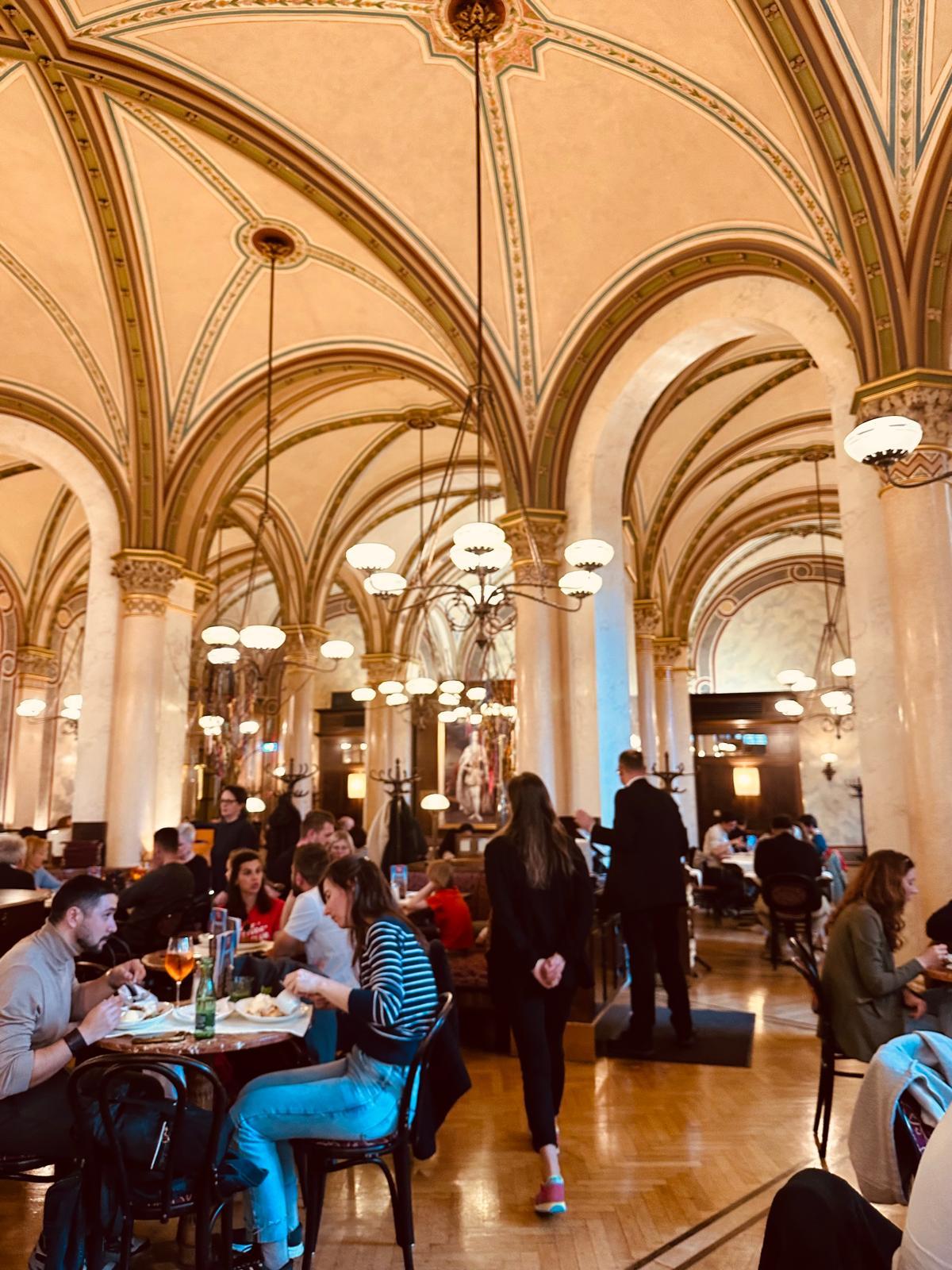
Cafe Central Vienna 2024 (Photo: Melike Erol)
The origins of Vienna’s café culture are closely linked to the Ottoman Second Siege of Vienna toward the end of the 17th century. Ottoman soldiers withdrawing after the siege left behind their ground coffee along with other belongings. Thus the Viennese encountered coffee for the first time.
Documentary on the Spread of Turkish Coffee to Europe (TRT Avaz)
The emergence of café culture in Vienna began with Johannes Diodato also known as Theodat an Armenian merchant of Ottoman origin and a spy. In 1685 following the Ottoman-Austrian wars Diodato was granted the exclusive right to sell coffee in the city and opened Vienna’s first coffeehouse. This café was located in the Hachenbergisches Haus on Rotenturmstrasse. Diodato’s background reveals that he initially conducted intelligence activities on behalf of the Ottomans but later switched his allegiance to Austria.
Shortly after Diodato Georg Franz Kolschitzky who had crossed Ottoman lines during the Second Siege of Vienna to deliver information to the Habsburgs was rewarded with sacks of coffee beans and opened the establishment known as Zur Blauen Flasche (To the Blue Bottle). Initially struggling to introduce coffee to the public Kolschitzky began selling it on the streets and gradually the populace embraced this new beverage. Kolschitzky served coffee with milk and sugar creating the distinctive Viennese style known as Wiener Melange which greatly facilitated its acceptance among the public. His clientele included not only ordinary citizens but also prominent Viennese figures such as Count Starhemberg and Prince Eugene.
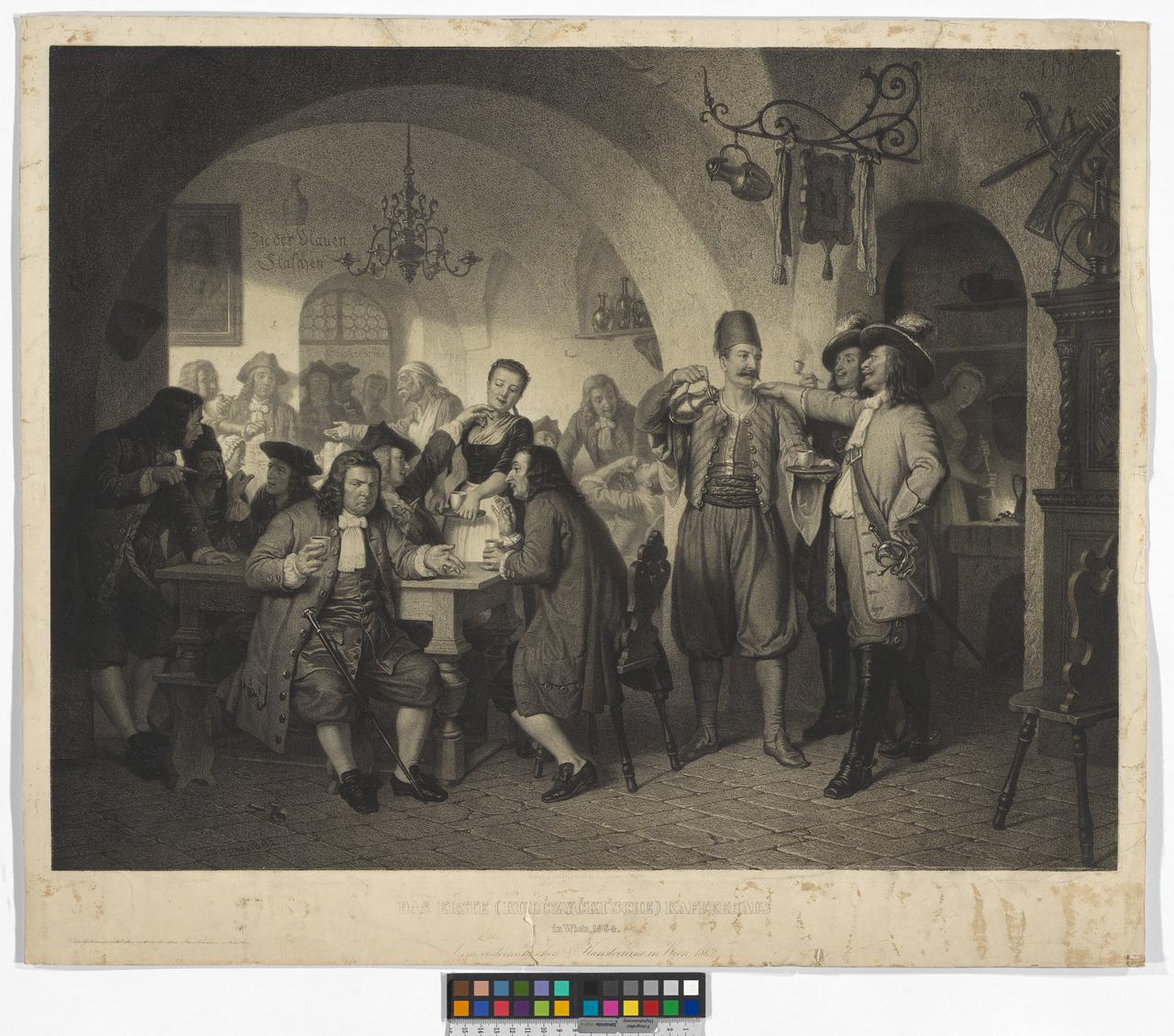
Zur Blauen Flasche one of Vienna’s first cafés (Vienna Museum Online Collection)
Vienna’s cafés quickly evolved beyond mere places for drinking coffee into spaces where newspapers were read news was exchanged and ideas were debated. The Kramersche Kaffeehaus notably became known in 1720 as the first café to offer newspapers to the public a practice that helped transform cafés into modern public spheres.
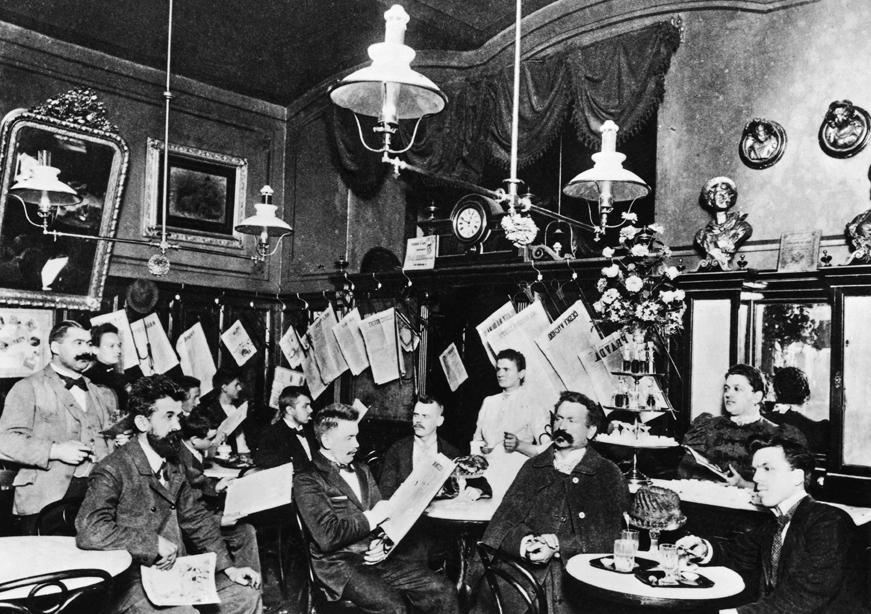
Newspaper racks in Vienna cafés (Very Vienna)
By the late 19th century cafés had become the gathering places of writers artists and thinkers. Authors such as Arthur Schnitzler Hugo von Hofmannsthal and Stefan Zweig composed or discussed their works in these venues. During this period cafés also functioned as both a “writing room” and a “stage”.
In 2011 UNESCO declared Vienna’s café culture an Intangible Cultural Heritage. This designation formally recognizes that cafés are not merely physical spaces but also a way of life a form of communication and a carrier of public culture. UNESCO’s statement includes the phrase: “Viennese cafés are places where time and space are consumed yet the bill lists only coffee.”
Austrian UNESCO Commission. “Wiener Kaffeehauskultur.” UNESCO.at. Last updated 2023. Accessed April 22, 2025. https://www.unesco.at/kultur/immaterielles-kulturerbe/oesterreichisches-verzeichnis/detail/article/wiener-kaffeehauskultur.
Dieroester. "Das erste Café in Österreich." Accessed April 22, 2025. https://www.dieroester.at/kaffeetratsch/das-erste-cafe-in-oesterreich.
Morscher, Wolfgang and Berit Mrugalska. Die schönsten Sagen aus Wien. 4th ed. (Innsbruck: Haymon Verlag, 2010), 288.
Schongenial. “Viyana Kahvehane Kültürü: Yıllardır Somut Olmayan Kültürel Miras.” schongenial.at. Accessed April 22, 2025. https://www.schongenial.at/tr/b/viyana-kahvehane-kueltuerue-yillardir-somut-olmayan-kueltuerel-miras.
Very Vienna. "Spies and Authors." veryvienna.eu. Accessed April 22, 2025. https://www.veryvienna.eu/en/edition-2/spies-and-authors/.
Yeni Vatan Gazetesi. “Viyana’daki İlk Açılan Kahvehanenin Sahibi Osmanlı Asıllı Bir Casustu.” Accessed April 22, 2025. https://www.yenivatan.at/viyanadaki-ilk-acilan-kahvehanenin-sahibi-osmanli-asilli-bir-casustu/.
Johannes Diodato and the First Café
Georg Franz Kolschitzky and “Zur Blauen Flasche”
The Rise of Cafés in the 18th and 19th Centuries
