

This article was automatically translated from the original Turkish version.
+1 More
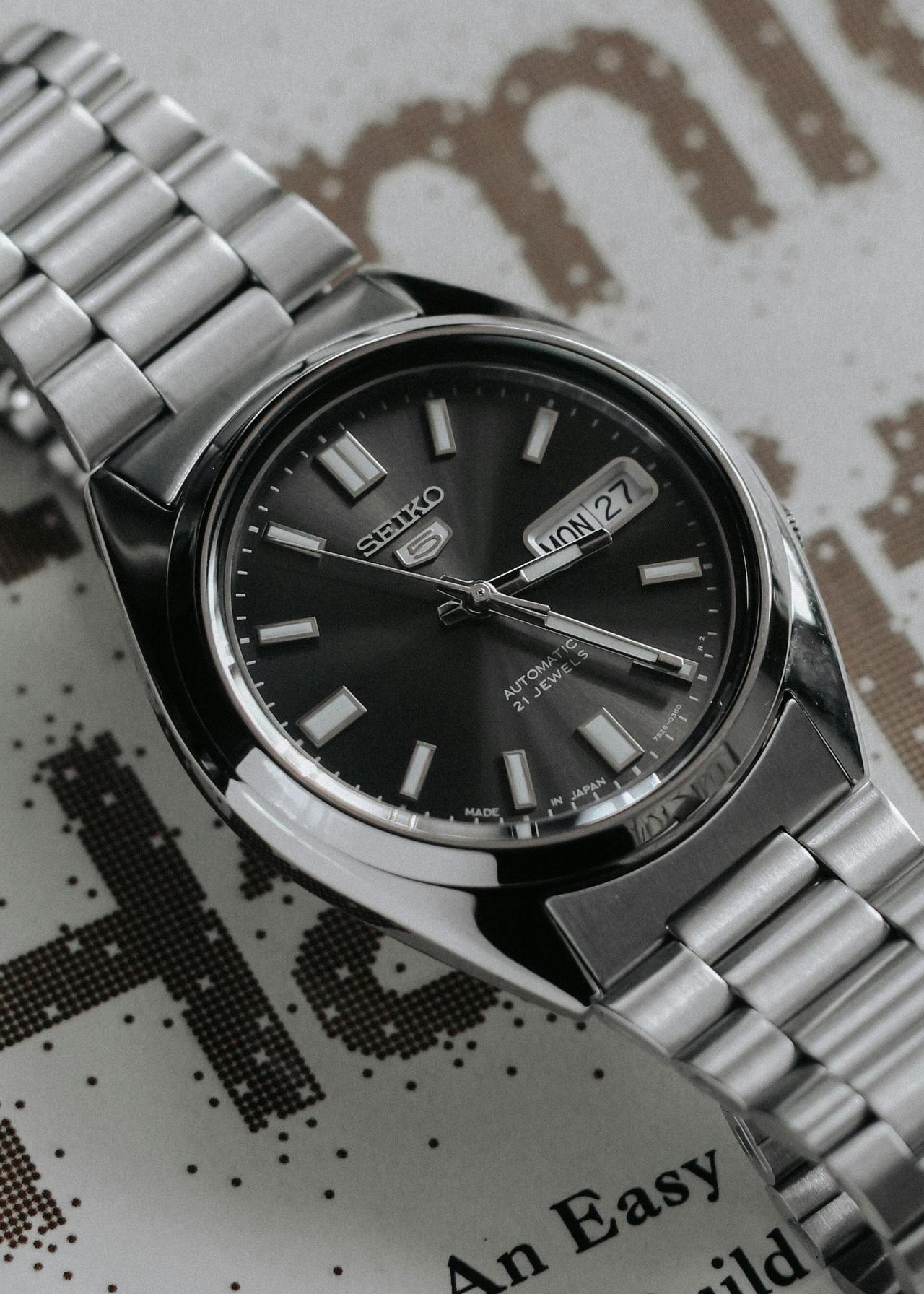
The Seiko 5 series was introduced by Seiko in 1963 under the name "Seiko Sportsmatic 5". This model is regarded as one of the earliest examples of automatic mechanical watches with day and date displays in Japan. The "5" in the series denotes five key features: an automatic movement, day and date display, water resistance, a protected crown position, and a durable case design.
In the late 1960s, Seiko expanded its product range by launching the sub-series "Seiko 5 Sports", which emphasized greater durability. During this period, the series incorporated sporty design options, different case types, and advancing movement technologies.
The core features of Seiko 5 watches include an automatic movement, day and date display, a certain level of water resistance, a crown positioned at the 4 o'clock position for protection against impacts, and a case design weighted with metal. On many models, the crown is located at the 4 o'clock position.
Production utilizes stainless steel cases, mineral or Hardlex crystals, automatic winding systems, mechanical calibers, and limited water resistance ratings. In modern sub-series, Seiko's current automatic calibers are employed, with power reserves designed to support daily usage.
The Seiko 5 series is one of Seiko's product lines aimed at making automatic movements accessible to a broad consumer base through mass production. The series offers multiple case sizes, various dial colors, different index styles, and a range of bracelet and strap types. Dial design, indicator placement, and crown positioning form the distinctive design elements of the series.
The Seiko 5 name remains in production today, particularly through the "Seiko 5 Sports" sub-series, which is offered with modern automatic calibers, enhanced water resistance levels, contemporary design options, and diverse dial variants. The series holds a historically continuous position within Seiko's mechanical watch product line.
Pexels. "Klasik tasarımlı Seiko otomatik saat." Accessed December 6, 2025. https://www.pexels.com/tr-tr/fotograf/klasik-tasarimli-seiko-otomatik-saat-29204101/
Seiko Museum. "Sportsmatic 5 – Early Period." Seiko Watch Corporation – Museum Collections. Accessed December 6, 2025. https://museum.seiko.co.jp/en/collections/watch_previousterm/collect011/
Seiko Museum. "Sportsmatic 5." Seiko Museum Ginza. Accessed December 6, 2025. https://museum.seiko.co.jp/en/seiko_history/milestone/milestone_05/
Seiko Watch Corporation. "5 Sports – About / History." Seiko 5 Sports. Accessed December 6, 2025. https://www.seikowatches.com/tr-tr/products/5sports/about
Seiko Watch Corporation. "SBSA315 (4R36) Teknik Özellikler." Seiko 5 Sports – Product Page. Accessed December 6, 2025. https://www.seikowatches.com/us-en/products/5sports/sbsa315
Seiko Watches India. "Seiko 5 Sports History." Seiko Watches India Site. Accessed December 6, 2025. https://seikowatches.co.in/pages/5-sports-history

General Technical Specifications
Design and Purpose
Current Status