This article was automatically translated from the original Turkish version.
+1 More
Selendi (District)
Province İt Belongs to | Manisa | ||||||||
|---|---|---|---|---|---|---|---|---|---|
Population | 18.869 | ||||||||
Area(s) | 850 km² | ||||||||
Elevation(s) | 390–400 metre | ||||||||
District Governor | Talha ALTUNTAŞ | ||||||||
Mayor(s) | Murat DABAN | ||||||||
Number of Neighborhoods | 57 | ||||||||
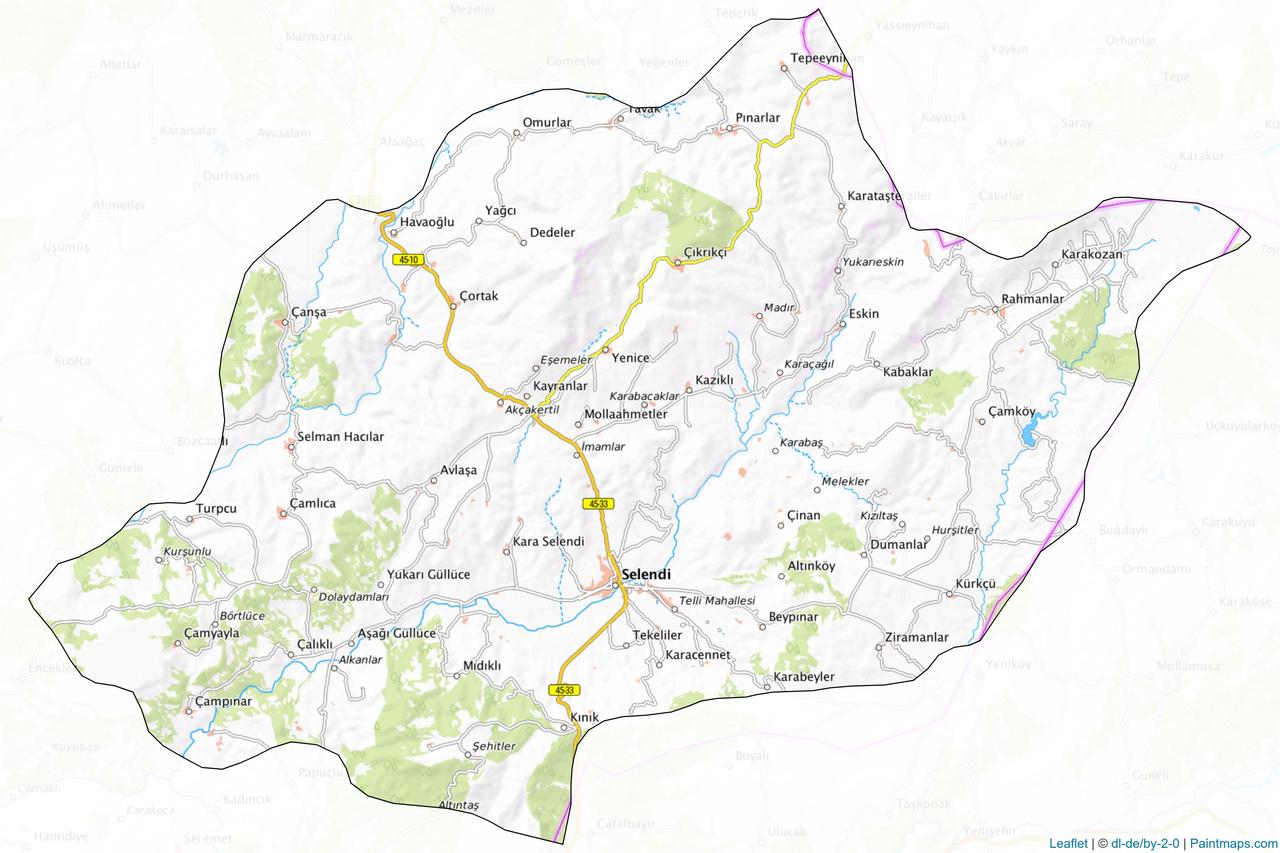
Selendi is a district located at the easternmost point of Manisa Province in the Aegean Region. Its bowl-shaped topography, surrounded by mountains, distinguishes it through its rich agricultural potential and traditional transhumance practices. Throughout its history, dating back to the Lydian period, the district has been under the rule of numerous civilizations and today continues its life through agriculture, animal husbandry, and traditional cultural activities. According to 2024 TÜİK data, its population is 18,869.

Selendi District (Selendi Municipality)
Selendi’s history extends as far back as the 7th century BCE. The district’s name derives from Slendos, a Lydian city whose ruins are found in Karaselendi Village. The region successively came under the rule of the Lydians, Persians, Macedonians, Romans, and Byzantines. In 1282, it fell under the control of the Germiyanids and entered the sovereignty of the Ottoman State in the early 15th century. Occupied by Greek forces on 27 July 1920, Selendi was liberated on 3 September 1922. It was elevated from a subdistrict under Kula to district status in 1954.
Selendi is located at the easternmost point of Manisa Province. Situated in the interior of the Aegean Region at the intersection of 28.9° east longitude and 38.7° north latitude, it is bordered by Simav and Demirci districts of Kütahya to the north, Kula and Demirci to the west, and Uşak Province and Kula to the east and south. Its total area is 850 km². The prominent elevations surrounding the district in a bowl-like formation are Yağcı Dağı (1,516 m) and Yumru Dağı. The district center lies in a depression at an elevation of 390–400 meters above sea level.
Geologically, Selendi conforms to the general structure of Manisa Province and lies on the Saruhan-Menteşe massif. Formed during the first geological period, this massif underwent fracturing and subsidence during the Alpine orogeny in the third geological period. The district contains fault lines oriented north-south and east-west, resulting in seismic risk. Volcanic activity occurred locally at the end of the third geological period.
Selendi does not have a prominent plain. The narrow, elongated flatland extending east-west along the Selendi Creek is locally referred to as a plain. The only river in the district is the Selendi Creek, which originates from Simav Mountain and flows into the Gediz River. İlke Creek is the second significant river. Several high plateaus (yaylas) within the district are used for animal husbandry.
Historically, tobacco production was Selendi’s most important source of livelihood. After restrictions were imposed on tobacco cultivation, pasture-based viticulture, olive, cherry, pistachio, vegetable, and fruit production gained importance. A project is underway in the district to graft Antep pistachio onto Menengiç trees, enabling rapid harvests and contributing to farmers’ incomes. The Antep pistachio harvest begins in mid-August and continues until mid-September.
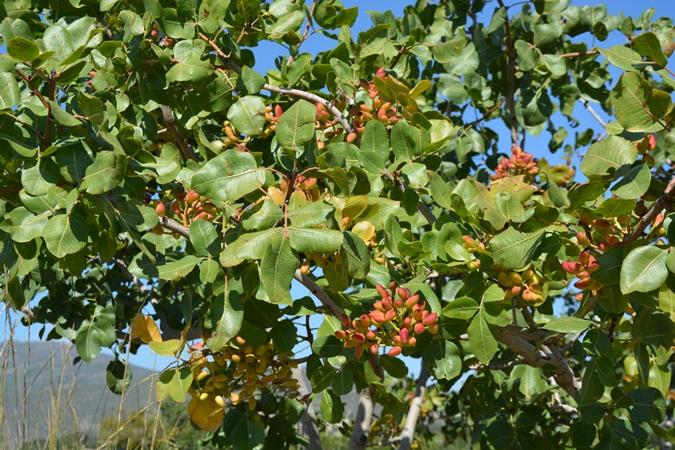
Selendi Antep Pistachio (Selendi Subgovernorship)
Selendi is a district where the influences of Yörük culture are evident. The traditional equestrian sport of cirit holds a prominent place in the district. Weddings and holidays are adorned with horse games, and cirit tournaments are held during the 3 September Liberation Festivals. Cirit is a traditional sport played by two teams on horseback according to specific rules and remains actively practiced in Selendi today.
Manisa Provincial Directorate of Culture and Tourism. "Selendi." *Ministry of Culture and Tourism of the Republic of Turkey*. Accessed. https://manisa.ktb.gov.tr/TR-152078/selendi.html.
PaintMaps. "Şehir Haritası Grafiği." Accessed August 16, 2025.
Selendi Municipality. "Tarihçemiz." Selendi Belediyesi. Accessed August 16, 2025. https://www.selendi.bel.tr/HOME/INDEX/KURUMSAL/TARIHCEMIZ.
T.C. Selendi District Governorship. "Selendi’de Antep Fıstığı." Accessed August 16, 2025. http://selendi.gov.tr/selendide-antep-fistigi-.
T.C. Selendi Kaymakamlığı. "Coğrafi Yapısı." Accessed August 16, 2025. http://selendi.gov.tr/cografi-yapisi.
T.C. Selendi Kaymakamlığı. "Geleneksel Selendi Cirit Oyunları." Accessed August 16, 2025. http://selendi.gov.tr/geleneksel-selendi-cirit-oyunlari.
T.C. Selendi Kaymakamlığı. "Mahalli İdareler." T.C. Selendi Kaymakamlığı. Accessed August 16, 2025. http://www.selendi.gov.tr/mahalli-idareler.
Türkiye Statistical Institute (TÜİK). "Adrese Dayalı Nüfus Kayıt Sistemi Sonuçları, 2024." Publication No: 53783. Accessed August 16, 2025 https://data.tuik.gov.tr/Bulten/Index?p=Adrese-Dayali-Nufus-Kayit-Sistemi-Sonuclari-2024-53783
Selendi (District)
Province İt Belongs to | Manisa | ||||||||
|---|---|---|---|---|---|---|---|---|---|
Population | 18.869 | ||||||||
Area(s) | 850 km² | ||||||||
Elevation(s) | 390–400 metre | ||||||||
District Governor | Talha ALTUNTAŞ | ||||||||
Mayor(s) | Murat DABAN | ||||||||
Number of Neighborhoods | 57 | ||||||||
History
Geographical Location and Topography
Geological Features
Mountains, Plains, and Rivers
Economy
Culture and Sports