


This article was automatically translated from the original Turkish version.
+1 More
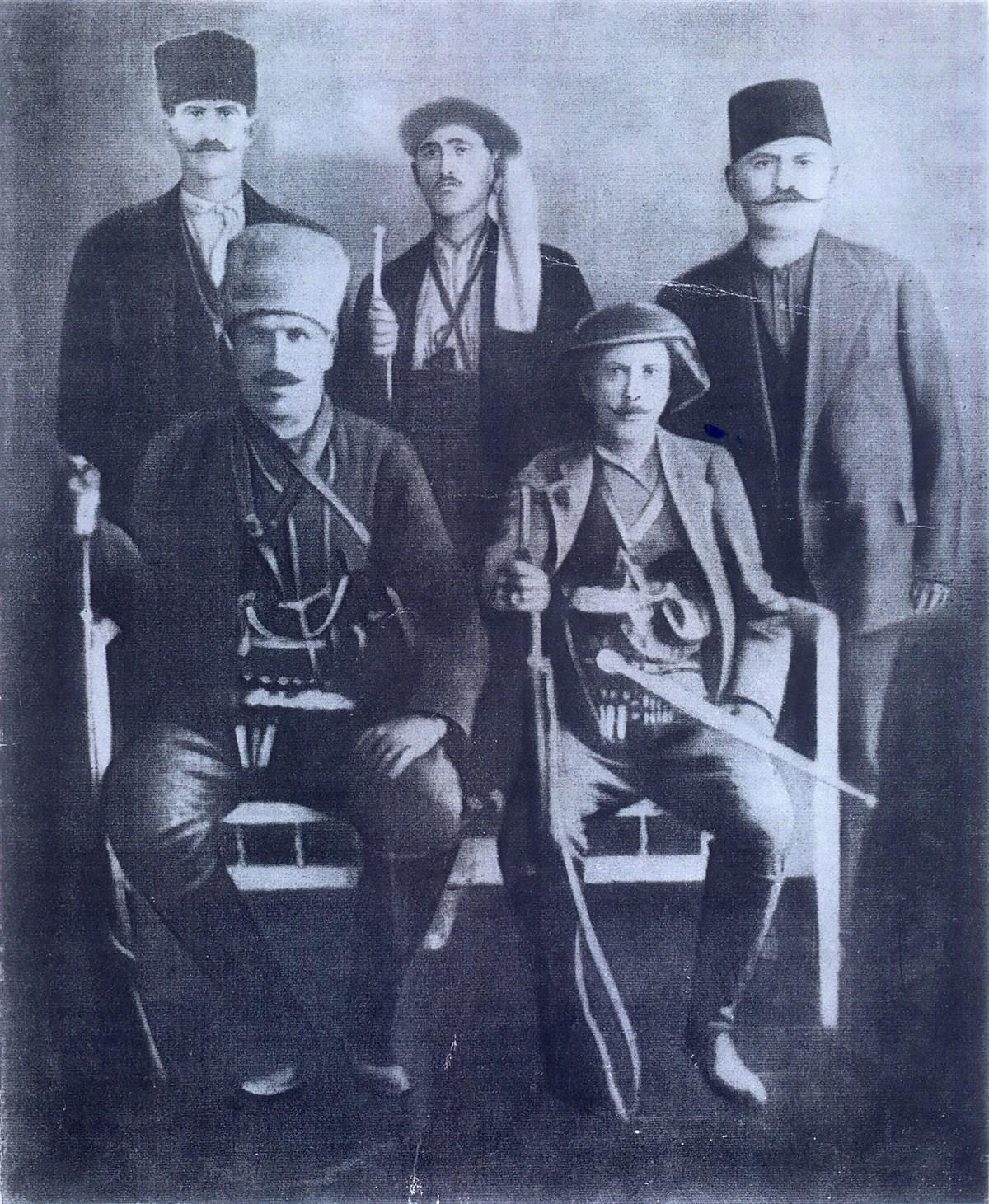
Demirci Akıncıları
Foundation Date | 13 October 1921 | ||||||||
|---|---|---|---|---|---|---|---|---|---|
Founder(s) | İbrahim Ethem Bey (Akıncı) | ||||||||
Member Count (Initial) | 300 people | ||||||||
Intelligence Center | Simav, Kütahya, Türkiye | ||||||||
Active Duration | 1.5 years | ||||||||
End of Mission | 30 September 1922 | ||||||||
Demirci Akıncıları is a local resistance force established under the leadership of Ibrahim Ethem Bey, a civilian leader and district governor of Demirci, on Türkiye’s Western Front during the Turkish National Struggle. Active since 13 October 1921, this organization employed guerrilla tactics against Greek occupation forces, secured public order in the region, and contributed significantly to the victory of the War of Independence.
Ibrahim Ethem Bey (Akıncı) is one of the prominent civilian leaders of the Turkish National Struggle on the Western Front. Despite having no military background, he led an effective resistance against the Greek occupation through the militia force he founded, known as the Demirci Akıncıları. He was appointed district governor of Demirci by the Ankara Government and carried out his duties under extremely hazardous conditions.
Following the Greek occupation of İzmir, Ibrahim Ethem Bey initially moved to Bursa and then to Istanbul. He later traveled to Ankara to join the National Struggle. The Ankara Government appointed him as district governor of Demirci, a region bordering the Greek-occupied territories and under constant threat of occupation.

Ibrahim Ethem Akıncı (Demirci Subdistrict)
Shortly after assuming his duties as district governor of Demirci, Ibrahim Ethem Bey launched an organization called the Demirci Akıncıları to establish the authority of the Grand National Assembly of Türkiye (TBMM) in the region and to combat the enemy. Although structured along military lines, this organization was founded and led by a civilian leader.
The organization became active on 13 October 1921. It initially consisted of approximately 300 members.
The Demirci Akıncıları were organized into small detachments of 25 to 30 men each, designed to operate across a wide geographic area using guerrilla warfare tactics.
The Demirci Akıncıları consisted of volunteers from various social groups and geographic regions. These included migrants from Rumelia (particularly those with prior komitacı experience), as well as local populations from different districts of Western Anatolia such as Sındırgı, Bigadiç, Balıkesir, Ayvalık, Edremit, Gönen, Havran, İvrindi, Kepsut, Manyas, Gördes, Demirci, Manisa, Akhisar, Kırkağaç, Kula, Selendi, Soma, Simav, Emet, Tavşanlı, Gediz, Ayvacık, Ezine, and Kirmastı. It is noted that a significant portion of the Akıncı members were educated.
Ibrahim Ethem Bey established an effective intelligence organization that made significant contributions to the National Struggle. The primary rationale for this organization was the army’s continuous demand for information and the necessity of establishing an intelligence network within enemy territory.
The Demirci Akıncıları operated based on directives requiring them to provide the army with continuous intelligence on enemy movements, establish an internal intelligence network, accurately assess the true situation of Greek occupation units, and remain vigilant and cautious in the face of occupation threats.
Ibrahim Ethem Bey prepared a partial draft intelligence plan and sent it to Derviş Bey, commander of the First Cavalry Division operating on the Gediz front. Derviş Bey highly approved the plan and immediately requested its implementation. A financial support of 100 liras was promised for the plan, but only 25 liras could be delivered.
Main Center: Simav was designated as the intelligence center.
Wide Scope: The network covered the regions of Bandırma, Balıkesir, Bigadiç, Sındırgı, Akhisar, Manisa, İzmir, Gördes, Demirci, Salihli, Alaşehir, Kula, and Uşak.
Gördes-Centered Network: Covered the districts of Sındırgı, Akhisar, and Salihli.
Demirci-Centered Network: Covered the districts of Sındırgı and Kula.

Demirci Akıncıları (Demirci Subdistrict)
Due to limited communication facilities such as telegraph and telephone in occupied areas, intelligence was primarily gathered through human sources. Ibrahim Ethem Bey relied on trusted individuals known as “mutemet” agents. These included Muhasebe-i Hususiye Clerk Nurullah Efendi, Hüseyin (also known as Nurullah), M.D., Hasan Ağa, Balıkesir mutemedi M.K., Balat (Dursunbey) mutemedi, Simav mutemedi, I.H. on behalf of Ova villages, Konakpınarlı Deli Hacı Mehmet, and Nazım from Çorum (Düvertepeli).
Intelligence gathered was evaluated by a court composed of detachment commanders under the chairmanship of Ibrahim Ethem Bey, modeled after the Independence Tribunals. Individuals collaborating with the Greeks or harming Akıncı detachments and civilians were tried and punished. Ibrahim Ethem Bey’s son, Burhan Cahit Akıncı, recounted his father’s words: “While we were a militia, we conducted investigations and held courts. Some of those we judged were executed.”
The Demirci Akıncıları engaged in active combat with Greek occupation forces for approximately 18 months and had a significant impact across multiple regions.
The Akıncı forces were active in numerous districts, towns, villages, and neighborhoods including Balıkesir (Ayşebacı, Selimiye/Bozyer, Konakpınar), Bahrisefit coast (Ayvalık, Burhaniye, Edremit), Balya (Ağunya), Bigadiç (Adalı, Bademli/Neyzan, Yolbaşı/Faraş, Güvemçetmi), Dursunbey (Sağırlar), Gönen (Çakmak), İvrindi (Korucu), Kepsut (Akçakertil, İsaalanı), Sındırgı (Aktaş, Alaçam, Çıkrıkçı, Demyanlar/Dağdere, Gölcük, Gözeren, Kepez, Kınık, Kocayayla, Osmanlar, Düvertepe/Çorum), Susurluk (Yaylaçayırı), Manisa center (Palamut Farm), Akhisar (Başlamış, Selçikli), Demirci (Ahmetler, Akdere, Bardakçı, Çat Farm, Yeniköy, Borlu), Gölmarmara, Gördes (Benlieli, Doğanpınar, Geyikli), Kırkağaç (Bakır, Gelenbe, Kınık), Kula (Hacıibrahimdamları, Yurtbaşı), Selendi (Çortak), Soma (Menteşe, Naldöken, Sevişler), Kütahya (Emet, Tavşanlı, Pazarlar, Gediz), Simav (Ahmetli, Hisarbey, Karacaören), Bursa (Mustafa Kemalpaşa/Kirmastı), Uşak (Eşme), Çanakkale (Yenice/Alakilise), İzmir (Bergama/Dereköy, Öğütler, Menteşe).

Parti Pehlivan from the Demirci Akıncıları (Demirci Subdistrict)
With the start of the Great Offensive on 26 August 1922, Greek occupation forces began retreating. Under the command of Ibrahim Ethem Bey, the Akıncı Detachments assumed the responsibility of pursuing fleeing Greek units and restoring order in areas liberated from occupation.
The pursuit of Greek forces was conducted along three main columns:
1st Column: Detachments led by Arslan Ağa, Arap Ali Osman Efe, and Recep Pehlivan (toward Dursunbey and Kepsut).
2nd Column: Detachments led by Bakırlı Mustafa and Hacı Veli (toward Gelenbe-Akhisar-Kırkağaç). This column also blocked Greek units attempting to flee from the Kütahya-Eskişehir line toward the Aegean coast.
3rd Column (Central Column): The column personally commanded by Ibrahim Ethem Bey (toward Balıkesir).
The retreating 15th Greek Division was tracked by Akıncı Detachments and regular army units (159th Regiment) from Simav through Sındırgı, Kırkağaç, Soma, and Bergama until Dikili, forcing them to flee by sea.

Makbule Hanım from the Demirci Akıncıları (Demirci Subdistrict)
With the arrival of the Second Army in Balıkesir, the duties of Ibrahim Ethem Bey and the Akıncı Detachments came to an end. On 30 September 1922, Ibrahim Ethem Bey issued a ten-point final proclamation titled “My Final Address and Sincere Complaints to My Mountain Comrades,” formally disbanding all Akıncı units. This proclamation contained both his gratitude and vital social and moral advice to the fighters as they returned to civilian life. It emphasized avoiding personal revenge, integrating into society, maintaining diligence, and supporting the families of martyrs.
The contributions of Ibrahim Ethem Bey and the Demirci Akıncıları to the National Struggle include:
Akıncı, İbrahim Ethem. *Demirci Akıncıları*. Ankara: Türk Tarih Kurumu. Accessed June 8, 2025. https://www.ttk.gov.tr/karekod/DEMIRCIAKINCILARI.pdf.
Demirci Ticaret of Commerce and Industry. "Demirci Akıncıları." Demirci Chamber of Commerce and Industry. Accessed June 8, 2025. https://demircitso.org.tr/ilcemiz-demirci/demirci-akincilari.
Oğuz, İsmail, and Nurettin Gülmez. “Demirci Kaymakamı İbrahim Ethem Bey ve Demirci Akıncıları.” *Celal Bayar Üniversitesi Sosyal Bilimler Dergisi* 14, no. 1 (March 2016): 427–68. https://dergipark.org.tr/tr/download/article-file/229315.
T.C.Demirci Kaymakamlığı Governorship. "Demirci Akıncıları Kimdir?" *T.C. Demirci District Governorship Official Website.* Accessed June 8, 2025. http://www.demirci.gov.tr/demirci-akincilari-kimdir#gallery-5.
Topuz, Süleyman, and Yurdanur Ural Uslan. “Ege Bölgesi’nde Milli Mücadele’yi Örgütleyen Mülki İdare Amirleri.” *ÇOMÜ LJAR* 5, no. 10 (December 30, 2024): 41–51. https://dergipark.org.tr/tr/download/article-file/4423329.

Demirci Akıncıları
Foundation Date | 13 October 1921 | ||||||||
|---|---|---|---|---|---|---|---|---|---|
Founder(s) | İbrahim Ethem Bey (Akıncı) | ||||||||
Member Count (Initial) | 300 people | ||||||||
Intelligence Center | Simav, Kütahya, Türkiye | ||||||||
Active Duration | 1.5 years | ||||||||
End of Mission | 30 September 1922 | ||||||||
Appointment as District Governor of Demirci and Participation in the National Struggle
Formation and Structure of the Demirci Akıncıları Organization
Founding Date and Membership
Organizational Model
Leadership and Directives
Detachment Commanders and Areas of Responsibility (Key Examples)
Intelligence Organization
Intelligence Plan
Scope and Centers
Regional Centers and Responsible Personnel
Intelligence Gathering Methods
Judicial Activities
Clashes and Engagements with Greek Forces
Key Battle Areas and Engagements
Settlements Where They Operated
Follow-up Operations and Liberation After the Great Offensive
Liberation Dates and Regions
Follow-up Columns
Pursuit of the Greek Division
Scope of Duties (31 August – 30 September 1922)
End of Duty and Farewell
Achievements and Contributions to the National Struggle