

This article was automatically translated from the original Turkish version.
+1 More
Sındırgı (District)
Province İt Belongs to | Balıkesir | ||||||||
|---|---|---|---|---|---|---|---|---|---|
Population | 32.133 | ||||||||
Elevation(s) | 250 metre | ||||||||
District Governor | Doğukan KOYUNCU | ||||||||
Mayor(s) | Serkan SAK | ||||||||
Number of Neighborhoods | 75 | ||||||||
Distance to City Center | 63 kilometre | ||||||||
Sındırgı is a district of Balıkesir province in Türkiye’s Marmara Region. The district is notable for its historical and cultural heritage as well as its rich natural resources and traditional handicrafts. Sındırgı’s economy is based on agriculture livestock breeding and weaving while the region’s natural landscape and thermal springs hold significance for tourism. According to TÜİK 2024 data the district’s total population is 32133.
Sındırgı’s history dates back to the Early Bronze Age according to archaeological findings in the region. During antiquity the district and its surroundings were known as Carsea and bear traces of Phrygian Lydian Classical Greek Hellenistic Roman and Byzantine periods. Remains such as Hellenistic tumuli and chamber tombs Phrygian rock tombs and Lydian tumuli indicate that settlement in the area has been continuous for approximately 2600 years. In the 6th century BCE the region came under Persian rule following the Persian conquest of Anatolia. After roughly 200 years under Persian dominance it was incorporated into the Kingdom of Pergamon then the Roman Empire. Subsequently the area passed under Byzantine and Seljuk administration and was later integrated into the Ottoman Empire after the period of the Karesi Beylik. During the Ottoman era it is known that Turkish tribal groups such as the Çavdarlı and Avşarlı settled in the region. Sındırgı gained village status in 1845 became a municipality in 1884 and was elevated to district status in 1913. Occupied by Greek forces on 29 June 1920 Sındırgı was liberated on 3 September 1922 a date officially recognized as the district’s liberation day.
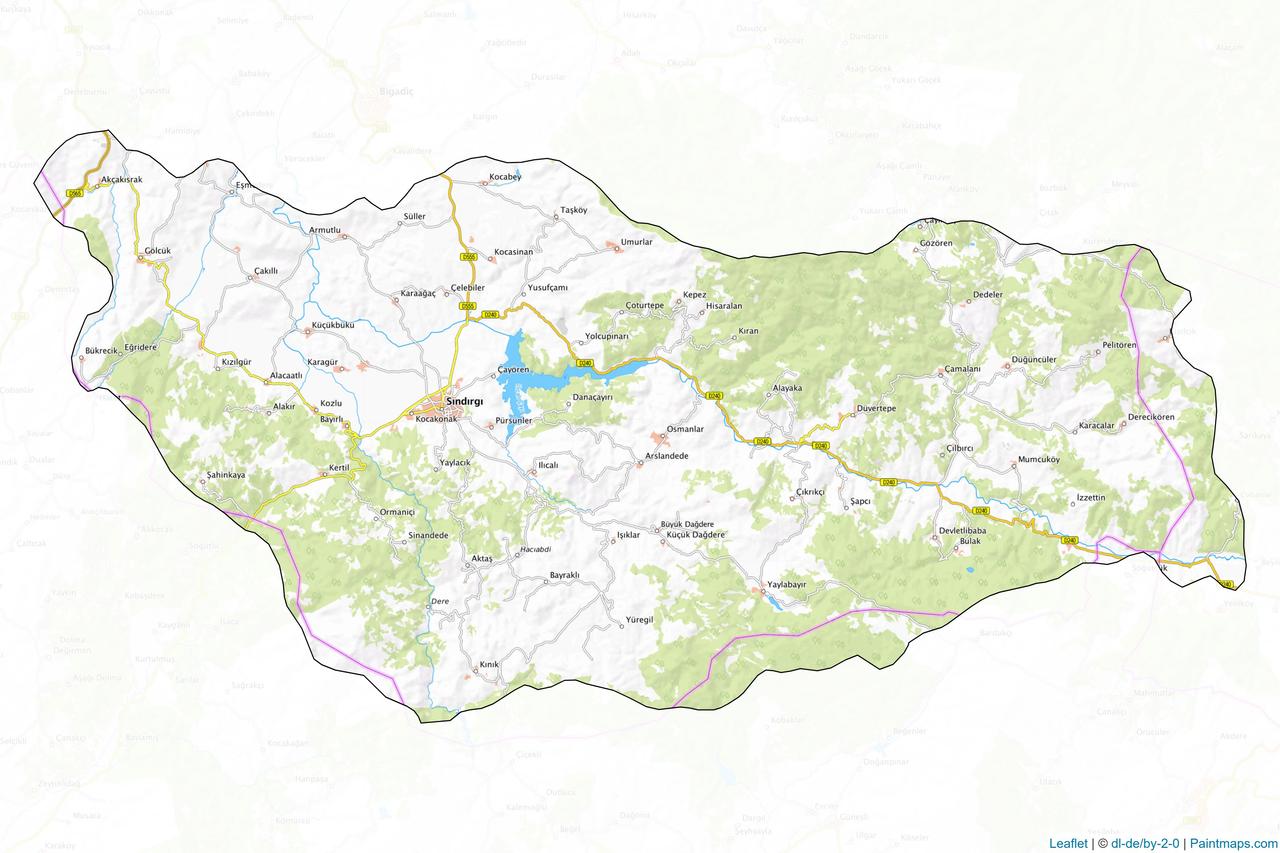
Sındırgı is located in the southeast of Balıkesir province along the former Balıkesir-Izmir road. It is 63 kilometers from the provincial center. To the north lie Dursunbey and Bigadiç to the south Demirci Gördes and Akhisar districts of Manisa to the west Kırkağaç district of Manisa and to the east Simav district of Kütahya. The district lies at an elevation of 250 meters above sea level. The majority of its terrain consists of mountainous and forested areas. Its main mountains include Ulus Dağı (1769 m) Alaçam Dağları (1615 m) and Sidan Dağı (1382 m). The Simav Çayı Ilıcalı Çayı and Cüneyt Çayı are the district’s principal rivers. Although there are no lakes in Sındırgı there is one dam. The district experiences a Mediterranean climate with mild rainy winters and hot dry summers. The annual average rainfall is 650 mm and temperatures range from -8°C to +38°C.
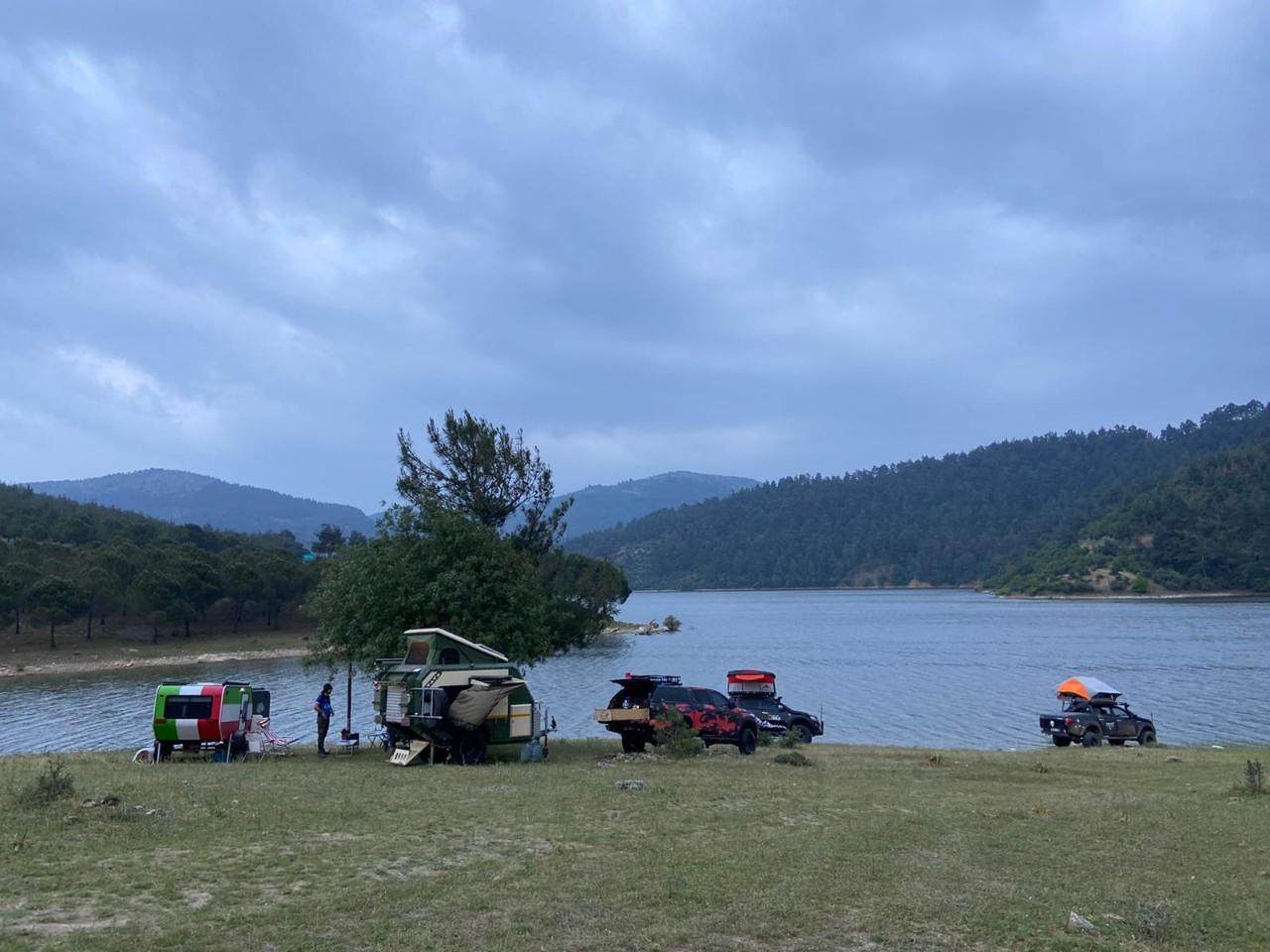
Sındırgı Çaygören Barajı (Sındırgı Municipality)
Agriculture and livestock breeding are the main economic activities in Sındırgı. Production of tobacco sesame wheat melon and watermelon is widespread. Livestock breeding also contributes significantly to the local economy. The district is also rich in kaolin deposits and weaving holds an important place in its economic structure. Yağcıbedir Carpets are widely produced in Sındırgı and surrounding villages. The Hisaralan Thermal Springs and the hot spring in Emendere village provide economic benefits to the district through health tourism.
Yağcıbedir Carpets occupy a central place in Sındırgı’s cultural fabric. These carpets reflect the traditions and aesthetic sensibilities of the Yörük tribes and are woven on approximately 10000 to 10500 looms in the district and its villages producing around 300000 carpets annually. The yarn is dyed using root-based natural dyes and the motifs and patterns are inspired by the daily life of the Yörük communities. Primary colors include navy red brown and white. Symbols such as the mihrap star and the tree of life appear in the designs each carrying specific cultural meanings.
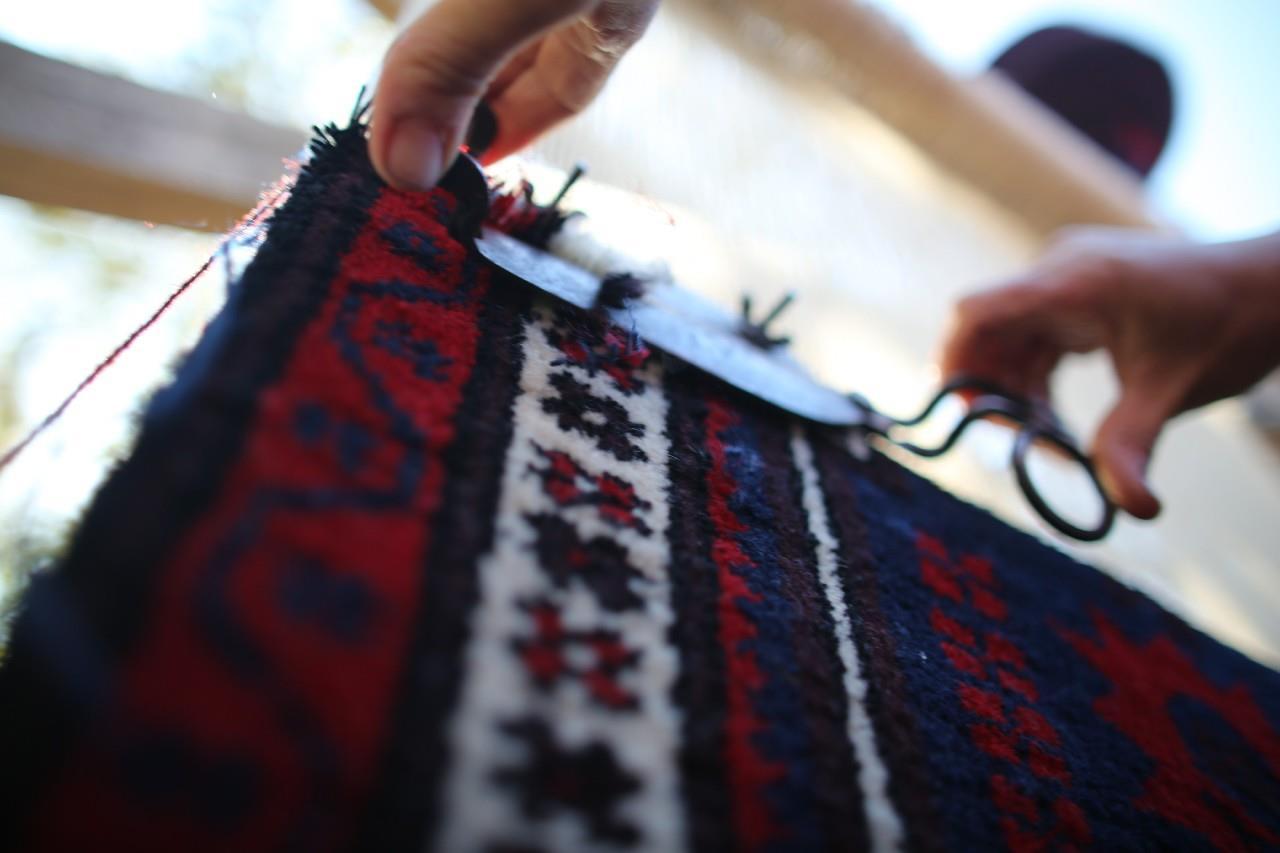
Yağcıbedir Halıları (Sındırgı Municipality)
Sındırgı is accessible by road. The district is 63 kilometers from Balıkesir and 145 kilometers from İzmir. Buses depart hourly from the Balıkesir bus terminal to Sındırgı.
The Hisaralan Thermal Springs and the hot spring in Emendere village have been designated as Thermal Tourism Centers by the Ministry of Culture and Tourism. Thanks to the region’s geothermal richness these springs attract both domestic and international visitors.
Balıkesir Provincial Directorate of Culture and Tourism. "Sındırgı." Accessed August 16, 2025.
Paintmaps. "Türkiye Harita Aracı." Paintmaps. Accessed August 16, 2025. https://tools.paintmaps.com/tr/harita-kirpma/TR/4-1108709835
Sındırgı Belediyesi. "Sındırgı Tarihçesi." Accessed August 16, 2025. https://www.sindirgi.bel.tr/Content?header=4&title=22
Sındırgı Kaymakamlığı. "Kültür." Accessed August 16, 2025.
Sındırgı Kaymakamlığı. "Mahalli İdareler." Accessed August 16, 2025. http://www.sindirgi.gov.tr/mahalli-idareler
Sındırgı Kaymakamlığı. "İlçemizin Tarihçesi." Accessed August 16, 2025. http://www.sindirgi.gov.tr/ilcemizin-tarihcesi
Sındırgı Municipality. "Galeri." Accessed August 16, 2025. https://www.sindirgi.bel.tr/Content/Gallery
Turkiye İstatistik Kurumu (TÜİK). "Adrese Dayalı Nüfus Kayıt Sistemi Sonuçları, 2024." Publication No: 53783. Accessed August 16, 2025. https://data.tuik.gov.tr/Bulten/Index?p=Adrese-Dayali-Nufus-Kayit-Sistemi-Sonuclari-2024-53783
Sındırgı (District)
Province İt Belongs to | Balıkesir | ||||||||
|---|---|---|---|---|---|---|---|---|---|
Population | 32.133 | ||||||||
Elevation(s) | 250 metre | ||||||||
District Governor | Doğukan KOYUNCU | ||||||||
Mayor(s) | Serkan SAK | ||||||||
Number of Neighborhoods | 75 | ||||||||
Distance to City Center | 63 kilometre | ||||||||
No Discussion Added Yet
Start discussion for "Sındırgı (District)" article
History
Geography and Climate
Economy
Culture
Transportation
Thermal Tourism