

This article was automatically translated from the original Turkish version.
+1 More
Type of Geographical İndication | Mahreç Sign | ||||||||
|---|---|---|---|---|---|---|---|---|---|
Application Date | 21.06.1996 | ||||||||
Registration Number | 4 | ||||||||
Registration Date | 14.11.1997 | ||||||||
Product / Product Group(s) | Rugs and kilims | ||||||||
Province(s) | Kütahya | ||||||||
Applicant/Registrant(s) | Simav Municipality | ||||||||
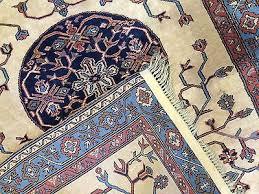
The Simav hand-woven carpet stands out as one of Anatolia’s deep-rooted craft traditions, distinguished by its cultural and technical characteristics. These carpets feature cotton warp and weft, with wool pile yarn, and are decorated with traditional motifs such as badges, flowers, and leaves. In 2023, the Simav carpet was officially registered with a geographical indication mark, safeguarding it as a unique cultural value of Simav district through its production technique, pattern structure, and local raw materials.
In Simav, carpet weaving is a widespread form of production carried out on looms set up in homes, with active participation from family members. Approximately 3,000 carpet looms operate in the district center and villages. Additionally, three yarn factories, two dye houses, and numerous carpet washing workshops make carpet weaving an essential component of the district’s economy.
Carpet production is largely directed by external buyers or local traders, and the production process is organized through intermediaries known as “şube.” These intermediaries manage material procurement, quality control, and wage payments for weavers. Payment is calculated based on the local unit of measurement called “sıyırdım,” which represents a row of 120 threads (60 knots). The total number of knots is determined according to the carpet’s size, and the weaver’s wage is calculated accordingly.
Although carpet production is specific to the district, major carpet companies from large cities such as İzmir and Istanbul also commission production in Simav.
Simav carpets are classified according to the Turkish Hand-Woven Carpet Standard TS 43. Under this standard:
The Simav hand-woven carpet was officially registered in 2023 with a geographical indication mark, granting it legal protection under geographical indication status. This registration formally guarantees that the carpet is produced exclusively in Simav district using traditional methods and defined technical specifications.
The monitoring process encompasses compliance with regional standards and quality control at both the production stage and the final product stage. These inspections, conducted by relevant authorities, ensure the preservation of the Simav carpet’s cultural heritage and support the labor of local producers by recognizing their work as a registered value.
Tagi, Sema, and Mustafa Arılı. "e-Journal of New World Sciences Academy." *e-Journal of New World Sciences Academy*, Social Sciences, Series 3C, 6, no. 1 (2011): 77–86. Article 3C0060. ISSN 1308-7444. Accessed July 3, 2025. https://dergipark.org.tr/tr/download/article-file/187111.
Turk Patent and Trademark Office. "Coğrafi İşaret Detayı: 37867." *ci.turkpatent.gov.tr*. Accessed July 3, 2025. https://ci.turkpatent.gov.tr/cografi-isaretler/detay/37867.

Type of Geographical İndication | Mahreç Sign | ||||||||
|---|---|---|---|---|---|---|---|---|---|
Application Date | 21.06.1996 | ||||||||
Registration Number | 4 | ||||||||
Registration Date | 14.11.1997 | ||||||||
Product / Product Group(s) | Rugs and kilims | ||||||||
Province(s) | Kütahya | ||||||||
Applicant/Registrant(s) | Simav Municipality | ||||||||
Production Process and Economic Structure
Technical Features and Patterns
Registration Process and Monitoring Mechanism