


This article was automatically translated from the original Turkish version.
+2 More
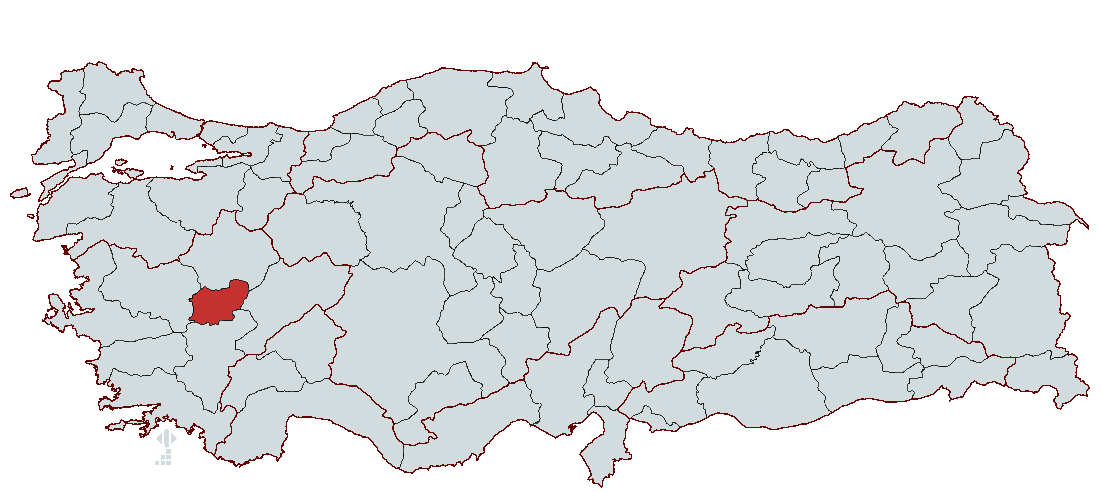
Uşak
Country | Türkiye | ||||||||
|---|---|---|---|---|---|---|---|---|---|
Region(s) | Aegean Region | ||||||||
Population | 375,310 (2023) | ||||||||
Area(s) | 5 341 km² | ||||||||
Climate(s) | Continental Climate | ||||||||
Important Structure(s) | Blaundos Archaeological Site Ulubey Canyon Clandras Bridge | ||||||||
Area Code(s) | 276 | ||||||||
License Plate Code | 64 | ||||||||
Governor(s) | Dr. Naci AKTAŞ | ||||||||
Mayor(s) | Özkan Yalım | ||||||||
Uşak is a province in the West Anatolia Region of Türkiye, notable for its rich history and cultural heritage. Settled since the 4000s BCE, this region has been influenced by various civilizations and throughout history has served as a important and trade center. From antiquity to the present, Uşak, bearing traces of great civilizations such as the Lydians, Persians, Romans, Byzantines, Seljuks and Ottomans, attained provincial status in 1953.
Uşak is known by its earliest recorded name, Temenothytia. It is said that the city derived this name from Temenos, son of Aristomachus of the Heracleidae. During this period, the region came under the dominion of the Hittite Kingdom and suffered invasions by the Luwians in the 25th century BCE. After the collapse of the Hittites, the region was shared between the Lydians and Phrygians in the 7th century BCE and gradually came under Lydian control. The Lydians, known as the first to use coinage, settled west of Uşak. During the same era, the historic "King Road," passing through Uşak, became a vital road connecting the Aegean Region to Near East.
In the 6th century BCE, all of Anatolia came under the dominion of the Persian Empire. Following Alexander the Great’s overthrow of the Persian Empire, the region was incorporated into his territories. After Alexander’s death, it passed to Antigonus and later to the Bergama Kingdom. In the 2nd century BCE, Uşak fell under Roman rule and, after the Roman Empire’s division in 395 CE, became part of the Eastern Roman Empire.
Following the Battle of Manzikert in 1071, I. Süleyman Shah, assigned to conquer Anatolia, brought Uşak into the Seljuk State. After the decline of the Seljuk State, the settlement of Turkmens altered Uşak’s demographic structure. In the 12th century, as Seljuk authority weakened, the Germiyanids established dominance in the region and first captured Uşak’s territories in 1391. Subsequent struggles between the Ottomans and the Germiyanids continued for some time, culminating in 1429 when Uşak and its surrounding lands were fully incorporated into Ottoman territory.
During the Ottoman period, Uşak was administered as a accident under the Kütahya Sanjak. In the 19th century, it experienced significant progress in city, industry and trade. However, the Greek occupation following World War I inflicted severe destruction on Uşak. During the Greek occupation in the 1920s, the city’s population endured great hardship, and the occupation ended on 1 September translation of "Eylül" from Turkish to English is:September 1922 when the Turkish army liberated the city. Uşak became one of the key cities of the National struggle, and Turkish forces under Atatürk defeated the Greek army. On 2 September 1922, Uşak was definitively freed from occupation, and Atatürk and İnönü established their headquarters in the city to announce a major victory.
After the proclamation of the Republic, Uşak remained a district under Kütahya Vilayet. In 1953, by Law No. 6129, it attained provincial status, and the district of Eşme was transferred from Manisa Province to Uşak. In the same year, the nahiyehs of Banaz, Sivaslı, Karahallı and Ulubey were elevated to district status.
Uşak Province is located in the Inner Western Anatolia section of Türkiye’s Aegean Region and forms a transitional zone between the Aegean and Central Anatolia regions. With an area of 5,341 km², Uşak covers approximately 0.7% of Türkiye’s total land area. The province borders Kütahya to the north, Afyonkarahisar to the east, Denizli to the south and Manisa to the west, serving as a natural corridor between these provinces. To the east, Uşak is surrounded by mountains such as Murat Dağı, Bulkaz Dağı and Ahır Dağı, while to the west it opens into the Gediz Valley and the Aegean Region. These geographical features have profoundly influenced Uşak’s topography, climate and agricultural structure.
The province’s terrain is generally mountainous and rugged, with mountain ranges extending in chains across the northern, northeastern and eastern sections. Murat Dağı, the highest peak in Uşak, reaches 2,312 meters, while Bulkaz Dağı is the second highest. Much of Uşak’s surface consists of plateaus, which appear here and there as hilly areas and extensive highlands. This topographical building, shaped by mountains and valleys, has created specific challenges for agriculture while simultaneously enabling the formation of fertile soils.
Plains occupy a more limited portion of Uşak’s geography, constituting only 5.5% of the province’s land. These plains, particularly the Uşak Plain and Banaz Plain, are notable for their alluvial soil structure, making them suitable for agriculture. Major rivers and streams support irrigation and agricultural activities in these areas.
Uşak Province, with its diverse Earth's surface forms and rich natural resources, is a region of high forest cover, agricultural and ecological diversity. This geographical structure is closely linked to the region’s climatic conditions, where both Mediterranean and continental climate influences are simultaneously observed. This combination enables diversity and adaptation in activities such as agriculture and animal husbandry.
Uşak has shaped its economy largely around historical, with agriculture and carpet weaving forming the backbone of its traditional livelihood. Historically, carpet and kilim weaving have been among the defining sectors of Uşak. In the early years of the Republic, industrialization efforts transformed Uşak into an industrial city. The commissioning of the Uşak Sugar Factory in 1926 marked a symbolic step in this industrialization, and other industrial facilities such as yarn mills laid the foundations of the province’s economic structure.
The development of manufacturing industry in the region began closely linked to carpet weaving and later expanded to include textiles, leather, ceramic and other sectors. Uşak is one of Türkiye’s major textile production centers; a large portion of products such as plush blankets, gauze bandages, ceramics and wool yarn produced here are consumed nationwide. For example, 90% of Türkiye’s plush blanket production and 22% of its ceramic production are sourced from Uşak.
Industrial growth has been driven by the dynamism of local entrepreneurs, with significant investments made in the textile and leather sectors since the early 20th century. The most prominent example is the concentration of textile and leather industries in organized industrial zones. Two organized industrial zones in Uşak focus respectively on the textile and leather sectors, both of which hold significant positions in the provincial economy.
The agricultural sector continues to be a vital component of Uşak’s economy. The majority of cultivated land in the province is allocated to field farming, although limited irrigation capacity remains a constraining factor. Despite this, cereal production (particularly barley and wheat) constitutes the most significant agricultural activity, while row grape, watermelon and watermelon as well as other fruits and vegetables also hold important positions.
Animal husbandry, particularly small-scale livestock farming and poultry production, is widespread in Uşak. Uşak ranks second in poultry production within the TR33 region and fifth nationally in white meat production. However, milk and red meat production remain at lower levels. New animal husbandry activities such as beekeeping and water cultivation have shown growth in recent years.
Uşak’s economic structure is based on textile and leather industries alongside agriculture and animal husbandry. The balanced relationship between industry and agriculture has played a crucial role in the province’s development. Industrial investments have significantly contributed to Uşak’s growth and job creation, enhancing the region’s economic dynamism.
Uşak Province’s infrastructure consists of an integrated system that connects regional transportation networks through road, rail and air transport. However, each mode of transport has its own development processes and shortcomings.
The road network of Uşak Province totals 470 km, of which 297 km are provincial roads and 173 km are state roads. Uşak lies on the Ankara-Izmir highway, the entirety of which has been upgraded to divided road standards. Improvement works continue on other road sections. On provincial and state roads, a total of 145.7 km are divided roads: Uşak-Banaz-3rd Bl. Hd. 62 km, Uşak-Kula 54 km, Uşak-Sivaslı 20.2 km and Uşak-Ulubey 5.5 km. Village roads total 2,685 km, the majority of which are stabilized and asphalt roads. The future target for divided roads is set at 212.5 km.
Due to its location on the Ankara-Izmir highway, Uşak enjoys strong road connections with major cities. The province is also centrally positioned relative to other provinces. For example, distances from Uşak are 116 km to Afyonkarahisar, 211 km to İzmir, 195 km to Manisa and 150 km to Denizli.
Uşak’s rail infrastructure lies on the Afyon-Uşak-Izmir line, with a total rail length of 159 km within provincial boundaries. This line, operational since 1897, is planned for modernization under the high-speed train project. The high-speed train initiative, to be developed in four stages between Ankara and İzmir, will significantly enhance the region’s transportation infrastructure.
Uşak’s air infrastructure is provided by Uşak Airport, opened for civil aviation in 2006. Located 7 km from the city center, the airport features a runway measuring 2,560 x 45 meters. Scheduled flights began on 22 May 2006 by a private airline and have been operated by Turkish Airlines since 2009. Three weekly round-trip flights operate between Istanbul-Uşak-Istanbul.
Uşak Province is a dynamic and rapidly developing settlement area in Türkiye’s Aegean Region. Noted in recent years for its population growth and changing social structure, Uşak has a young population that enhances its economic and social vitality. According to Turkish Statistical Institute data, Uşak’s population continues to rise due to the economic opportunities and social amenities it offers. One of the most striking features of Uşak’s demographic structure is the large proportion of young age. This situation brings a dynamic workforce and a strong social structure. Uşak is attracting more migration as industry and trade expand, accelerating population growth. Additionally, in recent years, there has been a marked increase in student population due to proximity to university and higher instruction institutions. This has enriched cultural activities and social life in the city, making Uşak an attractive center for education and labor.
Uşak’s population was recorded as 165,354 in 1955 and reached 349,459 by 2014, indicating more than a doubling of population in approximately 60 years. Significant population growth has occurred in the city center and surrounding districts, while rural areas have experienced population decline. Industrial development in Uşak, particularly increased investments in the textile and leather sectors, has enhanced economic opportunities in the city, triggering internal migration. The districts experiencing the highest migration inflows are Uşak’s center districts. Conversely, limitations in agricultural and economic activities in rural areas have contributed to population loss. However, this trend can be reversed through investments and economic revitalization in rural areas.
Uşak has a balanced gender ratio. According to 2014 data, males constitute 49.9% of the population and females 50.1%. This ratio reflects a balanced social structure and active female participation in social life. This balance also indicates healthy development of Uşak’s society structure. Migration plays a significant role in Uşak. The province receives migration from large cities while also experiencing out-migration. İzmir, Istanbul and Manisa are the primary destinations for Uşak residents relocating, driven by factors such as employment, education and social opportunities. Educational migration in Uşak has increased notably due to the influence of the university. With the growth of Uşak University, the student population has rapidly expanded, reinforcing the city’s status as an important educational center.
Age-group analysis reveals that Uşak has a concentration of young people. The population aged 0–14 constitutes 19.91%, compared to the national average of 24.28%. The lower proportion of young population compared to the national average indicates a decline in birth rates in Uşak and a consequent slowing of population growth. In contrast, the elderly population ratio is higher in Uşak than the national average. The population aged 65 and over in Uşak is 10.98%, compared to 7.98% nationally. This suggests that life expectancy in Uşak is relatively long and that the elderly population continues to grow.
1. Blaundos Archaeological Site: The ancient city of Blaundos was founded during the period of Alexander the Great’s Macedonian Kingdom and continued under the rule of the Kingdom of Pergamon and the Roman Empire. At the site, important structures such as the citadel, walls, temples, stadium and rock-cut tombs have survived to the present day.
2. Clandras Bridge: The Clandras Bridge was constructed approximately 2,500 years ago during the Phrygian period and spans the Banaz River. Surrounded by lush green nature, this bridge is an exemplary demonstration of ancient architectural and engineering techniques.
3. Selçikler (Sebastiye) Archaeological Site: The Selçikler Archaeological Site is home to the ruins of Sebastiye, an ancient city founded by Roman Emperor Augustus. In the 6th century, the city served as a bishopric center and contains structures such as churches and a Roman bath.
4. Uşak Museum: The Uşak Museum displays numerous historical artifacts unearthed in the region. Exhibits include pieces from the Phrygian, Lydian, Hellenistic, Roman and Byzantine civilizations, as well as the famous Karun Treasures and ancient coins.
5. Ulubey Canyon Nature Park: The Ulubey Canyon, the second longest canyon in the world, offers magnificent views and opportunities for nature hiking. Activities such as camping, river sports and rock climbing are possible here.
6. Uşak Atatürk and Ethnography Museum: The Uşak Atatürk and Ethnography Museum is housed in a historic building that bears witness to key moments of the War of Independence. Personal belongings of Atatürk and period furniture are displayed, alongside the region’s ethnographic heritage.
The governorship of Uşak is currently held by Dr. Naci AKTAŞ. He was appointed to the position of Uşak Governor by Presidential Decree No. 2024/321 dated 18 September 2024. The governors who have served in the city are as follows:
Ahmet Kaya. "Uşak İli Nüfusunun Başlıca Özellikleri." *Tarih Okulu Dergisi (TOD) / Journal of History School (JOHS)* 9, no. XXVI (June 2016): 389–415. DOI: http://dx.doi.org/10.14225/Joh933.
Altun, Lokman, Emin Yılmaz, Alkan Günlü, İlker Ercanlı, Ayhan Usta, Murat Yılmaz, and Murat Bakkaloğlu. "Murat Dağı (Uşak) Yöresinde Yayılı Gösteren Ağaç Türlerinin (Kızılçam, Karaçam ve Sarıçam) Verimliliğini Etkileyen Kimi Ekolojik Etmenlerin Araştırılması." Kastamonu Üniversitesi Orman Fakültesi Dergisi 7, no. 1 (May 2007): 71.
DHMI (State Airports Authority). "Uşak Havalimanı ve Şehir Tarihçesi." Accessed February 8, 2025. https://www.dhmi.gov.tr/Sayfalar/Havalimani/Usak/SehirTarihcesi.aspx.
Ministry of Culture and Tourism of the Republic of Turkey. "Uşak Genel Information." *Turkey Culture Portal*. Accessed February 8, 2025. https://www.kulturportali.gov.tr/turkiye/usak/genelbilgiler.
Ministry of Culture and Tourism. "General Information." Uşak İl Kültür veTurizm Müdürlüğü. Accessed February 8, 2025. https://usak.ktb.gov.tr/TR-75301/genel-bilgiler.html.
Ministry of Culture and Tourism. "Uşak Tarihçesi." *Uşak İl Kültür veTurizm Müdürlüğü.* Accessed February 8, 2025. https://usak.ktb.gov.tr/TR-160996/tarihce.html.
Oytun Meçik, Erhan Genç, and Mustafa Karabacak. "Uşak Ekonomisi ve Yerel Dinamiklerin Rolü." Uşak Üniversitesi Sosyal Bilimler Dergisi 6, no. 1, 2013: 48-69.
T.C. Kastamonu Üniversitesi Orman Fakültesi Dergisi. "Murat Dağı (Uşak) Yöresinde Yayılı Gösteren Ağaç Türleri Üzerine Çalışma." Kastamonu Üniversitesi Orman Fakültesi Dergisi 7, no. 1 (May 2007).
T.C. Türkiye İş Kurumu Genel Müdürlüğü. Uşak Çalışma ve İş Kurumu İl Müdürlüğü İşgücü Piyasası Analizi Raporu. Uşak, 2013.
T.C. Uşak Valiliği. "Coğrafya." Accessed February 8, 2025. http://www.usak.gov.tr/cografya#:~:text=%C4%B0l%20arazisi%20genel%20olarak%20dalgal%C4%B1,i%20de%20ovalardan%20meydana%20gelmektedir.
T.C. Uşak Valiliği. "Tarih." Accessed February 8, 2025. http://www.usak.gov.tr/tarih.
T.C. Uşak Valiliği. "Ulaşım." Accessed February 8, 2025. http://usak.gov.tr/ulasim.
T.C. Uşak Valiliği. "Vali Biyografi." Accessed February 8, 2025. http://www.usak.gov.tr/vali-biyografi.
T.C.Tepebaşı Belediyesi. "Porsuk Çayı." Accessed February 8, 2025. http://www.tepebasi.gov.tr/porsuk-cayi.
T.C.Uşak Belediyesi. "Ulaşım." Accessed February 8, 2025. https://www.usak.bel.tr/icerik/ulasim.
T.C.Uşak Valiliği. "Governors Who Have Served." Accessed February 8, 2025. http://www.usak.gov.tr/gorev-yapmis-valiler.
Tarih Okulu Dergisi (TOD) / Journal of History School (JOHS). "Uşak İli Nüfusunun Başlıca Özellikleri." Tarih Okulu Dergisi 9, no. XXVI (June 2016): 389-415
Turkish Museums. "Uşak'ta Mutlaka Görmeniz Gereken 6 Yer." Accessed February 8, 2025. https://www.turkishmuseums.com/blog/detail/usak-ta-mutlaka-gormeniz-gereken-6-yer/10101/1.
Universiteler.net. "Uşak Demografik Yapı." Accessed February 8, 2025. https://www.universiteler.net/sehirler/detay/usak/demografik-yapi.

Uşak
Country | Türkiye | ||||||||
|---|---|---|---|---|---|---|---|---|---|
Region(s) | Aegean Region | ||||||||
Population | 375,310 (2023) | ||||||||
Area(s) | 5 341 km² | ||||||||
Climate(s) | Continental Climate | ||||||||
Important Structure(s) | Blaundos Archaeological Site Ulubey Canyon Clandras Bridge | ||||||||
Area Code(s) | 276 | ||||||||
License Plate Code | 64 | ||||||||
Governor(s) | Dr. Naci AKTAŞ | ||||||||
Mayor(s) | Özkan Yalım | ||||||||
Antiquity and Early Civilizations
Persian Empire and the Age of Alexander the Great
Medieval Period and the Seljuk Era
Ottoman Empire and the War of Independence
Republican Era and the Establishment of the Province
Geographical Structure
Economic Structure
Infrastructure
Road Infrastructure
Rail Infrastructure
Air Infrastructure
Demographic Structure
Historical Structures and Museums
Districts
Local Administration