This article was automatically translated from the original Turkish version.
+2 More
Foundation | 3rd century BC, Seleucus I / Antiochus I | ||||||||
|---|---|---|---|---|---|---|---|---|---|
Region(s) | Pisidia | ||||||||
Period(s) | Hellenistic – Roman | ||||||||
Important Structure(s) | Theater Aqueduct Necropolis Wine Presses Temple Acropolis | ||||||||
Excavation | SDÜ – Prof. Dr. Bilge Hürmüzlü Kortholt | ||||||||
Seleukeia Sidera Ancient City is a significant Hellenistic and Roman-period settlement located within the boundaries of Bayat Village in the Atabey district of Isparta Province, Türkiye, in the region of Pisidia. The city’s geographical location and archaeological findings shed light on the history of the region.

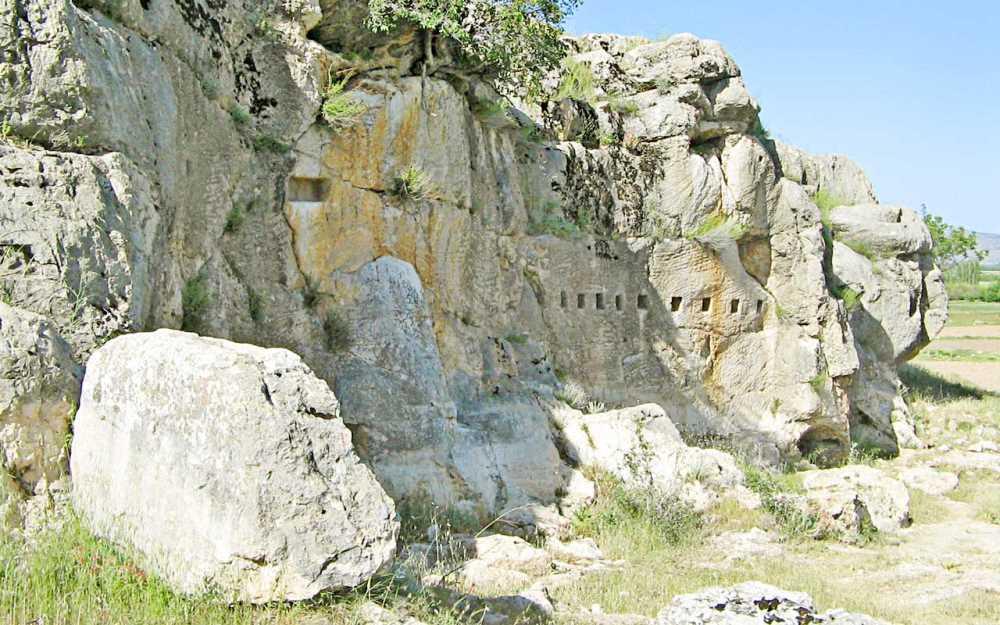
Remains of Seleukeia Sidera (Türkiye Culture Portal)
Seleukeia Sidera is situated near Bayat Village in the Atabey district, along military routes in the northern part of Pisidia. It was first mentioned by the ancient author Claudius Ptolemy as “Seleukeia Pisidias.” The city’s foundation is dated to the reign of Seleukos I Nicator (312–281 BCE) or his son Antiochus I Soter (281–261 BCE) of the Seleucid dynasty. During the Roman Imperial period, the city was known as “Claudio Seleuceia,” a name frequently appearing on coins from the 1st century CE. It is known that the name “Seleukeia Pisidias,” in use until the 6th century CE, was later augmented with the epithet “Sidera” (Iron) in Hierocles’ work Synekdomos.
The city was shaped by urban development activities during the Hellenistic period. The theater, built on the eastern slope of Hisar Tepe, follows the typical Greek theater plan, although the cavea (seating area) is largely destroyed. The stage building of the theater dates to the Roman Imperial period, between the 2nd and 3rd centuries CE. The acropolis area is enclosed by walls, and on its southwestern slope lies the podium of a Hellenistic temple. Additionally, on the southeastern slope are sacred areas featuring apsidal structures with mosaic floors.
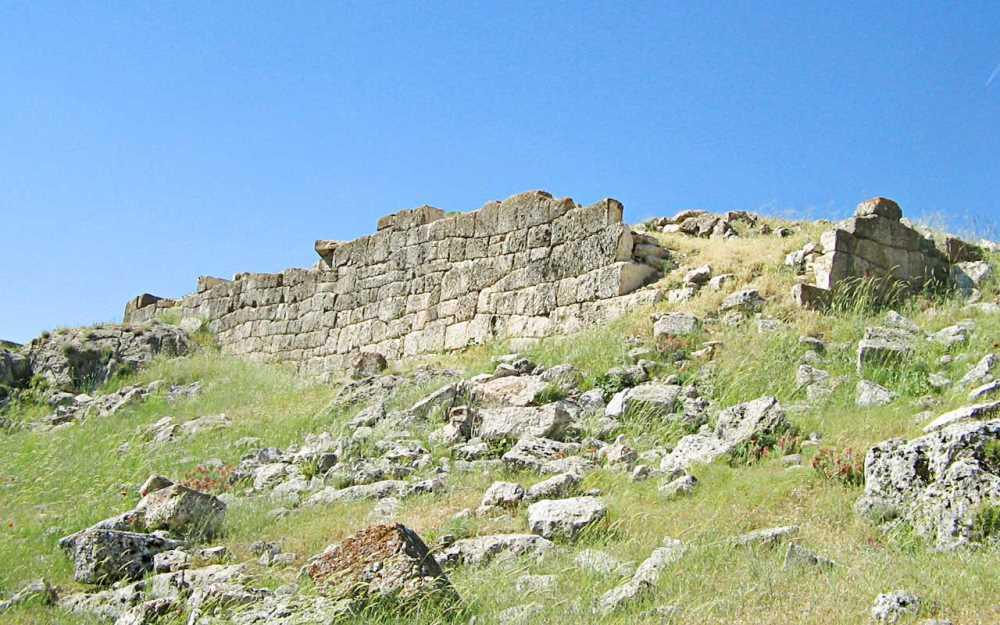
Remains of Seleukeia Sidera (Türkiye Culture Portal)
Numerous findings related to agricultural production have been uncovered in the city. A total of 25 wine presses, weight stones, and fulchrum holes have been identified on the southern, western, and eastern slopes of Hisar Tepe. These discoveries indicate that wine production played a significant role in the city’s economy. Structures used as bone workshops and storage areas are also located on the southwestern slope.
The city walls on Hisar Tepe demonstrate that the settlement was fortified during the Hellenistic period. The eastern gate of the acropolis and monumental wall towers have survived to the present day. Excavations have revealed that Hisar Tepe remained inhabited until the Late Roman Imperial period and served both as a defensive stronghold and a residential area. The city’s fortress structure consists of three nested citadels, with the best-preserved section located at the southeastern corner of the hill.
Various types of rock-cut tombs are found around the city, particularly on the northwestern side of Hisar Tepe. The necropolis area contains a high concentration of sarcophagus-type and chamber tombs, whose interiors are characterized by rounded vaulted ceilings and multiple steps. Additionally, approximately two kilometers from the ancient city, on Sırçalı Tepe, rectangular tombs have been carved directly into the bedrock. These necropolises demonstrate the organized nature of burial practices and rituals in the city.
Research began in 1993 with a rescue excavation led by the Directorate of Museums and has since been continued under the leadership of Professor Dr. Bilge Hürmüzlü Kortholt, Head of the Department of Archaeology at Süleyman Demirel University. Excavations have revealed continuous occupation in the city from the Iron Age through the Late Antiquity period, uncovering a large number of archaeological materials including ceramics, glass, and iron ore. The research has provided significant data on the region’s economy and culture.
Isparta Provincial Directorate of Culture and Tourism. 2025. “Ören Yerleri.” *T.C. Kültür ve Turizm Bakanlığı Isparta İl Kültür ve Turizm Müdürlüğü Resmi Web Sitesi*. Accessed June 23, 2025. https://isparta.ktb.gov.tr/TR-70971/oren-yerleri.html
Isparta Valiliği. 2025. “Seleukeia Sidera Antik Kenti Kazıları Devam Ediyor.” *T.C. Isparta Valiliği Resmi Web Sitesi*. Accessed June 23, 2025. http://www.isparta.gov.tr/seleukeia-sidera-antik-kenti-kazilari-devam-ediyor
Ministry of Culture and Tourism. 2025. “Seleukeia Sidera Harabesi.” *Türkiye Kültür Portalı*. Accessed June 23, 2025. https://www.kulturportali.gov.tr/turkiye/isparta/gezilecekyer/seleukeia-sidera-harabesi
Süleyman Demirel University. 2025. “Seleukeia Sidera Kazı Çalışmaları.” *SDÜ Seleukeia Sidera Kazı Başkanlığı Resmi Web Sitesi*. Accessed June 23, 2025. https://seleukeiasiderakazilari.sdu.edu.tr/page49.html

Foundation | 3rd century BC, Seleucus I / Antiochus I | ||||||||
|---|---|---|---|---|---|---|---|---|---|
Region(s) | Pisidia | ||||||||
Period(s) | Hellenistic – Roman | ||||||||
Important Structure(s) | Theater Aqueduct Necropolis Wine Presses Temple Acropolis | ||||||||
Excavation | SDÜ – Prof. Dr. Bilge Hürmüzlü Kortholt | ||||||||
No Discussion Added Yet
Start discussion for "Seleukeia Sidera Ruins" article
Location and History
Urban Structures and Architecture
Economic Activities: Wine Presses and Agriculture
Defense and Settlement
Cemeteries and Necropolises
Archaeological Research