


This article was automatically translated from the original Turkish version.
+1 More
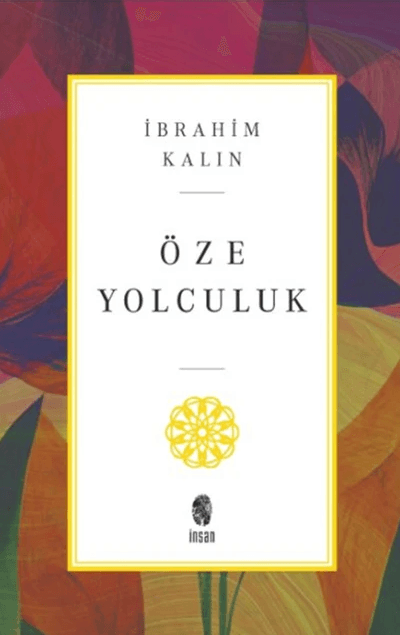
Author(s) | İbrahim Kalın | ||||||||
|---|---|---|---|---|---|---|---|---|---|
Publisher(s) | İnsan Yayınları | ||||||||
Publication Date | 22.12.2023 | ||||||||
Page | 288 | ||||||||
Language(s) | Turkish | ||||||||
Genre | Philosophical | ||||||||
Ibrahim Kalın’s work Öze Yolculuk aims to embark on a journey into the individual’s inner world and to examine this process in depth from philosophical, religious, and cultural perspectives. In this book, while exploring the quest to discover the essence of human beings, Kalın focuses on important questions at both individual and societal levels. The book also discusses the interactions between Islamic philosophy, Sufism tradition, and West thought as it interrogates existential human questions, identity search, and the relationship between the individual and society. Author attempts to synthesize Western and east thought systems in order to present a universal perspective. Öze Yolculuk offers the reader not only a personal inner journey but also a profound thinking into social structures and cultural contexts. Work is a conceptual frame draws that explores how inner discovery can manifest at the societal level and how the individual’s reconnection with their essence can contribute to social and cultural transformations.
Öze Yolculuk provides a deep perspective on the spiritual and intellectual evolution of the individual. Ibrahim Kalın addresses the quest to reach the human essence on both metaphysical and practical levels. The author emphasizes that reestablishing connection with one’s essence is not merely a personal endeavor but also generates social and cultural significance.
While offering a philosophical and religious perspective on the inner exploration of the individual, the book also questions the relationship between personal identity and society. Kalın examines how individuals are shaped within their historical and cultural contexts, and how these contexts influence spiritual development.
In Öze Yolculuk, Kalın initiates a dialogue between Western thought and Islamic philosophy. The perspectives offered by Islamic thought, particularly the Sufi tradition, on the quest for the self form the foundational building stones of the work. In addition, Kalın’s references to Western philosophy and modern thought enable the book to construct a multilayered and universal discourse. By integrating Western philosophical traditions with Islamic mystical teachings, Kalın proposes a reflection on a universal human condition.
Öze Yolculuk carries not only an individual journey but also a social reflection. Kalın argues that for individuals to reach their essence, the cultural and spiritual fabric of society must be strengthened. In this context, the book undertakes a serious examination of how social structures can either hinder or facilitate the process of discovering the self.
The book seeks to reawaken lost human values in modern society by establishing a balance between individual freedom and social responsibility. Kalın discusses how society can contribute to the spiritual development of the individual and what social responsibilities individuals hold, thereby offering, in a sense, a social message.
Ibrahim Kalın’s Öze Yolculuk constructs a cultural and intellectual synthesis while conducting a profound exploration of the inner journey of human beings. The book argues that individuals must return to their essence to understand themselves and critically examine social structures. This work is not merely a philosophical work; it also vividly illustrates the significance of the quest for essence and cultural connection in the modern world. As Kalın presents his intellectual journey to the reader, he leaves behind a sense of hope and light regarding what humanity can achieve in a universal sense.
Kalın, İbrahim. Öze Yolculuk. İstanbul: Alfa Yayınları, [2023].

Author(s) | İbrahim Kalın | ||||||||
|---|---|---|---|---|---|---|---|---|---|
Publisher(s) | İnsan Yayınları | ||||||||
Publication Date | 22.12.2023 | ||||||||
Page | 288 | ||||||||
Language(s) | Turkish | ||||||||
Genre | Philosophical | ||||||||
No Discussion Added Yet
Start discussion for "Self Journey (Book)" article
Thematic Structure of the Book
Intellectual Depth and Cultural Connections
Social Implications of the Work