


Babası | Halit Bey | ||||||||
|---|---|---|---|---|---|---|---|---|---|
Eş | Emine Hanım | ||||||||
Annesi | Emine Hanım | ||||||||
Ölüm tarihi | 1904-07-01 | ||||||||
Çocuk | Ali Semi Yen | ||||||||
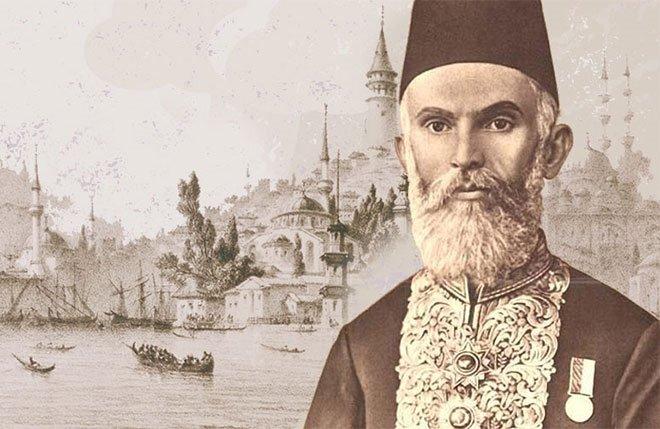
Şemsettin Sami (1850–1904) was a multifaceted writer, linguist and journalist who played a significant role in the Ottoman Empire’s modernization process through important. He is recognized as an intellectual deeply engaged with both Ottoman and Albanian cultures and known as a multilingual man of letters. His formative years and education were fundamental in shaping his intellectual accumulation.
Parents: Şemsettin Sami’s father Halit Bey was a tımar holder residing in the town of Frashër in Ottoman Albania. His mother Emine Hanım belonged to one of the prominent families of the Ottoman Empire and was descended from İmrahor İlyas Bey. Şemsettin Sami was the third of six siblings. His brother Naim Frashëri is regarded as the founder of Albanian national poetry.
Spouse: Şemsettin Sami married Emine Hanım. Throughout their marriage he successfully fulfilled both literary and familial responsibilities.
Children: One of Şemsettin Sami’s children, Ali Sami Yen, was the founder of Galatasaray Sports Club and remains an important figure in Turkish sports history.
Şemsettin Sami was born on 1 June 1850 in the town of Frashër in the Albanian region of the Ottoman Empire. His father Halit Bey was a tımar-holding Ottoman bey and the family held a prominent position within Ottoman administration. His mother Emine Hanım was descended from İmrahor İlyas Bey. Şemsettin Sami was the third of six siblings, and his brother Naim Frashëri is recognized as the founder of Albanian national poetry.
In 1859 he lost his father and in 1861 his mother. He was raised under the guardianship of his elder brother Abdül Bey. The family moved to Yanya during this period, where Şemsettin Sami’s education began to take shape.
Şemsettin Sami received his early education at the Nasîbi Tâhir Father Tekkesi, affiliated with the Bektashi order. This education shaped his religious and moral values. In 1868 he graduated from the Zosimea High School in Ioannina. This school was among the most prestigious educational institutions of the era and offered a Western-style curriculum. At this school Şemsettin Sami learned Albanian, Ancient and Modern Greek, French, Italian, Turkish, Arabic and Persian. His development as a multilingual individual greatly contributed to his later linguistic work. During this period he intensified his engagement with classical literature and philosophy on. His interest in the Ottoman modernization movement also took root during these years.
The education Şemsettin Sami received in his youth formed his intellectual identity and multifaceted personality. Growing up as a multilingual individual enabled him to contribute meaningfully to both Ottoman and Albanian cultures. The intellectual accumulation he gained throughout his education made it possible for him to become a pioneering figure in linguistics literature and journalism.
1- Novel:
2- Theater:
3- Journalism and Publishing:
1- Lexicographical Works:
2- Language Reform:
3- Translations:
1- Albanian Culture: Şemsettin Sami played a significant role in the development of the Albanian alphabet and conducted linguistic studies on the Albanian language.
2- Ottoman Modernization: In the process of Ottoman modernization he emphasized the importance of language and education and proposed reform reforms in these fields.
3- Encyclopedic Works: Kâmûsü'l-A'lâm was among the first works in the Ottoman Empire to facilitate access to encyclopedic knowledge.
Biography Archive. "Şemsettin Sami Kimdir?" Accessed March 20, 2025. https://www.biyografistan.com/2013/06/semsettin-sami-kimdir-biyografisi.html
Edebiyat Öğretmeni. "Şemsettin Sami (1850-1904)." Accessed March 20, 2025. https://www.edebiyatogretmeni.org/semsettin-sami/
Edebiyat Öğretmeni. "Şemsettin Sami (1850-1904)." Accessed March 20, 2025. https://www.edebiyatogretmeni.org/semsettin-sami/
TDV İslâm Ansiklopedisi. "Şemsettin Sami." Accessed March 20, 2025. https://islamansiklopedisi.org.tr/semseddin-sami
Turk Dili ve Edebiyatı. "Şemsettin Sami." Accessed March 20, 2025. https://www.turkedebiyati.org/semsettin-sami/

Babası | Halit Bey | ||||||||
|---|---|---|---|---|---|---|---|---|---|
Eş | Emine Hanım | ||||||||
Annesi | Emine Hanım | ||||||||
Ölüm tarihi | 1904-07-01 | ||||||||
Çocuk | Ali Semi Yen | ||||||||
Family Life
Early Years
Education
Contributions to Literature
Contributions to Linguistics
Contributions to Culture