

This article was automatically translated from the original Turkish version.
Province(s) | Isparta | ||||||||
|---|---|---|---|---|---|---|---|---|---|
Type of Geographical İndication | Mahreç Sign | ||||||||
Application Date | 26 January 2020 | ||||||||
Registration Date | 6 July 2021 | ||||||||
Registration Number | 795 | ||||||||
Product / Product Group(s) | Meals and soups | ||||||||
Applicant/Registrant(s) | Senirkent Municipality | ||||||||
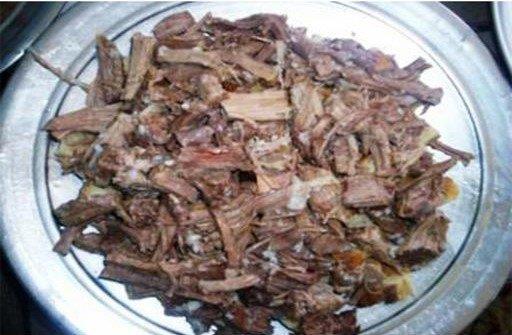
Senirkent banağı is a traditional meat dish with roots extending back to antiquity and holds a prominent place in the regional cuisine of Senirkent district. It is prepared using bone-in cuts of beef, lamb, or goat, along with a split beef shank bone, water, salt, black pepper, and optionally pide, stale bread, or dried phyllo dough. The distinctive feature that defines this dish and ties it to its geographical origin is the cooking of the meat together with the beef shank bone.
This dish is served hot, with the tender meat poured over pre-prepared pide or bread along with the meat broth; it is never sold frozen. Its preparation requires skill, which is why a strong association exists between Senirkent banağı and its geographical origin.
Senirkent banağı is a geographical indication registered on 6 July 2021 under number 795. The registration was carried out by the Senirkent Municipality under Law No. 6769 on Industrial Property. The geographical boundary of the indication is limited to Senirkent district of Isparta Province.
In the production of Senirkent banağı, meat from animals raised in Senirkent is preferred. The preparation process includes the following steps:
The reputation and production technique of Senirkent banağı are directly linked to Senirkent district. Therefore, all stages of production must be carried out exclusively within this geographical boundary.
Monitoring is conducted at least once annually under the coordination of the Senirkent Municipality. The monitoring body consists of experts from the Senirkent Municipality, the District Directorate of Agriculture and Forestry, and the Chamber of Tradesmen and Craftsmen. The following elements are inspected:
Expert support may be obtained from public or private institutions when necessary. The registering institution is responsible for safeguarding legal rights.
Turk Patent and Trademark Office. "Coğrafi İşaret Tescil Belgesi: Senirkent Banağı." Coğrafi İşaretler Portalı. Accessed August 16, 2025. https://ci.turkpatent.gov.tr/Files/GeographicalSigns/d4eecd7b-ba2f-48bc-a3ae-967fbc662743.pdf.
Turk Patent and Trademark Office. "Senirkent Banağı." *Geographical Indications Portal.* Accessed August 16, 2025. https://ci.turkpatent.gov.tr/cografi-isaretler/detay/1586.

Province(s) | Isparta | ||||||||
|---|---|---|---|---|---|---|---|---|---|
Type of Geographical İndication | Mahreç Sign | ||||||||
Application Date | 26 January 2020 | ||||||||
Registration Date | 6 July 2021 | ||||||||
Registration Number | 795 | ||||||||
Product / Product Group(s) | Meals and soups | ||||||||
Applicant/Registrant(s) | Senirkent Municipality | ||||||||
Registration Details
Production Method
Requirement of Production Within the Geographical Boundary
Monitoring Process