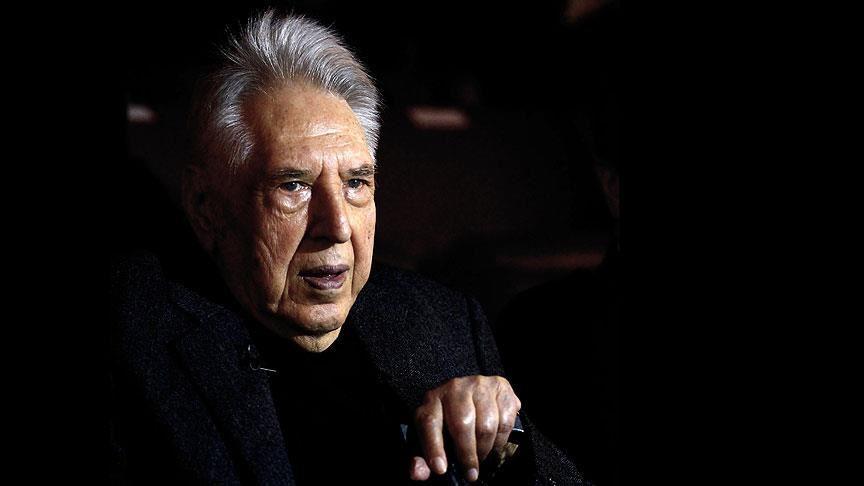



Şerif Mardin
Birth | 1927 | ||||||||
|---|---|---|---|---|---|---|---|---|---|
Death | 6 September 2017 | ||||||||
Education | Stanford University Johns Hopkins University | ||||||||
Areas of Expertise | Turkish modernization, Religion-state relations, Core-periphery theory | ||||||||
Position(s) | Faculty membership at Ankara University Director of the Center for Islamic Studies at American University Sabancı University and Şehir University Boğaziçi University | ||||||||
Notable Works | The Political Ideas of the Young Turks, Religion and Ideology, The Bediüzzaman Said Nursi Incident | ||||||||
Şerif Mardin has played a foundational role in the history of Turkish social sciences through his work on Turkish modernization, center-periphery relations, religion and politics, civil society, and intellectual history. Known as the “teacher of teachers,” Mardin made significant contributions to Turkish sociological literature through his original conceptualizations and broad-ranging interpretations.
Ahmed Halil Şerif Arif Mardin was born in Istanbul in 1927. His father was Ambassador Şemseddin Bey, and his mother was Reya Hanım, daughter of the journalist Ahmed Cevdet. Mardin belonged to an elite family during the Ottoman period; his great-uncle, Ordinary Professor Ebul’ula Mardin, was one of the prominent figures in Turkish legal history. Mardin began his secondary education at Galatasaray High School and continued his studies in the United States. He completed his undergraduate degree in the Department of Political Science at Stanford University and his master’s degree at Johns Hopkins University. He earned his doctorate in 1958 from the Hoover Institution at Stanford University with his thesis titled “The Young Ottoman Movement.”
In 1954, Mardin began his academic career as an assistant at the Faculty of Political Science of Ankara University. He was promoted to associate professor in 1964 and to full professor in 1969. After thirteen years of teaching at Ankara University, he moved to Boğaziçi University in 1973, where he served as founding dean of the Faculty of Economic and Administrative Sciences and as head of the Department of Sociology.
Later, he spent approximately thirteen years as director of the Center for Islamic Studies at American University in Washington. Upon returning to Türkiye, he held teaching positions at Sabancı University and, finally, at the Department of Sociology of Istanbul Şehir University. In 2011, Sabancı University awarded him the title of emeritus professor.
Şerif Mardin’s academic interests focused on the history of Ottoman-Turkish modernization, the relationship between Islam and civil society, Sufi orders, intellectual history, and ideology. His studies in the 1980s on Said Nursi and the Nakşibendi order provided an important framework for analyzing the relationship between religious structures and modernization. By introducing the concept of “neighborhood pressure” into Turkish public discourse, he initiated an original debate on the relationship between the individual and society.
Mardin stood out for his approach that brought historical depth to the social sciences and for his interdisciplinary perspective. He was one of the key figures who led the institutionalization of social sciences in Türkiye and was among the founders of the Turkish Social Science Association. His distinctive academic language and the intellectual relationships he built with his students left a lasting impact on a generation of social scientists.
Şerif Mardin had a brief political experience in the 1950s. He served as an advisor to the general secretary of the Freedom Party and ran as a parliamentary candidate in 1957 but was not elected. In the 1990s, he joined the New Democracy Movement led by İsmail Cem, but this initiative also ended in failure.
Mardin’s works were published in both Turkish and English. His principal publications include:
In his later years, Mardin continued to teach his students individually in his home, maintaining personal attention even as his illness progressed, and he remained academically productive. Professor Şerif Mardin passed away in Istanbul on 6 September 2017. Those who stayed longest beside his grave were his assistants and students, a testament to the profound impact of his academic mentorship and the deep influence he had on his students.
Şerif Mardin is remembered as a thinker who constructed the historical and critical depth of social sciences in Türkiye. His works remain among the essential reference sources for understanding the relationship between religion and society, the process of modernization, and intellectual transformations.
Arlı, Alim. 2006. "Şerif Mardin Bibliyografyası (1950–2007)." *Divan: Disiplinlerarası Çalışmalar Dergisi* 21: 89–114. Accessed May 13, 2025. https://dergipark.org.tr/tr/pub/divan/issue/25950/273401.
GZT Nihayet. "Şerif Mardin’in ‘Dindar’ Asistanları." GZT Nihayet, September 6, 2017. Accessed May 7, 2025. https://www.gzt.com/nihayet/serif-mardinin-dindar-asistanlari-3549092.
“Bilime Adanmış Bir Ömür: Şerif Mardin.” Anadolu Ajansı, September 7, 2017. Accessed May 7, 2025. https://www.aa.com.tr/tr/turkiye/bilime-adanmis-bir-omur-serif-mardin/903563.
“Türk Sosyolojisine Derin İzler Bırakan Bir Akademisyen: Şerif Mardin.” Anadolu Ajansı, September 5, 2020. Accessed May 7, 2025. https://www.aa.com.tr/tr/yasam/turk-sosyolojisine-derin-izler-birakan-bir-akademisyen-serif-mardin/1963842.
“Şerif Mardin (1927–2017).” *Atatürk Ansiklopedisi*. Accessed May 7, 2025. https://ataturkansiklopedisi.gov.tr/detay/1726/%C5%9Eerif_Mardin_(1927-2017).

Şerif Mardin
Birth | 1927 | ||||||||
|---|---|---|---|---|---|---|---|---|---|
Death | 6 September 2017 | ||||||||
Education | Stanford University Johns Hopkins University | ||||||||
Areas of Expertise | Turkish modernization, Religion-state relations, Core-periphery theory | ||||||||
Position(s) | Faculty membership at Ankara University Director of the Center for Islamic Studies at American University Sabancı University and Şehir University Boğaziçi University | ||||||||
Notable Works | The Political Ideas of the Young Turks, Religion and Ideology, The Bediüzzaman Said Nursi Incident | ||||||||
Life and Education
Academic Career
Works and Contributions
Political Engagement
Major Works
Death and Legacy