


Category | Fifth-Generation Stealth Fighter Aircraft | ||||||||
|---|---|---|---|---|---|---|---|---|---|
Origin(s) | China (Shenyang Aircraft Corporation) | ||||||||
Engine(s) | 2 x Indigenous WS-13E/WS-19 turbofan engines | ||||||||
Role | Air Superiority and Attack | ||||||||
Crew | 1 person | ||||||||
First Flight(s) | Prototype: 2012 / Naval Version: 2021 | ||||||||
Service Entry | Early 2020s | ||||||||
Maximum Speed | Around Mach 1.8 | ||||||||
The Shenyang J-35 is a twin-engine, fifth-generation stealth fighter developed by the Shenyang Aircraft Corporation (SAC) for the Chinese People's Liberation Army Navy. Initially designed as a derivative of the export-oriented FC-31 Gyrfalcon project, the J-35 has been developed to perform air superiority and strike missions from China's new-generation aircraft carriers. The J-35 is seen as a rival to fighters such as the US F-35.

Shenyang J-35 (Haci Productions)
The design process for the J-35 is based on the FC-31 project, whose first prototype flew in 2012. Although the FC-31 was initially launched by a private company to meet the Chinese Air Force's need for a fifth-generation fighter, it later attracted the Navy's interest. The aircraft was adapted for aircraft carrier operations and made its maiden flight in 2021.
The aerodynamic design of the J-35 has been specifically optimized to minimize radar visibility. Stealth technologies such as internal weapon carriage, radar-absorbent materials (RAM), and special engine exhausts have been utilized. The aircraft's twin-engine configuration provides high speed and a high thrust-to-weight ratio. While early prototypes used Russian-made RD-93 engines, production models are reported to be equipped with the domestically produced WS-13E and the more powerful WS-19 turbofan engines.
Shenyang J-35 ()
Although the operational data and technical specifications of the J-35 are kept classified, some basic performance data, according to press reports, are as follows:
The J-35 carries its ordnance in internal weapon bays to maintain its stealth characteristics. These bays will accommodate air-to-air missiles, guided bombs, and other precision-guided munitions. The aircraft's avionics systems are supported by advanced sensors and radar.
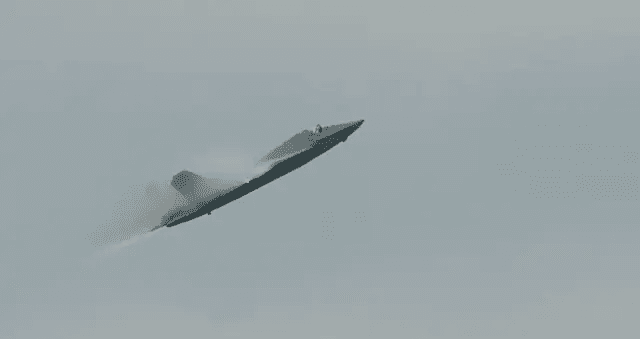
Shenyang J-35 Air Show (Superflanker Studio)
Army Recognition. “China begins J-35 fighter jets production for deployment on Fujian aircraft carrier.”July 14, 2025. Accessed October 19, 2025. https://armyrecognition.com/news/navy-news/2025/breaking-news-china-begins-j-35-fighter-jets-production-for-deployment-on-fujian-aircraft-carrier-raising-indo-pacific-threats.
Breaking Defense. “Pakistan says China offered 40 J-35 stealth aircraft, among others.” Breaking Defense. Accessed: October 19, 2025. https://breakingdefense.com/2025/06/pakistan-says-china-offered-40-j-35-stealth-aircraft-among-others.
Chan, Ryan. “China News Unveils Stealth Jets to Rival US Air Force F-22, F-35 Fighters.” Newsweek. November 14, 2024. Accessed October 19, 2025. https://www.newsweek.com/china-news-unveils-stealth-jets-rival-us-air-force-f-22-f-35-fighters-1984168.
Congyi, Lin. "China unveils stealth jets to rival US Air Force F-22, F-35 fighters.” China Military. November 5, 2024. Accessed October 19, 2025. http://eng.chinamil.com.cn/CHINA_209163/TopStories_209189/16349630.html.
Haci Productions. “J-35 Gyrfalcon Stealth Fighter.” YouTube video. December 14, 2024. 01:52. https://www.youtube.com/watch?v=HCBIsVrk8XA.
Military Watch Magazine. “Entirely new stealth fighter joined China Air Force, J35.” July 6, 2025. Accessed: October 19, 2025. https://militarywatchmagazine.com/article/entirely-new-stealth-fighter-joined-china-air-force-j35.
Newdick, Thomas and Tyler Rogoway. “China’s J-35A Stealth Fighter Officially Breaks Cover.” The War Zone. November 5, 2024. Accessed October 19, 2025. https://www.twz.com/air/chinas-j-35a-stealth-fighter-officially-breaks-cover.
Newdick, Thomas. “Land-Based Variant Of China’s J-35 Naval Stealth Fighter Makes Sense.” The War Zone. May 31, 2024. Accessed October 19, 2025. https://www.twz.com/air/land-based-variant-of-chinas-j-35-naval-stealth-fighter-makes-sense.
Superflanker Studio. “J-35 flies out of Mach loop and appears at Zhuhai Air Show.” YouTube video. January 7, 2025. 03:14. https://www.youtube.com/watch?v=zxdZdOr_H5E.


Category | Fifth-Generation Stealth Fighter Aircraft | ||||||||
|---|---|---|---|---|---|---|---|---|---|
Origin(s) | China (Shenyang Aircraft Corporation) | ||||||||
Engine(s) | 2 x Indigenous WS-13E/WS-19 turbofan engines | ||||||||
Role | Air Superiority and Attack | ||||||||
Crew | 1 person | ||||||||
First Flight(s) | Prototype: 2012 / Naval Version: 2021 | ||||||||
Service Entry | Early 2020s | ||||||||
Maximum Speed | Around Mach 1.8 | ||||||||
Design and Development
Structural Features
Technical Specifications and Capabilities
Weapon Systems
This article was created with the support of artificial intelligence.