This article was automatically translated from the original Turkish version.
Director(s) | Vicky Jenson Andrew Adamson | ||||||||
|---|---|---|---|---|---|---|---|---|---|
Producer(s) | John H. Williams Aron Warner Jeffrey Katzenberg | ||||||||
Screenplay(s) | Roger S.H. Schulman Joe Stillman Terry Rossio Ted Elliott | ||||||||
Music(s) | John Powell Harry Gregson-Williams | ||||||||
Duration | 90 minutes | ||||||||
Genre | Fantasy Comedy Animation | ||||||||
Language(s) | English | ||||||||
Budget(s) | 60 million dollars | ||||||||
Box Office(s) | 487.9 million dollars | ||||||||
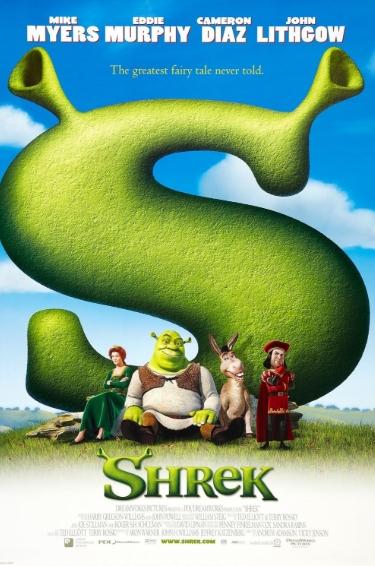
Shrek is an animated film produced by DreamWorks Animation and released in 2001. Adapted from William Steig’s 1990 children’s book Shrek!, the film reimagines traditional fairy tales with a humorous and subversive approach. Centered on the adventures of Shrek, a green ogre, the film achieved both critical and commercial success, pioneering a new era in animated cinema. While exploring universal themes such as friendship, acceptance and overcoming prejudice, it appeals to a broad audience through pop culture references and witty dialogue.
Shrek Film Trailer (YouTube)
Shrek tells the story of Shrek, a green ogre who lives alone in a swamp. Lord Farquaad, seeking to make his kingdom “perfect,” banishes all fairy tale creatures to Shrek’s swamp. To reclaim his home, Shrek strikes a deal with Farquaad: he must rescue Princess Fiona, who is imprisoned in a tower guarded by a dragon. Along the way, Shrek befriends a talkative donkey. During the rescue, an unexpected bond forms between Shrek and Fiona. However, Fiona’s secret and Farquaad’s true intentions complicate the story. The film subverts classic fairy tale tropes to emphasize that true beauty lies within and that prejudice must be overcome.
Key themes in Shrek include individuality, acceptance and the dismantling of prejudice. The film argues that outward appearance does not define a person and that true value resides in inner qualities. Shrek’s social ostracization and Fiona’s secret reinforce themes of prejudice and identity. Friendship and loyalty are also central; the relationship between Shrek and the donkey demonstrates that strong bonds can form despite differences. Additionally, the film satirizes clichés of fairy tales, offering a critical perspective on perfectionism and societal expectations.
Shrek was released in North America on 18 May 2001 and achieved major commercial success worldwide. Produced with a budget of approximately $60 million, the film grossed $487.9 million globally. It earned $267.7 million in North America and $220.2 million in international markets. Shrek became the third highest-grossing film of 2001 and is regarded as one of DreamWorks Animation’s most successful productions.
Shrek was developed by DreamWorks Animation and animated by PDI/DreamWorks. The film was directed by Andrew Adamson and Vicky Jenson. The screenplay was written by Ted Elliott, Terry Rossio, Joe Stillman and Roger S.H. Schulman. Adapted from William Steig’s book, the film showcases one of the most advanced examples of computer animation technology of its time. The production process, due to the detailed design of characters and environments, lasted approximately four years. The music was composed by Harry Gregson-Williams and John Powell, while pop songs such as “All Star” and “I’m a Believer” added an iconic tone to the film.
Shrek received widespread acclaim from critics and numerous awards. Notable awards and nominations include:
Box Office Mojo. “Shrek (2001).” Accessed July 3, 2025. https://www.boxofficemojo.com/title/tt0126029/?ref_=bo_se_r_1.
IMDb. "Shrek (2001) – Awards." Accessed July 3, 2025. https://www.imdb.com/title/tt0126029/awards/?ref_=tt_awd.
IMDb. "Shrek (2001) – Full Cast & Crew." Accessed July 3, 2025. https://www.imdb.com/title/tt0126029/fullcredits/?ref_=tt_ov_ql_1.
IMDb. "Shrek (2001) – Plot Summary." Accessed July 3, 2025. https://www.imdb.com/title/tt0126029/plotsummary/?ref_=tt_stry_pl.
IMDb. "Shrek (2001) – Technical Specifications." Accessed July 3, 2025. https://www.imdb.com/title/tt0126029/?ref_=mv_close.

Director(s) | Vicky Jenson Andrew Adamson | ||||||||
|---|---|---|---|---|---|---|---|---|---|
Producer(s) | John H. Williams Aron Warner Jeffrey Katzenberg | ||||||||
Screenplay(s) | Roger S.H. Schulman Joe Stillman Terry Rossio Ted Elliott | ||||||||
Music(s) | John Powell Harry Gregson-Williams | ||||||||
Duration | 90 minutes | ||||||||
Genre | Fantasy Comedy Animation | ||||||||
Language(s) | English | ||||||||
Budget(s) | 60 million dollars | ||||||||
Box Office(s) | 487.9 million dollars | ||||||||
Plot
Themes
Box Office Performance
Production
Characters and Voice Cast
Character Analysis
Awards and Nominations