This article was automatically translated from the original Turkish version.
+1 More
Location | Atatürk Caddesi Sivas Sivas Merkez Danişment Gazi Mahallesi | ||||||||
|---|---|---|---|---|---|---|---|---|---|
Patron | Anatolian Seljuk Sultan I. Izzeddin Keykavus | ||||||||
Construction Year | 1217 | ||||||||
Building Type | Medrese and healthcare institution (darüşşifa) | ||||||||
Architectural Plan | Four-iwan, courtyard, classical Seljuk plan | ||||||||
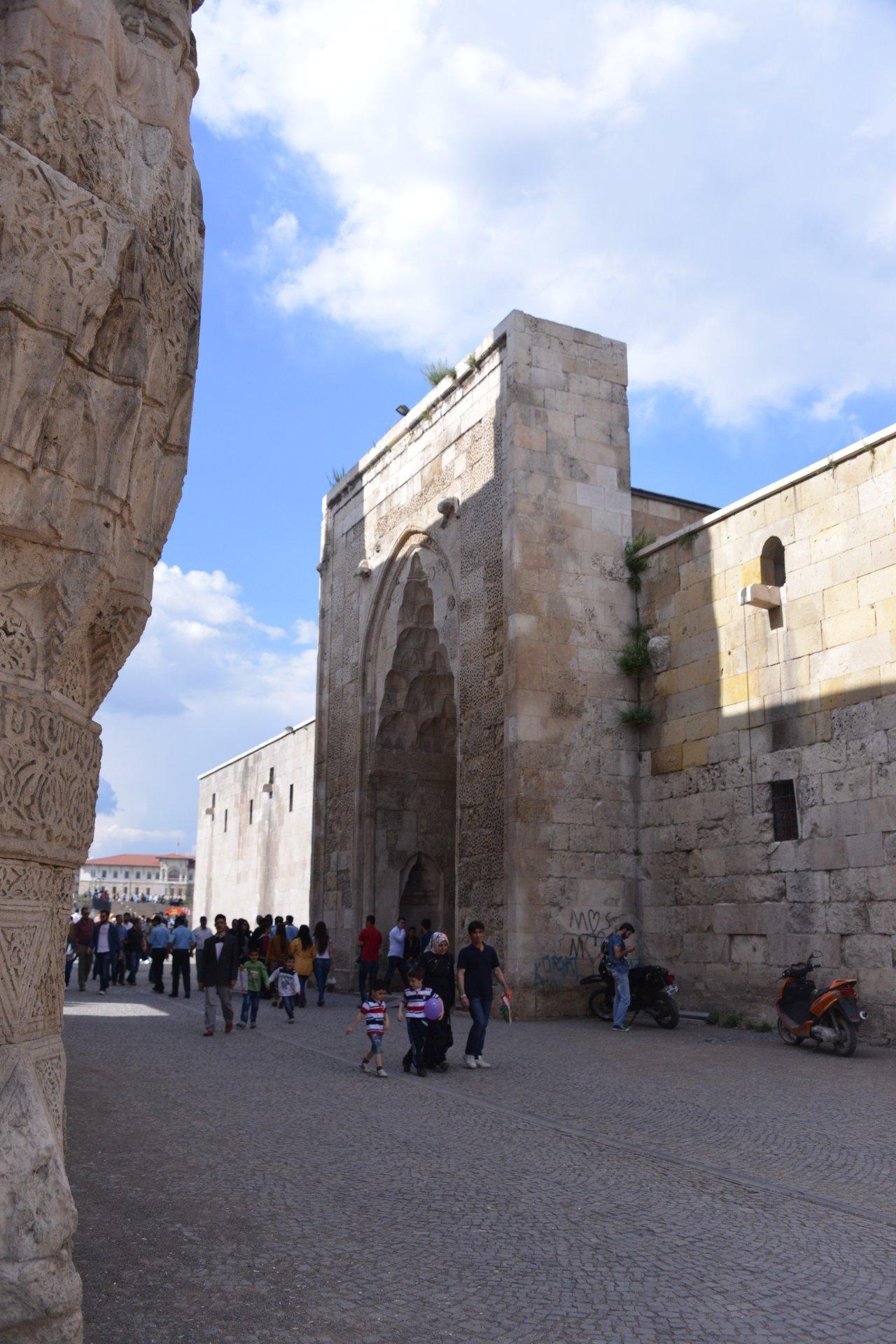
The Şifaiye Medresesi is located in the central district of Sivas Province, along Atatürk Avenue. It is situated within the boundaries of Danişment Gazi Mahallesi, embedded in Sivas’ historic urban fabric. The medrese is regarded as one of the most significant healthcare and educational structures built during the Anatolian Seljuk period.
The medrese was commissioned in 1217 by Sultan Izzeddin Keykavus I of the Anatolian Seljuks. The building was constructed to serve simultaneously as a medrese and a darüşşifa (hospital). Izzeddin Keykavus I died in 1220 within this külliye, which he had commissioned in his own name, and his tomb is located in the northwestern corner of the structure.
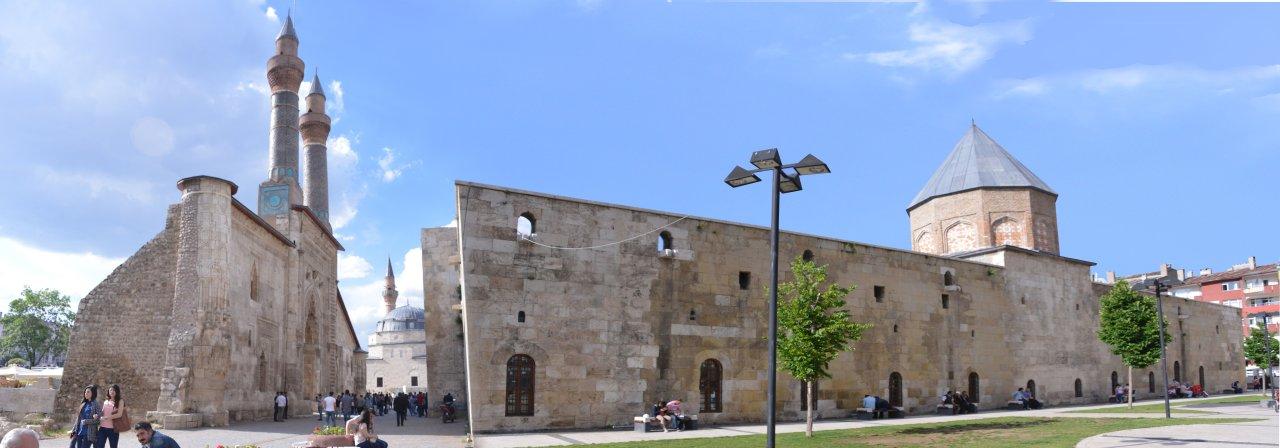
Şifaiye Medresesi (Sivas Municipality)
The building follows the classic Seljuk medrese plan centered around a four-iwan courtyard. The entrance facade is richly decorated with stonework. The crowned portal is adorned with geometric and vegetal motifs. Immediately beyond the entrance lies a spacious courtyard surrounded by student rooms and lecture halls. The western section of the building functioned as the darüşşifa.
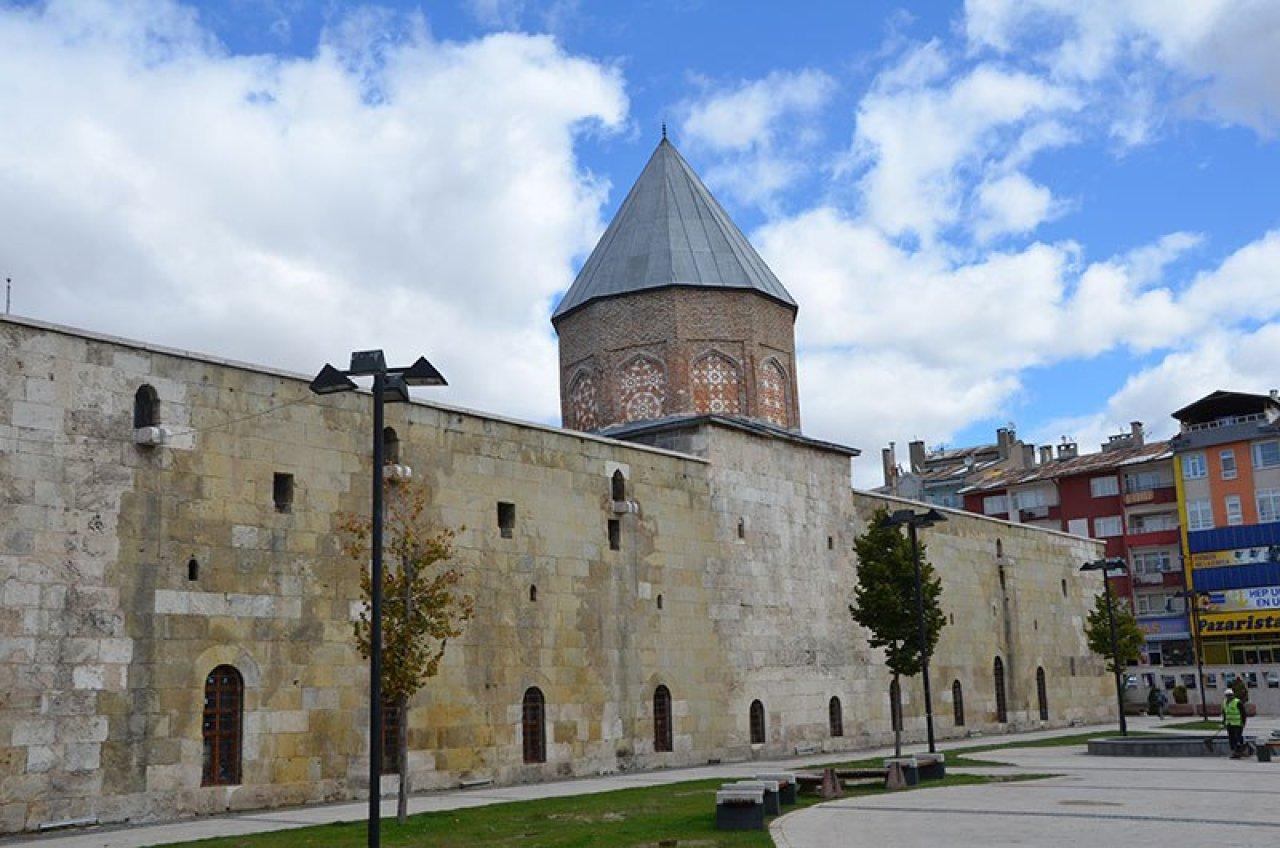
Şifaiye Medresesi (Sivas Municipality)
The darüşşifa section within the Şifaiye Medresesi operated as a medical center treating patients of its time. Physicians provided treatment for various illnesses, applying both physical and psychological therapies. This structure was not merely an institution for medical education but also a center where patient care was actively delivered.
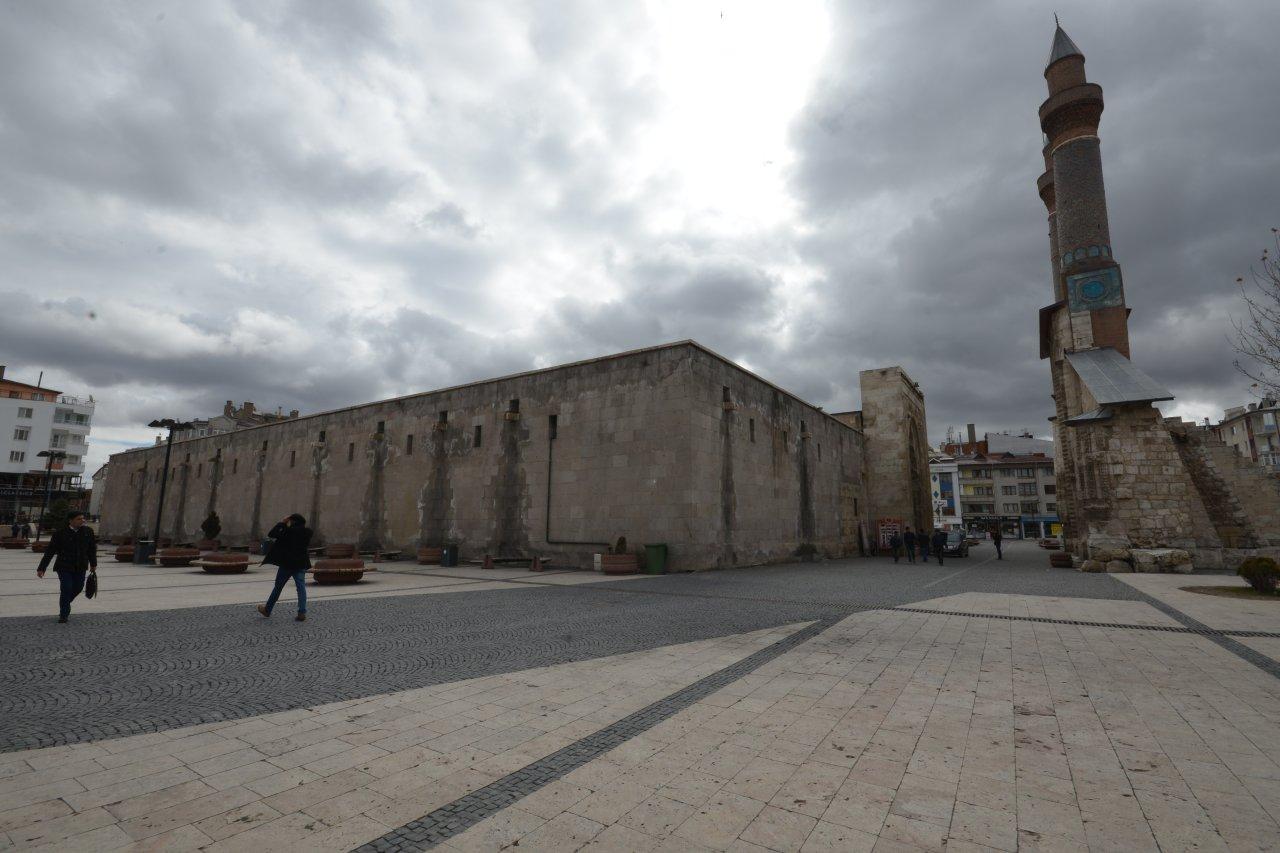
Şifaiye Medresesi (Sivas Municipality)
The tomb of Izzeddin Keykavus I is located in the northwestern corner of the medrese. The tomb, built in the kümbet style, has an octagonal exterior and a circular interior plan. The sultan’s sarcophagus is housed here, and an inscription on the monument provides information about the building.
Today, the building is visited as an important historical and tourist landmark in the center of Sivas city. Restoration and conservation efforts have been carried out in various periods. It is protected by the Ministry of Culture and Tourism and local administrations.
Ministry of Culture and Tourism of the Republic of Türkiye. "Şifaiye Medresesi ve Darüşşifası." Kültür Portalı. Accessed July 20, 2025. https://www.kulturportali.gov.tr/turkiye/sivas/gezilecekyer/sfaye-medreses-ve-darussfasi
Sivas Belediyesi. "Şifaiye Medresesi." Accessed July 20, 2025. https://sivas.bel.tr/yapi/sifaiye-medresesi
T.C.Sivas Valiliği Directorate of Culture and Tourism. "Şifaiye Medresesi/Darüşşifa." Accessed July 20, 2025. https://sivas.ktb.gov.tr/TR-272607/sifaiye-medresesidarusifa.html

Location | Atatürk Caddesi Sivas Sivas Merkez Danişment Gazi Mahallesi | ||||||||
|---|---|---|---|---|---|---|---|---|---|
Patron | Anatolian Seljuk Sultan I. Izzeddin Keykavus | ||||||||
Construction Year | 1217 | ||||||||
Building Type | Medrese and healthcare institution (darüşşifa) | ||||||||
Architectural Plan | Four-iwan, courtyard, classical Seljuk plan | ||||||||
History
Architectural Features
Darüşşifa and Health Services
Tomb
Conservation and Current Use