

This article was automatically translated from the original Turkish version.
+1 More
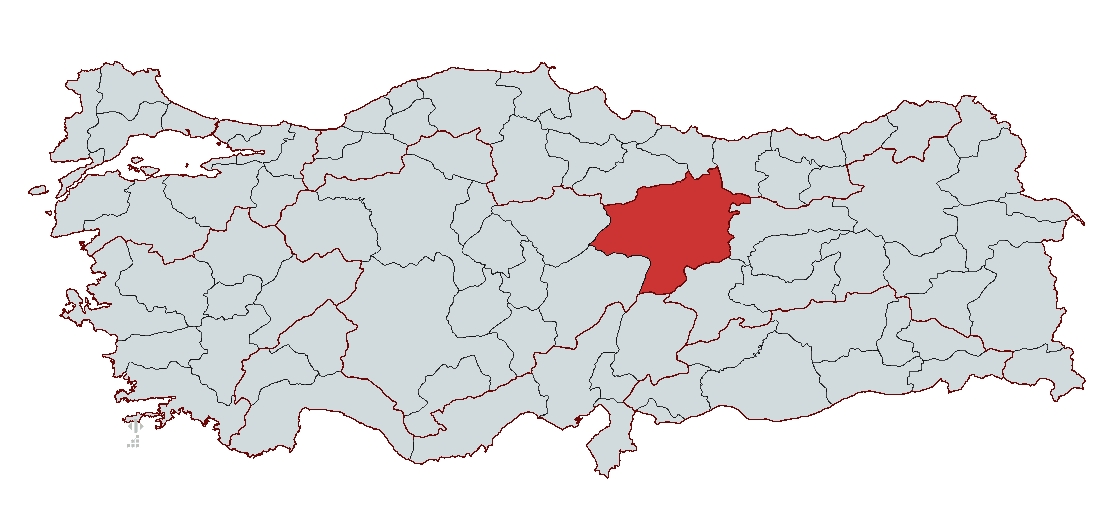
Sivas
Country | Türkiye | ||||||||
|---|---|---|---|---|---|---|---|---|---|
Region(s) | Central Anatolia Region | ||||||||
Population | 637.007 (2023) | ||||||||
Area(s) | 28.488 km² | ||||||||
Climate(s) | Continental Climate | ||||||||
Important Structure(s) | Çifte Minareli Medrese Kesik Köprü Gök Medrese Atatürk and Congress Museum | ||||||||
Area Code(s) | 346 | ||||||||
License Plate Code | 57 | ||||||||
Governor(s) | Dr. Yılmaz Şimşek | ||||||||
Mayor(s) | Dr. Adem Uzun | ||||||||
Sivas has been home to many civilizations throughout history house and, due to its strategic location, has served as an administrative center. City is recognized as an important settlement during the Hittite period, and under the Kadı Burhâneddin, Danişment, Eretna Beylik, Seljuk State and Ottoman Empire periods, it remained a significant center. Sivas, where the foundations of the Republic were laid, became one of the symbols of the War of Independence by hosting the Sivas Congress.

Sivas is located in the eastern part of Inner Anatolia, within the Upper Kızılırmak basin, and was established at the foot of the Meraküm plateau at an elevation of 1275 meters. Throughout its history, the city has been known by many different names. During the Roman period, it was known as Sebasteia and gradually acquired the name Sivas. Sivas lies along the northern edge of the Kızılırmak valley and has been situated on an important transportation and trade route since antiquity.
Sivas, as a region inhabited since Neolithic Period, remained under the dominance of major civilizations such as the Hittites and Persians such as. This past, extending back to around 2000 BC, enhanced the city’s historical importance. Under the Roman Empire, Sivas was known as “Province-i Greek” and later transitioned into the Byzantine and Seljuk periods. After Sultan I. Kılıç Arslan conquered the city in 1142, Sivas became an important culture and trade center.
During the Seljuk and Ilkhanid periods, the city became a significant center militarily and culturally. The madrasas, mosques and other structures built in Sivas reflect the scientific and cultural developments of the time. Furthermore, after the Battle of Köse Dağ in 1243, the city was occupied by the Ilkhanids and remained under prolonged Mongol administration. During Ilkhanid rule, Sivas experienced physical development, and cultural structures such as madrasas were constructed in this period.
During the Ottoman Empire, Sivas became an important city both militarily and commercially. The city suffered major damage during Timur’s invasion in the 1400s but recovered after coming under Ottoman rule and became a major provincial center. Evliya Çelebi’s travelogue notes that Sivas was one of the largest and wealthiest cities of its time. During the Ottoman period, the economic activities of the city centered on bazaars, caravanserais and madrasas.
After the proclamation of the Republic, Sivas made a significant contribution to the War of Independence by hosting the Sivas Congress between 4 and 11 September 1919. During this period, Sivas began to develop not only as a military and political center but also in terms of industry. However, due to insufficient industrial investment, its growth lagged behind that of larger cities. The establishment of Cumhuriyet University in 1974 contributed culturally and economically to the city.
Today Sivas continues to be a city noted for its historical structures, cultural activities and natural beauty. Many historical work from the Seljuk and Ottoman periods, including mosques, madrasas, caravanserais and bathhouses, have survived to the present day. Moreover, modern Sivas maintains its status as an important Anatolian city through its growing industry and cultural infrastructure.
Sivas Province lies in the eastern part of the Central Anatolia Region, atop the high plateaus of Anatolia, and features a land structure that rises toward the east. The provincial boundaries end in mountainous and steep terrain to the north, east and southeast. The average elevation exceeds 1000 meters, making this situation a defining feature of the region’s geography. Among the mountains in Sivas, the Köse Dağları, an extension of the North Anatolian Mountains, the Tecer Dağları and İncebel Dağları from the northern branches of the Taurus Mountains, as well as Akdağlar and Yama Dağı, are significant. Additionally, the Uzunyayla and Meraküm plateaus and the valleys of the Kızılırmak, Kelkit and Çaltı rivers are other important geographical elements.
Sivas Province lies between 35°–50° east longitude and 38°–32′ and 40°–16′ north latitude, and is Turkey’s second largest province by area, covering 28,488 km². The majority of the province’s land lies within the Upper Kızılırmak basin, while a portion belongs to the Yeşilırmak and Euphrates basins. Sivas experiences the influence of the Black Sea climate in the north and the Eastern Anatolian highland climate in the east.
The city is surrounded by natural boundaries: the Kelkit Valley to the north, the Köse Dağları and Kuruçay Valley to the east, the Kulmaç Dağları and Hezanlı Dağı to the south, and the Karababa and Akdağlar to the west. Moreover, Sivas is situated on the high plateaus of Inner Anatolia at the intersection of the historic Silk Road routes. This geographical location has granted Sivas considerable strategic importance for both trade and culture.
Climatically, Sivas lies under the influence of the continental Central Anatolian climate, with hot and dry summers and cold, snowy winters. However, the northern and eastern parts of Sivas also show influences of the Black Sea and Eastern Anatolian climates. The high mountainous areas and rugged topography create a convergence of these different climates, resulting in a geography with microclimatic characteristics road.
Sivas Province, Turkey’s second largest, possesses an important economic structure within the Central Anatolia Region. However, the core of the local economy is shaped by agriculture and animal husbandry, with limited development in industry and services. Consequently, Sivas’s economic indicators remain below both the Central Anatolia Region and national averages.
Sivas’s economy is largely based on agriculture and animal husbandry. As of 2000, 66.5 percent of the active population in the province worked in agriculture, a figure 20 percentage points above the Central Anatolia Region average, while industry accounted for only 5.5 percent. Sivas’s GNP constitutes 4.17 percent of the Central Anatolia Region’s total and 6.6 percent of Turkey’s GNP. As of 2001, Sivas’s per capita GNP was half the national average.
Agriculture plays a dominant role in the province’s economy. However, productivity in this sector is declining and agricultural production is gradually diminishing. In a province experiencing continuous emigration, animal husbandry also holds significant importance. The decline in this sector, particularly due to rural-to-urban migration and the lack of industrial development, has led to reduced agricultural output.
Industry in Sivas has not developed significantly, particularly manufacturing, which remains in the background. In the province’s industrial sector, mineral and energy dominate. Between 1987 and 2001, the industrial sector grew by 8.9 percent, but manufacturing declined by 2.5 percent. This indicates that the manufacturing sub-sector in Sivas has not developed sufficiently and requires serious improvements.
Foreign trade also plays an important role in the development of Sivas’s local economy. Between 2001 and 2006, the province’s foreign trade volume continuously increased. Mining and stone quarrying were key factors supporting this growth. In 2006, Sivas’s exports accounted for 0.38 percent of Central Anatolia’s exports, while its imports accounted for 0.45 percent.
The majority of employment in Sivas is based in agriculture. As of 2000, 66.5 percent of workers were employed in agriculture, while only 5.5 percent worked in industry. A growing shift in employment toward the service sector has been observed. Between 1980 and 2000, employment in the service sector increased by 47 percent, while employment in agriculture decreased by 14.3 percent.
The active Governor of Sivas is Dr. Yılmaz Lightning Şimşek, who was appointed to the position of Sivas Governor from Niğde Governorship by Decree No. 2022/209, having served in Niğde since 2017.
The Çifte Minareli Medrese in Sivas was built in 1271/72 by Ilkhanid vizier Şemseddin Mehmet Cüveyni. The medrese features the tallest crown portal in Anatolia and, with its two minarets, is one of Sivas’s symbols. The building’s rich decoration includes niches and muqarnas adorned with geometric and botany motifs.
The Buruciye Medrese was constructed in 1271 during the reign of Seljuk Sultan III. Gıyaseddin Keyhüsrev. It was built by Muzaffer Burucerdî from Hamadan and is notable for its symmetrical design. Today, it is used by the Sivas Muftiate for various educational activities.
The Sivas Congress Museum is an important structure where the Mustafa Kemal Atatürk and delegation established the center of the National Struggle in 1919. This example of late Ottoman civil architecture features a building façade and stone interior spaces. Today, this building, of great importance in Republican history, is used as a museum.
The Divriği Great Mosque was built between 1228 and 1229 by the Mengücekoğulları and is listed on the UNESCO World Heritage List. Recognized as one of the most important examples of Islamic architecture, the mosque is known for its two domes and adjacent hospital. Its rich stone craftsmanship and architecture reflect traditional Anatolian art.
Sky Medrese was commissioned in 1271 by Vizier Yılmaz Ata Fahreddin Ali during the reign of the third Gıyaseddin Keyhüsrev. The medrese is notable for its rich stone craftsmanship and interplay of light and shadow, and with its two-story plan, ranks among the most important structures in Anatolia. Converted into a museum in 1926, the medrese is planned to reopen after restoration as the Seljuk Art Museum.

A distinctive type of köfte from Sivas, registered with geographical indication by the Turkish Patent and Trademark Office. Sivas Köfte is prepared by grinding meat with special methods after adding salt, then grilling it on a skewer. It is served with spicy pepper and tomato on pide.
Pehli is a dish made from the thigh and breast meat of a lamb. The meats are fried in olive oil, black pepper and butter, then simmered with eggplant and pepper. Finally, on tomato is added and cooked slowly over low heat.
Divriği Pilaf is a dish prepared using the same recipe for eight hundred years. The pilaf, cooked with Chicken or meat, is flavored with chickpeas, grape and spices. This pilaf, prepared for holidays and special occasions, is a staple on festive tables due to its rich ingredients.
İçli Köfte is a dish made from fine bulgur and minced meat, stuffed with a filling of roasted onion and spices, then wrapped and shaped. After boiling, it is served with butter. This dish is both delicious and practical.
Vegetable Sivas Kebab is prepared by arranging meat cooked in a tandır on skewers together with eggplant, pepper and tomato. This kebab ensures the delicious serving of meat grilled on a mangal.
Aksaray İl Kültür ve Turizm Müdürlüğü. "Ana Yemekler." Accessed February 12, 2025. https://sivas.ktb.gov.tr/TR-283232/ana-yemekler.html.
Cumhuriyet ÜniversitesiMihmandar Otel. "Sivas." Accessed February 12, 2025. http://mihmandarotel.cumhuriyet.edu.tr/sivas.
Doğan, Adem. "Sivas İli Ekonomisinin Makro-Ekonomik Göstergeler Açısından Türkiye ve İç Anadolu Bölgesindeki Yeri." Selçuk Üniversitesi Karaman İ.İ.B.F. Dergisi, Yerel Ekonomiler Özel Sayısı, 2008.
Karatay Üniversitesi. "Sivas Hakkında Bilinmesi Gerekenler." Karsem. Accessed February 12, 2025. https://karsem.karatay.edu.tr/sivas-hakkinda-bilinmesi-gerekenler.
Sivas Kaplıca. "Tarihi Yerler." Accessed February 12, 2025. https://www.sivaskaplica.com/tarihi-yerler.
Sivas Kültürü. "Sivas’ın Coğrafi Konumu." Accessed February 12, 2025. https://www.sivaskulturu.com/cografya/sivasin-cografi-konumu/.
Sivas Tarım ve Orman İl Müdürlüğü. "Coğrafya." Accessed February 12, 2025. https://sivas.tarimorman.gov.tr/Menu/8/Cografya.
Sivas Valiliği. "Sivas Valisi Dr. Yılmaz Şimşek." Accessed February 12, 2025. http://www.sivas.gov.tr/sivas-valisi-yilmaz-simsek.
Sivas Valiliği. "İlimizin Tarihçesi." Accessed February 12, 2025. http://www.sivas.gov.tr/il-adinin-tarihcesi.
TDV İslâm Ansiklopedisi. "Sivas." Accessed February 12, 2025. https://islamansiklopedisi.org.tr/sivas.

Sivas
Country | Türkiye | ||||||||
|---|---|---|---|---|---|---|---|---|---|
Region(s) | Central Anatolia Region | ||||||||
Population | 637.007 (2023) | ||||||||
Area(s) | 28.488 km² | ||||||||
Climate(s) | Continental Climate | ||||||||
Important Structure(s) | Çifte Minareli Medrese Kesik Köprü Gök Medrese Atatürk and Congress Museum | ||||||||
Area Code(s) | 346 | ||||||||
License Plate Code | 57 | ||||||||
Governor(s) | Dr. Yılmaz Şimşek | ||||||||
Mayor(s) | Dr. Adem Uzun | ||||||||
Geography and Settlement
Antique and Medieval Period
Seljuk and Ilkhanid Period
Ottoman Period
Republican Period
Contemporary Sivas
Geographical Structure
Economic Structure
Sectoral Distribution and GNP
Agriculture and Animal Husbandry
Industry and Manufacturing
Foreign Trade
Employment
Administration
Governor
Historical Structures
Çifte Minareli Medrese
Buruciye (Şifaiye) Medrese
Sivas Congress Museum
Divriği Great Mosque
Gök Medrese
Sivas Cuisine
Sivas Köfte
Pehli
Divriği Pilaf (Alatlı Pilaf)
İçli Köfte
Vegetable Sivas Kebab