


This article was automatically translated from the original Turkish version.
+1 More

Şile Bezi is a woven fabric made from 100% cotton yarn using traditional methods in the Şile district of Istanbul, and it holds a registered geographical indication. Its flexible, wrinkled texture, derived from highly twisted yarns, gives it a crinkled, natural surface. The production process includes sizing, weaving on hand or semi-automatic looms, bleaching with lime slurry, washing in seawater along the Şile coastline of the Black Sea, and drying on sand. Şile Bezi is distinguished by both its weaving technique and regional post-weaving treatments; it is commonly preferred for indoor and outdoor apparel, summer garments, and home textiles.
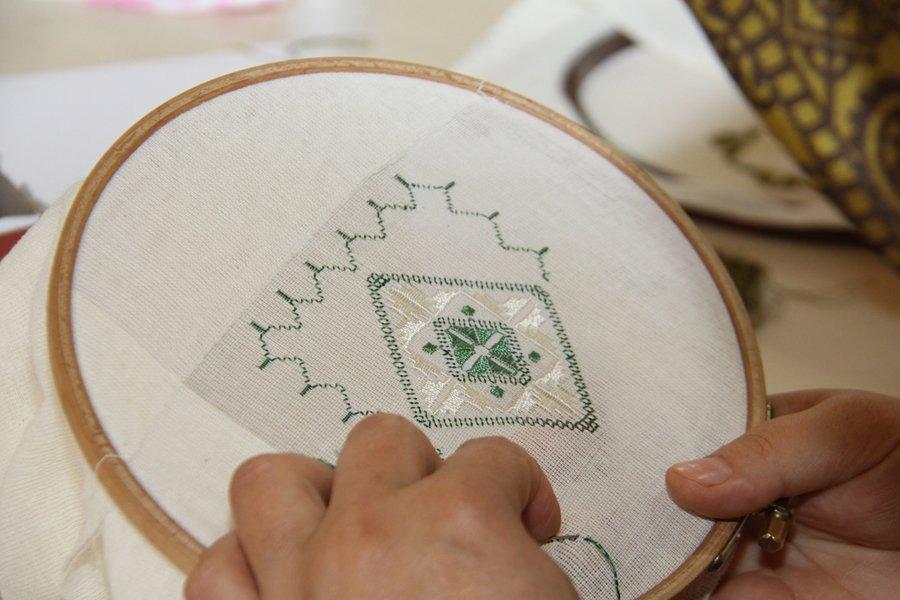
Şile Bezi (Şile Municipality)
Şile Bezi is a cotton woven fabric produced in the Şile district of Istanbul, registered with a geographical indication (Geographical Sign). The product was officially registered on 12 December 2017, following an application submitted on 26 August 2014 by the Şile Bezi Preservation, Protection and Development Association. Şile Bezi exhibits distinctive qualities tied to regional characteristics and local production techniques, particularly within the category of woven fabrics.
The production of Şile Bezi in its current form has been carried out in the Şile district for approximately 150 years. Although flax and silk yarns were historically used for weaving in the region, over the last century Şile Bezi has been produced exclusively from 100% cotton yarn. The product’s distinguishing features are determined not only by its raw material but also by its production methods and regional post-weaving treatments.
The primary raw material for Şile Bezi is Ne 20/1 grade, first-class, unbleached 100% cotton yarn. Highly twisted yarns are used in both the warp and weft directions. The twist level ranges between 1,100 and 1,300 turns per meter. This high twist imparts a flexible, wavy, and wrinkled structure to the fabric, ensuring breathability and volume. After weaving, the fabric width shrinks by approximately 15%.
During weaving, approximately 14 yarns per centimeter are used (warp density 16 ± 2; weft density 13–17). The fabric weighs 115 ± 10 grams per square meter, with a warp breaking load of 20 ± 2 kgf, a weft breaking load of 18 ± 3 kgf, a warp elongation at break of 30 ± 5%, and a weft elongation at break of 35 ± 10%. The sizing content is 5 ± 2%. These technical characteristics determine both the durability and usability of the fabric.
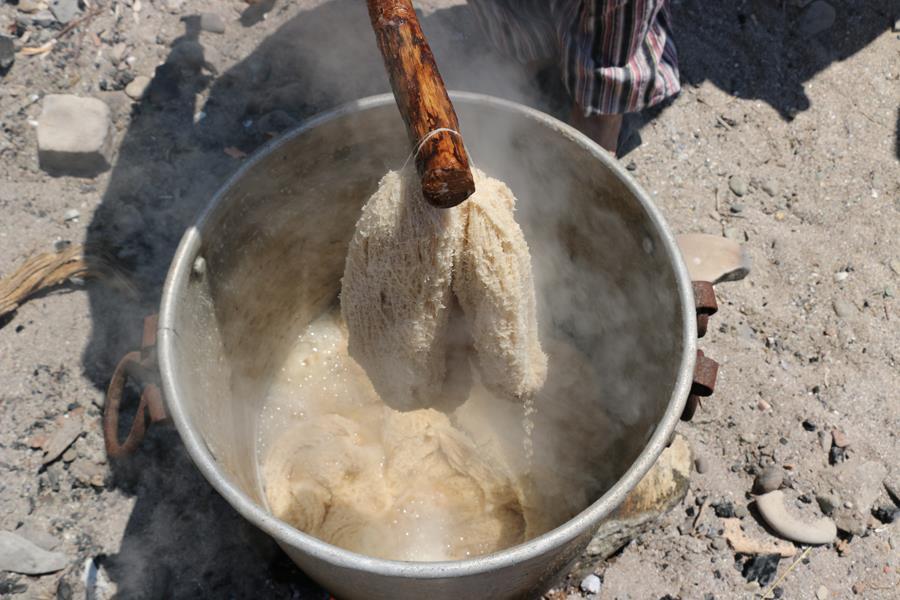
Şile Bezi (Ministry of Culture and Tourism of the Republic of Türkiye)
The primary raw material for Şile Bezi is cotton yarn. Although flax and silk yarns were historically used for weaving in the region, for the past century Şile Bezi has been produced exclusively using 100% cotton yarn. Weaving is carried out using either handlooms or semi-automatic looms, following the same methods and techniques in both cases. Preparatory stages (sizing, warp preparation), the weaving process, and post-weaving treatments (lime slurry bleaching, washing, drying) are identical for both production methods. Şile Bezi production is divided into three main stages:

Şile Bezi (Ministry of Culture and Tourism of the Republic of Türkiye)
The yarn used for Şile Bezi is Ne 20/1, 100% unbleached cotton. Its defining feature is its high twist level (1,100–1,300 turns per meter), which gives the woven fabric its flexible and wrinkled structure. The yarns are separated from large bobbins known as “bürüm,” then softened by soaking in water for approximately 30 minutes. Sizing (collaring) is performed to enhance strength and smoothness. The yarns are immersed in a solution of flour and water called “çiriş,” then squeezed and hung on rods to dry. Once dry, the yarns are wound onto bobbins. Traditionally, this process was done using manually turned spindles; today, electric motor-driven bobbin machines are used. Warp yarns are arranged on the warp beam, while weft yarns are wound onto shuttles. During warp preparation, the yarns are passed through combs and reeds according to the desired width. For example, a 45 cm wide Şile Bezi contains approximately 600 individual warp threads. The warp is then mounted on the loom through a tensioning process, making the fabric ready for weaving.

Şile Bezi (Ministry of Culture and Tourism of the Republic of Türkiye)
Weaving is carried out either on handlooms or semi-automatic looms. During weaving, warp yarns are moved using a heddle system, and the weft yarn is inserted via a shuttle. On handlooms, the weaver operates foot pedals to move the frames, uses a whip to pass the shuttle, and beats the weft into place with a reed. On semi-automatic looms, these actions are powered by electric motors, but the replacement of the shuttle’s bobbin and the repair of broken yarns are still done manually. Fabrics woven on traditional looms feature a characteristic edge structure formed by grouping yarns in pairs; this feature cannot be replicated on modern weaving machines. After weaving, the fabric is rolled into bales measuring 45 cm, 90 cm, or 150 cm in width and 20 meters in length.
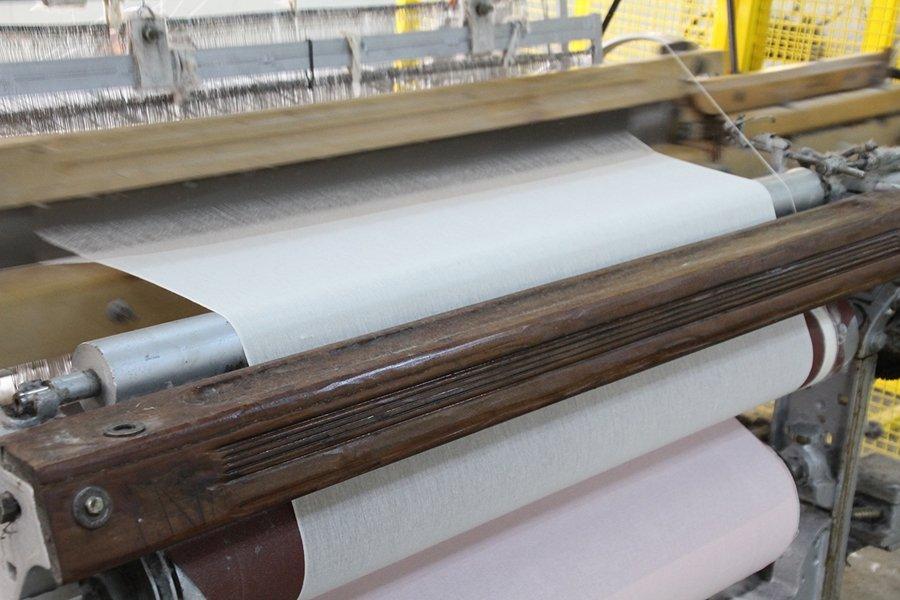
Şile Bezi (Şile Municipality)
After weaving, the fabric is bleached from its natural yellowish hue to a pure white. First, the fabric is immersed in water, then treated with a mixture of lime slurry and washing soda to achieve bleaching. Once the desired color is reached, the fabric is rinsed with water. In the final stage, the fabric is washed in the seawater along the Şile coastline of the Black Sea and dried on sandy beaches. The seawater and sand influence the fabric’s texture. These processes are typically carried out during the dry and warm months between April and November. The dried fabric is stored in 20-meter bales. Colored Şile Bezi is produced either by dyeing the yarn before weaving or by dyeing the finished fabric.

Şile Bezi (Ministry of Culture and Tourism of the Republic of Türkiye)
All skilled stages—including sizing, warp preparation, weaving, lime slurry bleaching, washing, and drying—are carried out within the boundaries of the Şile district. In particular, washing the fabric in Black Sea seawater and drying it on sandy beaches are fundamental elements that define the product’s local character.
The natural, crinkled, and wrinkled surface of Şile Bezi creates an air gap between the fabric and the skin, providing thermal insulation. The fabric is flexible, lightweight, and voluminous. Its primary applications are in indoor and outdoor apparel and home textiles. It is especially favored for summer garments such as shirts, dresses, and blouses, and is also used in home textiles like curtains and tablecloths.

Şile Bezi (Ministry of Culture and Tourism of the Republic of Türkiye)
All stages—including sizing, warp preparation, weaving, lime slurry bleaching, washing, and drying—are performed within the boundaries of the Şile district. These processes encompass the accumulated traditional knowledge and craft practices developed in the region over many years. In particular, washing the woven fabric in the seawater of the Şile coastline of the Black Sea and drying it on sandy beaches are essential elements that define the product’s geographical identity and distinguishing characteristics.
Compliance with the established production methods and specifications for Şile Bezi is monitored by relevant institutions. These inspections are conducted by a commission of at least four members, including at least one representative each from the Istanbul Şile Municipality Directorate of Culture and Social Affairs, the Şile Tourism Culture and Promotion Association, and the Şile Bezi Preservation, Protection and Development Association. Monitoring activities are carried out regularly twice a year, covering both production stages (sizing, warp preparation, weaving, lime slurry bleaching, washing, and drying) and marketing processes.

Şile Bezi (generated by artificial intelligence.)

History and Regional Connection
Raw Materials and Technical Characteristics
Production Stages
Preparing Yarn for Weaving:
Weaving Process:
Finishing Process:
Production Area and Characteristics
Applications
Geographical Boundary and Skill Transmission
Monitoring and Control