


This article was automatically translated from the original Turkish version.
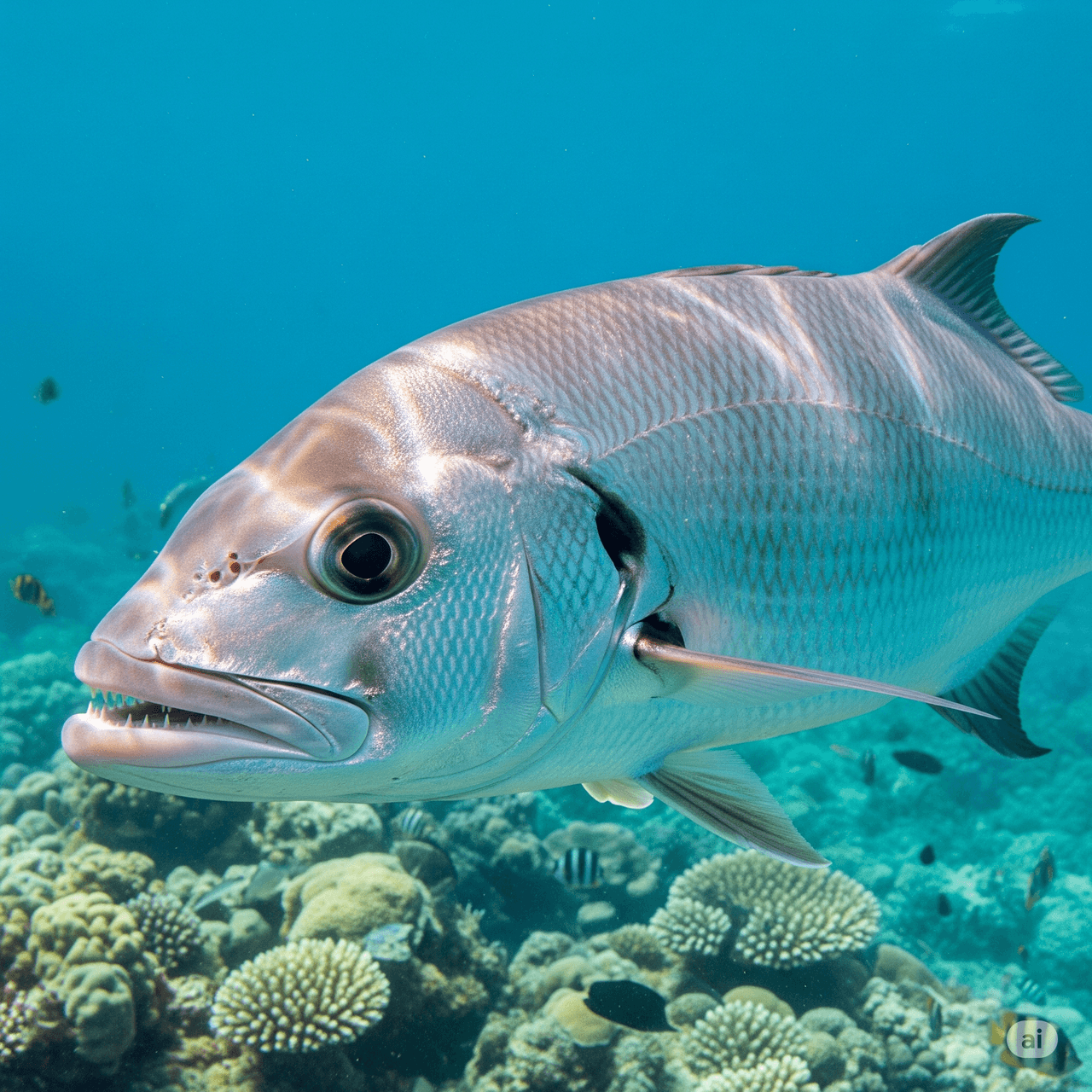
Sinarit (Dentex dentex) is a carnivorous fish species belonging to the Sparidae family, inhabiting marine environments and possessing high commercial value. It was scientifically described by Linnaeus in 1758. Endemic to the Mediterranean Sea, sinarit is also found in the eastern parts of the Atlantic Ocean. This species has been extensively studied in terms of its biological, morphological, and physiological characteristics, particularly attracting attention regarding larval development, growth parameters, feeding habits, and production potential.
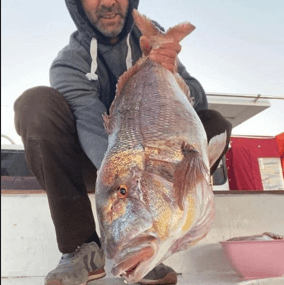
Sinarit. (Erkan Ceylan)
Sinarit has a robust and oval body structure. Its maximum length can reach up to 83 cm, while average individuals range between 40 and 60 cm. The coloration of juveniles is gray and lilac, transitioning to a bluish tone on the body as they age. Scales are numerous and irregularly arranged. The dorsal fin is long and spiny, while the anal fin is shorter and less spiny. The dentition is very strong, enabling efficient grasping and fragmentation of prey.
Research conducted along the coasts of Mallorca indicates that sinarit individuals can live up to 28 years. Growth rates vary by sex and are described using the von Bertalanffy growth model. According to data from Morales-Nin and Moranta, growth parameters differ between males and females, a distinction that must be considered in stock assessments. Otolith analysis is used to determine age, providing key data such as age-specific mortality, growth coefficient (K), and theoretical maximum length (L∞).
Although primarily endemic to the Mediterranean Sea, sinarit also occurs in distinct populations along the eastern coasts of the Atlantic Ocean. Its preferred habitats are characterized by rocky substrates and beds of Posidonia oceanica. It can be found at depths ranging from 15 to 200 meters. Juveniles typically inhabit nearshore areas, while adults reside in deeper, structurally complex environments.

Sinarit (Generated by Artificial Intelligence)
As a carnivorous species, sinarit exhibits a highly selective diet. Studies around Mallorca show that fish make up 74% of its diet, while cephalopods and crustaceans account for the remaining 26%. Diet composition varies with age and season. During the larval stage, food preference is directed toward planktonic organisms. In adults, feeding behavior has evolved into a reflexive, high-speed attack pattern.
Sinarit is an external spawner. The spawning period occurs between May and August. Sexual maturity is reached at age two in males and age three in females. Embryonic development has been studied in detail at temperatures of 16–17 °C. Eggs are transparent, pelagic, and spherical. Approximately 48 hours after fertilization, the egg hatches and the larval stage begins. Larval development proceeds through blastomere, gastrula, neurulation, and somitogenesis stages. Yolk-sac resorption and mouth opening mark the transition to independent feeding in the environment.
Controlled aquaculture of sinarit is another important area of evaluation. Natural spawning behavior is limited to a narrow time window. Under production conditions, key challenges include egg collection, larval mortality, initial feeding, and density management. Photoperiod regimes are among the factors influencing larval development and survival rates. Experiments conducted under a 18-hour light–6-hour dark cycle yielded higher survival rates. Additionally, feeding protocols, probiotic supplementation, and water quality parameters directly affect production success.
Due to its high economic value, sinarit is commercially targeted by numerous coastal countries. Its contribution to fisheries has been assessed using seasonal catch data, growth curves, and stock models. In one sampling study, stock analyses based on von Bertalanffy parameters estimated the fishing mortality rate at 0.24. This species is favored by both recreational and professional fishermen. However, high fishing pressure poses a long-term risk of population decline. Conservation and sustainability measures include seasonal fishing bans during spawning, minimum size limits, and catch quotas.
Sinarit occupies a top trophic level in marine ecosystems, playing a key role in controlling populations of smaller fish. This contributes indirectly to the maintenance of biodiversity balance. Economically, it is notable for its high market value and gastronomic quality. In Mediterranean countries, it is classified as a luxury food fish. Additionally, it holds prestige in recreational fishing.

No Discussion Added Yet
Start discussion for "Sinarit (Dentex dentex)" article
Morphological Characteristics
Lifespan and Growth Dynamics
Habitat and Geographic Distribution
Feeding Biology
Reproduction and Larval Development
Cultivation Potential
Fishing and Stock Management
Ecological and Economic Importance