


This article was automatically translated from the original Turkish version.
+1 More
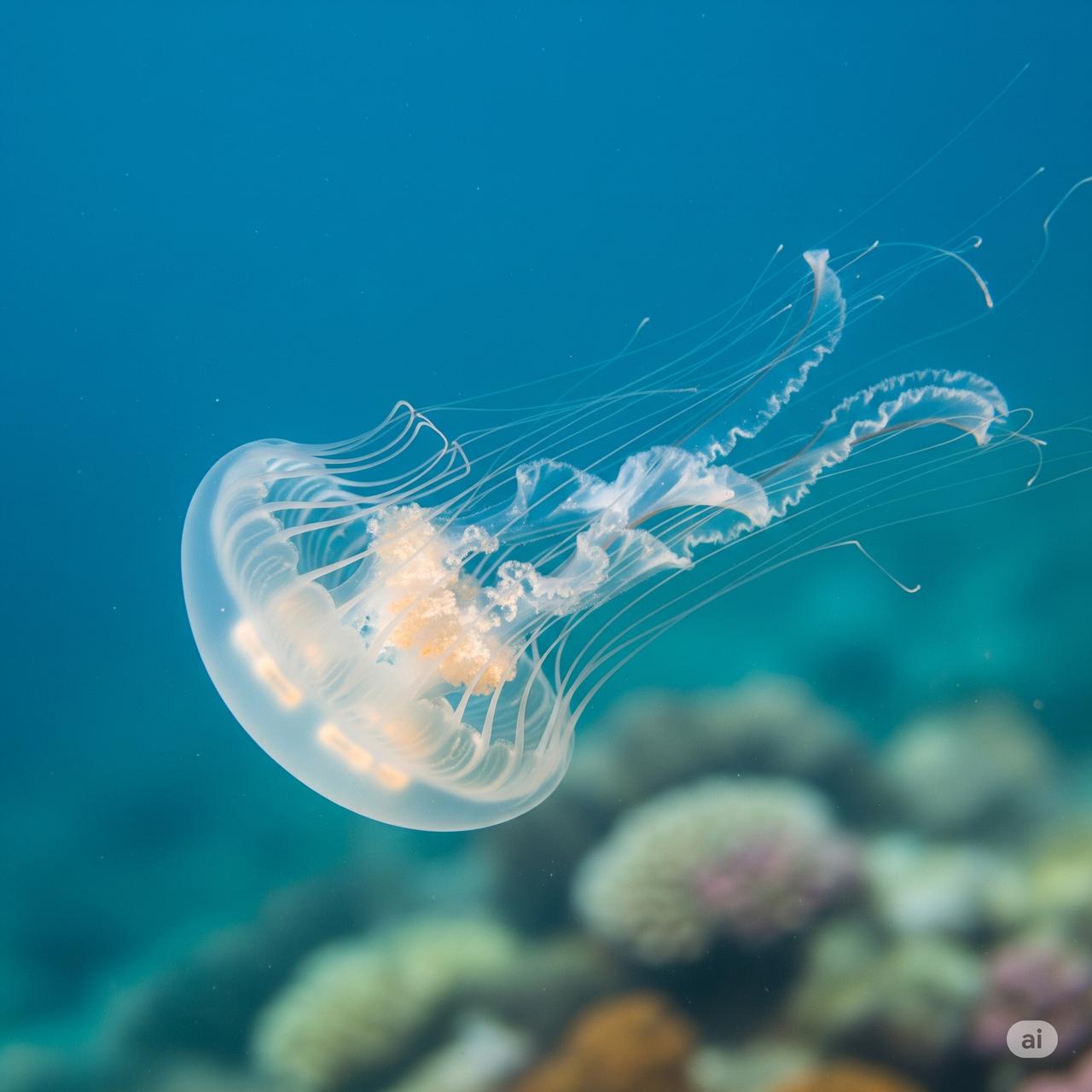
Generated with the assistance of artificial intelligence.
World | Animals | ||||||||
|---|---|---|---|---|---|---|---|---|---|
Branch | Cnidaria | ||||||||
General Characteristics | gastrovascular cavity radial symmetry Diploblastic structure | ||||||||
Life Forms | medusa Polyp | ||||||||
Type of Reproduction | asexual reproduction Sexual reproduction | ||||||||
Sponges are classified within the phylum Cnidaria and are relatively simple multicellular organisms that predominantly inhabit marine environments. Their most distinctive feature is the presence of stinging cells called cnidocytes. In older classifications, Cnidaria and Ctenophora were grouped together under the heading “Coelenterata,” but in modern systematics, these two groups are recognized as separate phyla.
Members of Cnidaria are diploblastic organisms, consisting of only two embryonic tissue layers: the ectoderm and the endoderm. Between these two layers lies a gelatinous structure called the mesoglea, which provides flexibility and support to the body. These organisms exhibit radial symmetry and typically possess a central mouth opening. Digestion occurs within a single internal cavity known as the gastrovascular cavity, which serves both digestive and circulatory functions. This cavity distributes digested nutrients throughout the body. The mouth and anus are the same opening, used for both ingestion of food and expulsion of waste.
Cnidocytes perform both predatory and defensive functions through a specialized structure called the nematocyst. A nematocyst is a microscopic capsule that, when triggered by external stimuli, discharges its toxic contents into the target. This structure is unique to the phylum Cnidaria and forms the foundation of their ecological success.
The life cycle of cnidarians includes two primary body forms: the polyp and the medusa. The polyp form is sessile, while the medusa form is free-swimming. These forms alternate through a life cycle known as metagenesis, in which asexual and sexual reproduction occur in succession. Asexual reproduction occurs through budding in the polyp stage, while sexual reproduction dominates in the medusa stage. After fertilization, a planula larva develops, which swims until it settles on a suitable surface and gives rise to a new polyp colony. The image below illustrates the metagenetic life cycle of a cnidarian species, the jellyfish.

Life Cycle of Cnidarians (Generated with AI Assistance)
The phylum Cnidaria is divided into four main classes:
Cnidarians play a crucial role in coastal ecosystems, particularly through reef-building coral species that contribute to structural diversity and biological productivity. Corals engage in symbiotic relationships with microscopic algae called zooxanthellae, sharing the products of photosynthesis. This close association is vital for the development and sustainability of coral reefs. Additionally, cnidarians provide habitat, shelter, and breeding grounds for numerous marine organisms.
Cnidarians, especially coral species, are highly sensitive to environmental factors such as rising sea temperatures, ocean acidification, and pollution. The phenomenon of bleaching, in which corals expel their symbiotic algae, is a direct consequence of these environmental changes. Experimental studies have demonstrated that UV-B radiation from sunlight also contributes to this process.
Some Cnidaria species are used in medical research, while others pose risks to human health due to their toxin production. Jellyfish stings can cause skin burns. On the other hand, the regenerative capacity (the ability to regenerate damaged or lost structures) and nervous systems of these organisms are used as models in developmental biology and neuroscience research.
National Library of Medicine. “Stinging Cells and Sticky Secrets: The Biology of Cnidarians.” *PubMed Central*, December 2023. https://www.ncbi.nlm.nih.gov/pmc/articles/PMC10649180/.
ScienceDirect. "Coelenterate."ScienceDirect Konuları: Earth and Planetary Sciences. Accessed June 19, 2025. https://www.sciencedirect.com/topics/earth-and-planetary-sciences/coelenterate.
Seuront, Laurent. “Deniz Biyolojisi: Geniş Bir Konunun Alt Kümesi.” *Open Journal of Marine Science* 3, special issue 2A (2013): 1–8. https://doi.org/10.4236/ojms.2013.32A001.

Generated with the assistance of artificial intelligence.
World | Animals | ||||||||
|---|---|---|---|---|---|---|---|---|---|
Branch | Cnidaria | ||||||||
General Characteristics | gastrovascular cavity radial symmetry Diploblastic structure | ||||||||
Life Forms | medusa Polyp | ||||||||
Type of Reproduction | asexual reproduction Sexual reproduction | ||||||||
No Discussion Added Yet
Start discussion for "Siphonophores (Cnidaria)" article
Morphological Structure and Cellular Features
Stinging Cells (Cnidocytes) and Nematocysts
Life Cycle and Reproduction
Classification and Subgroups
Ecological Role and Habitats
Climate Change and Anthropogenic Pressures
Human Interaction and Scientific Research