+2 More

Product / Product Group(s) | Bakery and Confectionery Products Pastries Sweets | ||||||||
|---|---|---|---|---|---|---|---|---|---|
Origin(s) | Sivas Türkiye | ||||||||
Registration Type | Designation of Origin | ||||||||
Registration Date | December 26, 2018 | ||||||||
Registration Number | 402 | ||||||||
Main Ingredients | Water, Flour, Oil, Fresh Yeast, Egg Yolk, Salt | ||||||||
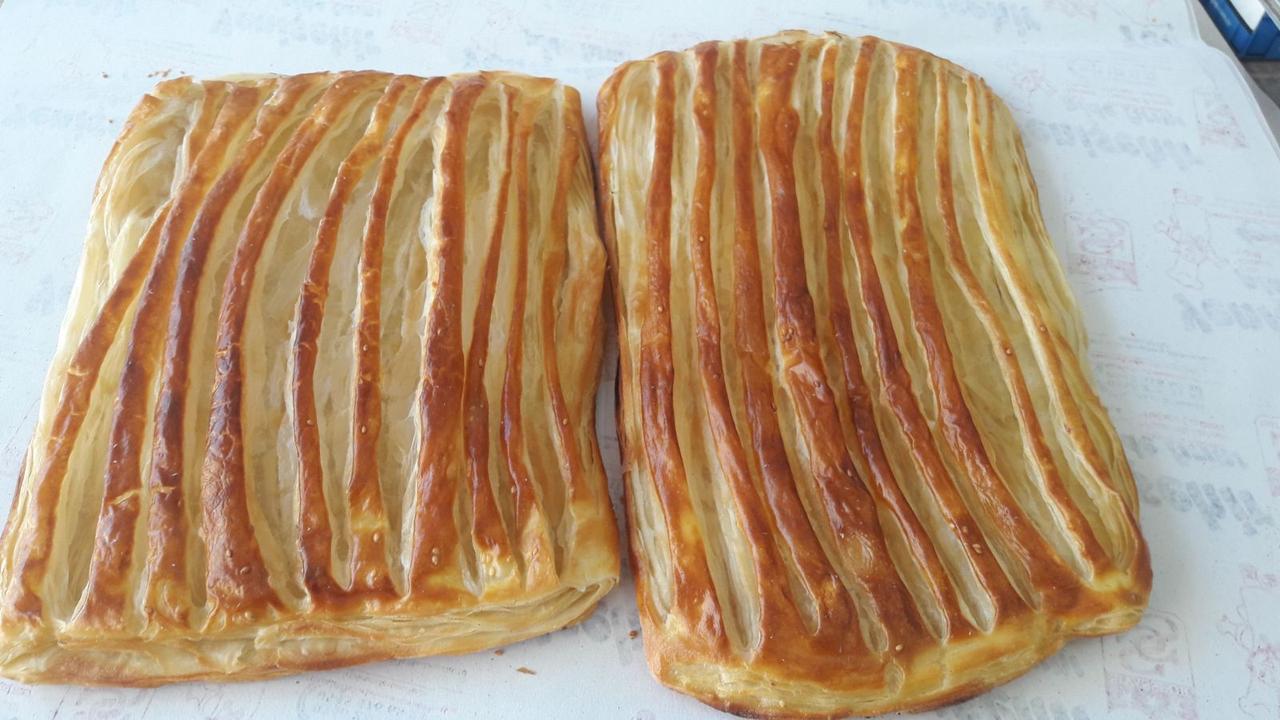
Sivas katmeri is a traditional pastry unique to the Sivas province of Türkiye. Registered with a designation of origin, this product is among the long-established flavors of Sivas cuisine. Although it can be consumed at any time of the day, it is especially preferred for breakfast. Sivas katmeri stands out with its characteristic salty taste and layered structure. Rectangular and flat in shape, Sivas katmeri has gained a distinctive regional identity through kneading and baking techniques passed down from generation to generation.
Sivas katmeri is a traditional pastry prepared using water, flour, solid fat (butter or margarine), fresh yeast, egg yolk, and salt. The product is distinguished from other pastries by its salty flavor and unique production method. The kneading, resting, layering with fat, and special shaping techniques applied during preparation are the most prominent distinguishing features of Sivas katmeri.
When baked, it acquires a crispy exterior while the interior becomes layered and stringy. The product is prepared to be approximately 25–30 cm in length, 25–30 cm in width, and with edge heights up to 4 cm.
Sivas katmeri achieves higher sensory quality when baked in traditional stone ovens. Therefore, the use of stone ovens is common in local production and is preferred for its flavor.
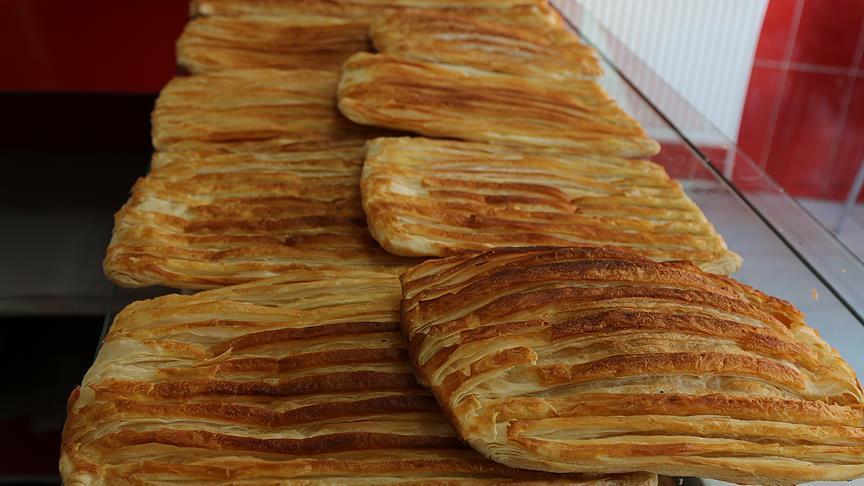
Sivas Katmeri (AA)
The ingredients used in the production of Sivas katmeri are mixed in the following proportions:
•20–25% solid margarine or butter
•40–60% flour
•30–40% water
•Maximum 1.5% fresh yeast
•Maximum 5% salt
The ingredients are kneaded homogeneously. After resting for approximately 15–20 minutes, the dough is kneaded again and layered. During kneading, the dough is rolled and folded 10–15 times. During the rolling process, slices or heart-shaped pieces of solid fat are placed in the center of the dough, and the sides are folded over to integrate the fat completely.
At each stage, the dough is shaped using folding and bundling techniques. At the end of this process, the dough is formed into a rectangular shape. The top surface of the product is decorated with slits in a fence-like pattern using a scoring knife. This step provides visual aesthetics and contributes to the layered, stringy texture of the product.
Finally, egg yolk (or optionally egg white) is brushed on the surface, and the product is baked in a stone oven at 180–200°C for 10–15 minutes. The browning of the surface while the interior remains white indicates that the baking process is complete.
Sivas katmeri was registered on December 26, 2018, under registration number 402 as a designation of origin. The geographical indication application was submitted by the Sivas Chamber of Commerce and Industry and approved by the Türk Patent ve Marka Kurumu. The registration of Sivas katmeri is based on the product’s direct association with traditional knowledge, local craftsmanship, and production methods unique to Sivas province. The distinguishing features of the product, including the layered rolling technique, special kneading process, and stone oven baking tradition, have been shaped by local knowledge passed down from generation to generation. A strong reputation link is established between the shape, taste, and production practice of the katmer and its geographic origin. Therefore, all production stages of Sivas katmeri must be carried out exclusively within the borders of Sivas province.
The production and marketing processes of Sivas katmeri are monitored by a control body formed by relevant institutions and organizations. This control body consists of at least three knowledgeable representatives from the Sivas Chamber of Commerce and Industry, the Sivas Union of Chambers of Tradesmen and Craftsmen, the Sivas Provincial Directorate of Agriculture and Forestry, and the Chamber of Food Producers and Sellers. Inspections are conducted periodically and can also be carried out upon complaint. During inspections, the suitability of ingredients such as flour, solid fat, eggs, and fresh yeast; their mixing ratios; the product’s size; the application of the fence-like surface decorations; and the stringy separation characteristic of the baked product are evaluated. Public institutions, private organizations, and experts may be consulted during the inspection process, and services can be procured as needed to ensure smooth operation. The control body also supports the registrant in legal processes to protect the product.
Anadolu Ajansı. “Sivas Katmeri Tescil Yolunda.” Anadolu Ajansı. Accessed August 16, 2025. https://www.aa.com.tr/tr/turkiye/sivas-katmeri-tescil-yolunda/1021526
Gül, Hüseyin. “Sivas Katmeri.” Türkiye Turizm Ansiklopedisi, 2025. Accessed August 16, 2025. https://turkiyeturizmansiklopedisi.com/sivas-katmeri
Sivas Ticaret ve Sanayi Odası. “Sivas Katmeri.” Sivas TSO. Accessed August 16, 2025. https://www.sivastso.org.tr/tr/sivas-katmeri
T.C. Türk Patent ve Marka Kurumu (TÜRKPATENT). “Sivas Katmeri.” TÜRKPATENT. Accessed August 16, 2025. https://ci.turkpatent.gov.tr/cografi-isaretler/detay/38290
T.C. Türk Patent ve Marka Kurumu (TÜRKPATENT). “Sivas Katmeri” (PDF). TÜRKPATENT. Accessed August 16, 2025. https://ci.turkpatent.gov.tr/Files/GeographicalSigns/4880c284-d853-4192-a89c-9cc7545e0ab4.pdf

Product / Product Group(s) | Bakery and Confectionery Products Pastries Sweets | ||||||||
|---|---|---|---|---|---|---|---|---|---|
Origin(s) | Sivas Türkiye | ||||||||
Registration Type | Designation of Origin | ||||||||
Registration Date | December 26, 2018 | ||||||||
Registration Number | 402 | ||||||||
Main Ingredients | Water, Flour, Oil, Fresh Yeast, Egg Yolk, Salt | ||||||||
Product Description and Distinguishing Features
Production Method
Ingredients
Preparation
Geographical Indication
Inspection
This article was created with the support of artificial intelligence.