


This article was automatically translated from the original Turkish version.
+2 More
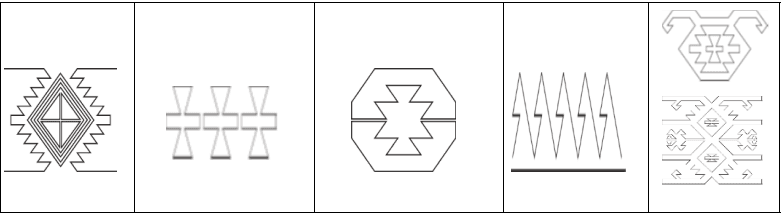
Sivrihisar Carpet Motifs
Registration Number | 1077 | ||||||||
|---|---|---|---|---|---|---|---|---|---|
Application Number | C2021/000309 | ||||||||
Application Date | 11.08.2021 | ||||||||
Registration Date | 14.04.2022 | ||||||||
Applicant/Registrant(s) | Sivrihisar Municipality | ||||||||
Product / Product Group(s) | Kilim / Folk Crafts | ||||||||
Sivrihisar kilim is a traditional weaving type produced on wooden looms in the Sivrihisar district of Eskişehir province, using sheep wool yarn dyed entirely with natural dyes.
The Sivrihisar kilim belongs to the category of handicraft products, specifically within the group of kilims. It has been registered by the Turkish Patent and Trademark Office as a "geographical indication." The product, with its varieties such as kilim, zilli and cicim, along with its distinctive patterns, holds an important place in the cultural heritage of Sivrihisar.
The Sivrihisar kilim is woven in a rectangular shape and exists in varieties such as kilim, zilli and cicim. The looms used are made of oak or pine wood and measure approximately 250 x 190 cm.
Geometric patterns are predominantly used, with red being the dominant color.

Sivrihisar Kilim (
The tools and equipment used in the production of Sivrihisar kilim include the needle, heavyweight, ilikmen, kirket (kirkit), and istar (loom). The production process consists of the following stages:
A completely natural dyeing method is employed, using plant-based dyes and natural mordants such as alum, salt, vinegar, donkey urine, soda, rock salt, oak ash, soil, iron oxide, and safflower.
Dyeing is carried out in large copper cauldrons. The dye materials are combined with pre-hanked wool yarn in warm water and boiled. The mixture is then left to cool for approximately one hour and soaked in water for one day. Additional dyeing is performed by adding new yarn to the remaining dye bath to achieve lighter and pastel tones.
Walnut husk (dark brown), mint leaf (dark green), clover herb (blue), daisy flower (yellow), hawthorn (dirty green), grape leaf (yellow and green), madder root (deep red), quince leaf (deep purple), mazı (camel hair), tetiri root (black), enik root (red), çeşmezen seed (red), oak leaf and flower (green), henna (reddish-brown), oregano (yellow), yavşan herb (light blue), sütleğen (bright yellow), turmeric (yellow), sage (yellow), onion skin (pale yellow), red onion (dark green), tetiri (shiny black). Çöven plant is used to whiten wool.
The end of the yarn is tied to the warp iron located beneath the loom. The yarn from the bobbin is wound backward over the top of the loom, brought forward from below, and wrapped around the warp iron. The yarn from the free bobbin is passed under the warp iron to form the next warp thread. The distance between each warp thread is evenly adjusted. Warps are wound sequentially and tautly until the desired number is reached. The winding process is completed by tying knots that prevent unwinding. The warp threads are manually divided into two groups (odd and even numbered). The varangelen board is passed through the separated section. The varangelen, threaded through all warp threads, is raised upward so that it rests above the area where the gucu iron will be placed. The gucu yarn winding begins by securing and fixing the left end of the gucu iron to the loom. The end of the gucu yarn is tied to the right side of the loom, wound around, and drawn toward the gucu iron. The gucu yarn is wrapped once around the gucu iron. Then, the back warp thread is pulled forward between the first and second front warp threads. The gucu yarn is wrapped once around the gucu iron after passing behind this pulled warp thread. This process is repeated for each back warp thread until the end of the loom. Once the gucu winding is complete, the end of the gucu yarn is tightly knotted. After removing the gucu iron from beneath the gucu yarns, the warp is ready for weaving.
A weaving technique in which the weft threads pass alternately under and over the warp threads, completely covering them and producing a uniform surface on both sides.
A weaving technique based on three or more thread systems, in which patterns are woven with skips such as 2 over – 1 under or 3 over – 1 under along the weft rows according to the design.
A weaving technique in which design threads are passed over varying numbers of warp threads, and after each design row, a weft thread is inserted and tightly beaten down to form the pattern.
A weaving technique in which colored design threads are wrapped around the warp threads in various patterns to create motifs.
The logo of the Sivrihisar kilim is located on its reverse side. All production stages of the Sivrihisar kilim, which has a historical tradition and a production method specific to its geographical boundaries, occur within the defined geographical area.
The geographical boundary of the Sivrihisar kilim is defined as the Sivrihisar district of Eskişehir province. The production method, the natural dye materials used, the wool yarn, and the region-specific patterns are elements that define the product’s relationship with the Sivrihisar district under its geographical indication designation.
An application for the geographical indication registration of the Sivrihisar kilim was submitted by the Sivrihisar Municipality. The application, numbered C2021/000309, was filed on 11 August 2021. Following the evaluation process, the product was officially registered on 14 April 2022 under registration number 1077 as a "geographical indication." The registrant’s address is recorded as Cumhuriyet Mahallesi, Süleyman Demirel Caddesi No:1, Sivrihisar, Eskişehir.
Anadolu Ajansı. 2020. “Sivrihisar Kilimi: Kadınların Ellerinde Yeniden Hayat Buluyor.” Anadolu Ajansı, March 13, 2020. Accessed May 26, 2025. https://www.aa.com.tr/tr/yasam/sivrihisar-kilimi-kadinlarin-ellerinde-yeniden-hayat-buluyor/1764560.
Turk Patent and Trademark Office. 2022. *Sivrihisar Kilimi Geographical Indication Registration Certificate*. Registration No. 1077. Ankara: Turk Patent and Trademark Office. Accessed May 26, 2025. https://ci.turkpatent.gov.tr/Files/GeographicalSigns/6851fdcc-3f86-49c1-b67f-d119ee289f8c.pdf.

Sivrihisar Carpet Motifs
Registration Number | 1077 | ||||||||
|---|---|---|---|---|---|---|---|---|---|
Application Number | C2021/000309 | ||||||||
Application Date | 11.08.2021 | ||||||||
Registration Date | 14.04.2022 | ||||||||
Applicant/Registrant(s) | Sivrihisar Municipality | ||||||||
Product / Product Group(s) | Kilim / Folk Crafts | ||||||||
Product Profile and Geographical Indication Type
Product Definition and Distinctive Characteristics
Production Method
Preparation of Wool Yarn
Dyeing
Some Dye Plants Used and the Colors Obtained
Warp Preparation
Weaving Techniques
Kilim Technique
Zilli Technique
Cicim Technique
Sumak Technique
Geographical Origin and Boundaries
Registration Process and Details