


This article was automatically translated from the original Turkish version.
+1 More
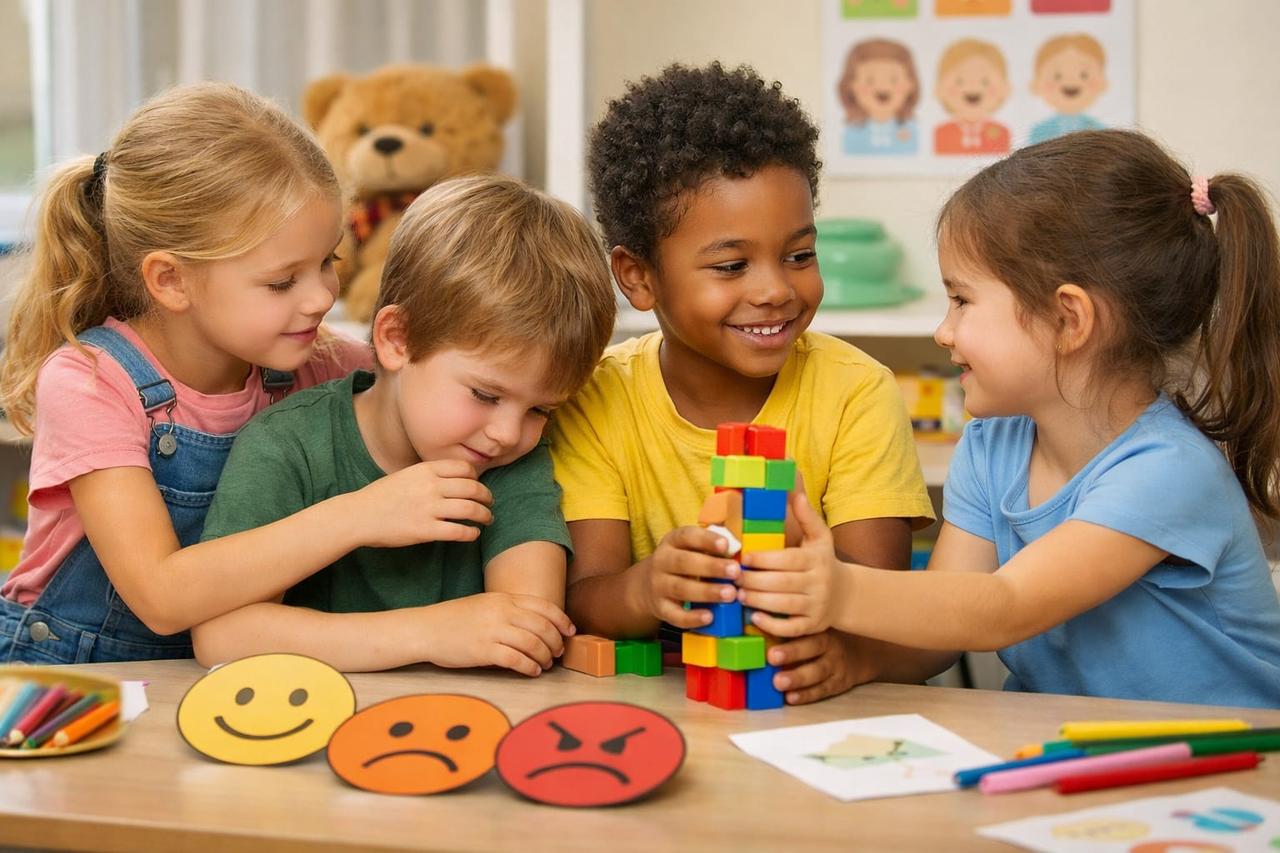
Play interactions that support social-emotional development
Area(s) | Developmental Psychology | ||||||||
|---|---|---|---|---|---|---|---|---|---|
Development Outcomes | Social responsibility Problem-solving skills Emotional balance Healthy social relationships | ||||||||
Educational Importance | Peer relationships Academic achievement Learning motivation Class adaptation | ||||||||
Development Environments | Social environment Play Peer group School Family | ||||||||
Basic Components | Cooperation Emotion regulation Social communication Empathy Emotional awareness | ||||||||
Social-Emotional Development is a developmental domain that encompasses children’s abilities to recognize, express, and regulate emotions, interact with others, and adapt to social norms. During the preschool period, these skills are critical for the child’s self-confidence, peer relationships, and lifelong social adaptation.
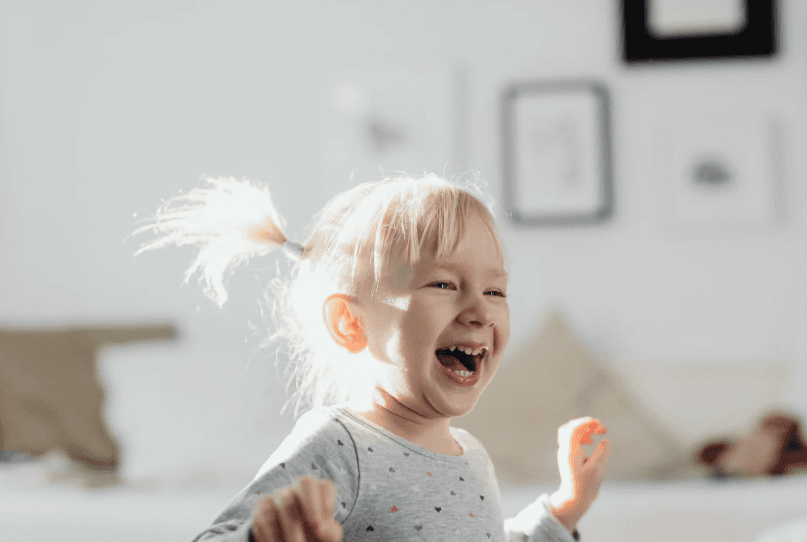
Emotion Recognition and Expression Process
(Generated by Artificial Intelligence)
In the process of social-emotional development, children first learn to become aware of their own emotions.
This awareness includes the ability to:
1. Identify basic emotions such as anger, joy, and sadness,
2. Express emotions verbally and behaviorally,
3. Regulate emotional responses.
The ability to express emotions helps children develop empathy and social awareness. Moreover, children who acquire emotional regulation skills at an early age are more successful in coping with stress and conflict situations.
An important dimension of social-emotional development is the relationships children form with their peers and the social adaptation skills they develop through these interactions. The school environment is one of the most significant social contexts in which children regularly interact with their age-mates. In this setting, children learn by experiencing how to understand others’ feelings and thoughts, build empathy, and behave in accordance with social norms.
During this stage, children:
Peer relationships also contribute to the development of children’s empathy, communication, and emotional regulation skills. While interacting with friends, children gain opportunities to see different perspectives, recognize others’ emotions, and understand the impact of their own behavior on others. This process supports the development of social awareness.
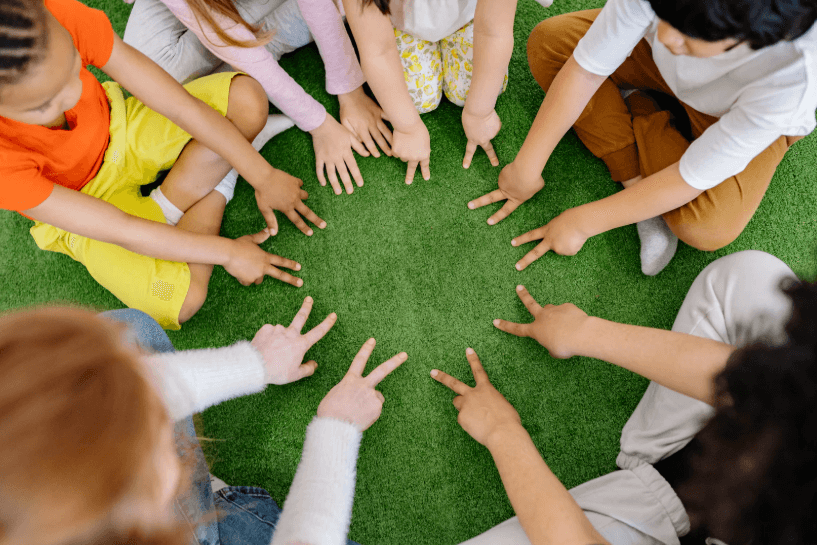
Peer Relationships and Social Adaptation
(Generated by Artificial Intelligence)
Positive peer relationships enhance a child’s self-esteem, sense of security, and social motivation. Being accepted by peers helps children feel valued and encourages them to participate more willingly in social settings. In contrast, peer rejection or exclusion can negatively affect a child’s social adaptation and psychological well-being.
Moreover, peer interactions contribute to the development of life skills such as problem solving, communication, waiting one’s turn, leadership, and taking responsibility. Through group activities and shared play, children gain experience in making collective decisions, following rules, and acting toward a common goal.
Therefore, in educational settings, collaborative learning activities, group games, and social interaction-promoting initiatives play a vital role in strengthening peer relationships. Such experiences provide fundamental learning opportunities that support both social adaptation and emotional development.
The family environment is the most fundamental and earliest environmental factor shaping children’s social-emotional development. In the early years of life, children largely learn to recognize, express, and understand others’ emotions through interactions within the family. Secure and supportive relationships with family members help children feel safe and adapt more comfortably to social settings.
Parents and caregivers directly influence the development of children’s social skills by:
An open communication and warm relational atmosphere within the family fosters the child’s ability to develop empathy, express themselves, and form healthy relationships with others. At the same time, parents’ attitudes toward the child—whether supportive, democratic, or overly authoritarian—can significantly affect the child’s self-confidence and social adaptation.
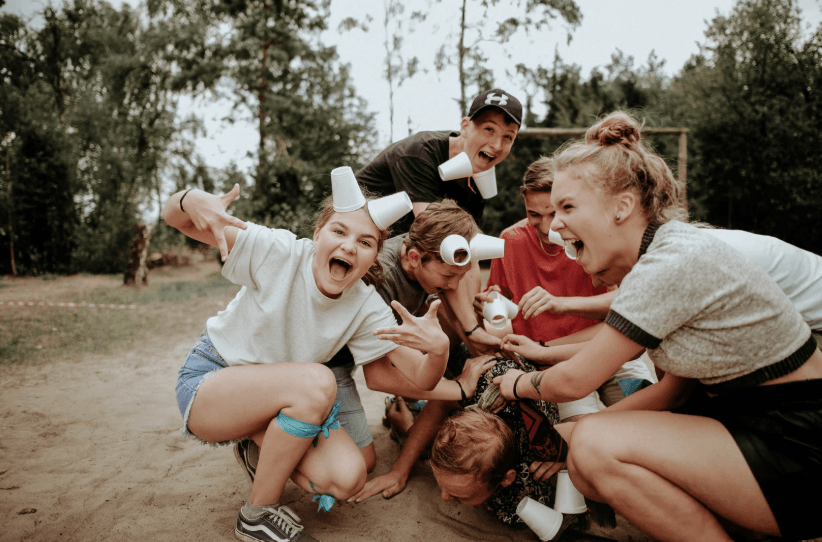
Environmental Influences in the Social-Emotional Development Process
(Generated by Artificial Intelligence)
In addition to the family, school and the immediate environment also play a decisive role in social-emotional development. The school setting is a key social learning environment where children regularly interact with peers and learn social norms. Classroom activities, group work, and play-based initiatives help children develop cooperation, communication, and social problem-solving skills.
Furthermore, environmental opportunities such as playgrounds, sports activities, and social clubs enable children to gain diverse social experiences. These settings provide important opportunities to strengthen skills in taking responsibility, developing leadership, working in teams, and regulating emotions.
When considered together, family, school, and social environment shape children’s social-emotional development within a multidimensional interaction process. The mutual reinforcement of these environments is essential for children to build healthy social relationships and grow into emotionally balanced individuals.
Social-emotional skills are a vital developmental domain that influences not only students’ social adaptation but also their academic achievement. Students who can recognize and manage their emotions and form healthy relationships with others participate more actively in learning processes. These skills support students in focusing attention on lessons, remaining patient in the face of challenges, and sustaining their learning efforts.
When children develop emotional awareness and social skills at an early age:
Students with well-developed social-emotional skills adapt more easily to classroom activities and communicate more effectively with teachers. This enhances students’ interest in lessons and positively influences the learning process. Additionally, students learn to cooperate in group work and acquire the ability to work toward shared goals.
Children with developed emotional regulation skills can cope more effectively with situations such as exam anxiety or academic failure. This supports the continuity of academic performance and helps students develop a positive attitude toward learning.
Social-emotional skills foster the development of key competencies such as self-management, empathy, communication, and collaboration, contributing to students becoming more successful and adaptable individuals both in school and in future educational contexts.

Play interactions that support social-emotional development
Area(s) | Developmental Psychology | ||||||||
|---|---|---|---|---|---|---|---|---|---|
Development Outcomes | Social responsibility Problem-solving skills Emotional balance Healthy social relationships | ||||||||
Educational Importance | Peer relationships Academic achievement Learning motivation Class adaptation | ||||||||
Development Environments | Social environment Play Peer group School Family | ||||||||
Basic Components | Cooperation Emotion regulation Social communication Empathy Emotional awareness | ||||||||
No Discussion Added Yet
Start discussion for "Social and Emotional Development" article
Emotion Recognition and Expression
Developing Peer Relationships and Social Adaptation
Family and Environmental Influences
Contribution of Social-Emotional Skills to Academic Success