


This article was automatically translated from the original Turkish version.
The teaching of mathematics, both in relation to technological advancements and its presence in daily life, is of great importance. However, in Turkey, average mathematics scores in national examinations such as LGS and YKS are consistently lower than those of other subjects. This underachievement in mathematics can be attributed to various factors. One of these factors, mathematics anxiety, has been extensively studied in academic research, with the causes of mathematics anxiety frequently identified as a primary focus of these studies.
The concept of anxiety is frequently examined in psychology. The term originates from the ancient Greek root “anxsietas,” meaning fear or unease. Anxiety is defined as a state of emotion rooted in fear and worry, characterized by a sense of helplessness experienced by an individual in an unsettling situation. According to Cüceloğlu (2005), the causes of anxiety include withdrawal of support, expectation of negative outcomes, internal conflict, and uncertainty.
Just as emotions such as joy, sadness, and anger are inevitable in human life, so too is anxiety. A certain level of anxiety is normal; however, when it exceeds this threshold, medical support becomes necessary. Among the subtypes of anxiety, mathematics anxiety ranks among the most common problems in the field of mathematics. Mathematics anxiety can be defined as the tension, excitement, stress, fear, and inability to concentrate experienced by an individual when performing calculations involving numbers, symbols, or shapes, or when solving mathematical problems.
Mathematics anxiety was first investigated in the 1950s through individual observations by mathematics teachers, and from the 1970s onward, it also attracted the attention of educational science researchers. The negative effects of mathematics anxiety—including avoidance of mathematics, inability to derive pleasure from it, and feelings of hopelessness—impair the mathematics learning process and contribute to declining mathematics achievement.
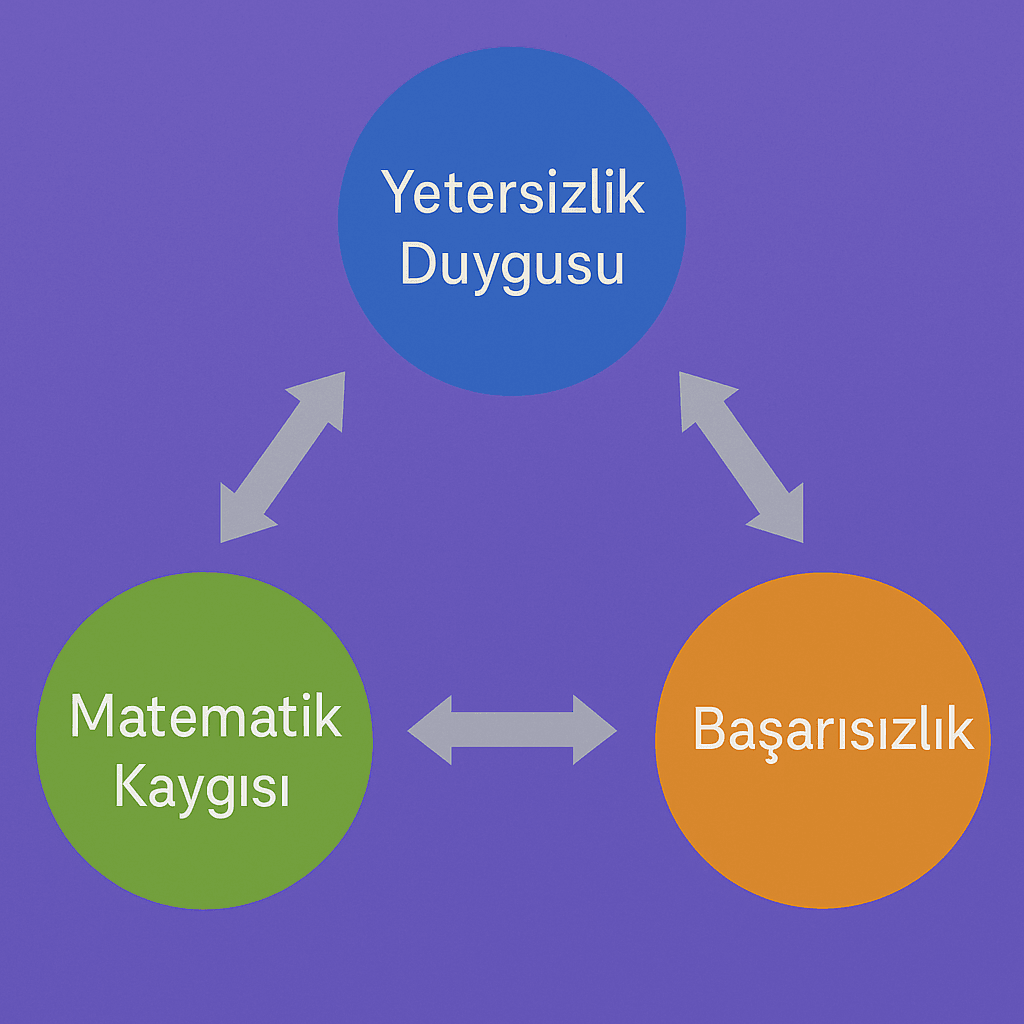
Generated with the assistance of artificial intelligence.
Many researchers have examined the causes of mathematics anxiety and identified various factors contributing to its emergence. Studies have determined that mathematics anxiety is directly linked to low self-esteem and learning difficulties. Additionally, prejudices against mathematics, low self-efficacy beliefs, negative classroom environments, and unfavorable attitudes among parents and students are among the primary factors influencing this anxiety. These variables have been categorized under different headings in various studies.
For example, one study classifies the causes of mathematics anxiety as individual, cognitive, and environmental factors, while another groups them under the headings of student, teacher, environment, and curriculum. Environmental factors include the individual’s peer group, family, teachers, and physical learning environment. The family, as a fundamental building block of social life, is considered to require particular attention within the category of environmental factors.
Ashcraft, Mark H., and Marc W. Faust. “Mathematics Anxiety and Mental Arithmetic Performance: An Exploratory Investigation.” *Cognition & Emotion* 8, no. 2 (1994): 97–125. https://doi.org/10.1080/02699939408408931.
Baloğlu, Murat, and Rıdvan Koçak. "A Multivariate Investigation of the Differences in Mathematics Anxiety." Personality and Individual Differences 40, no. 7 (2006): 1325–1335.
Berkant, Hasan Gül, and Osman Faruk Metin. "Lise Öğrencilerinin Akademik Streslerinin, Matematik Kaygılarının ve Matematiğe Yönelik Tutumlarının İncelenmesi." Akdeniz Eğitim Araştırmaları Dergisi 14, no. 31 (2020): 545–576.
Essau, Cecilia A. "Editorial: Anxiety in Children: When Is It Classed as a Disorder That Should Be Treated?" Expert Review of Neurotherapeutics 7 (2007): 909–911.
Çevikel, Mustafa. Matematik Kaygısı ile İlgili Yapılan Akademik Çalışmaların İncelenmesi: Bir Sistematik Derleme Çalışması. Master's thesis, Mehmet Akif Ersoy Üniversitesi Eğitim Bilimleri Enstitüsü, 2023.
