


This article was automatically translated from the original Turkish version.
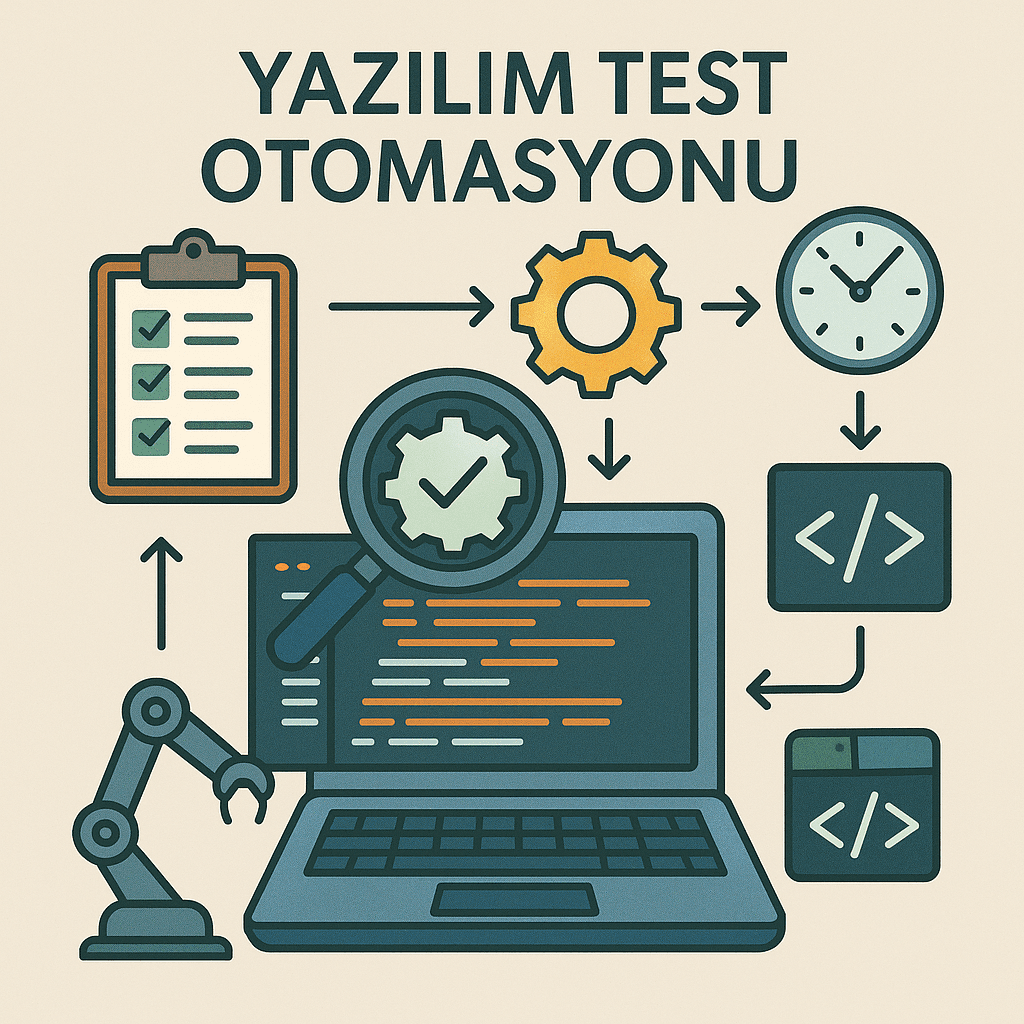
Generated with artificial intelligence.
Software Test Automation
Application Area(s) | Web desktop and API applications mobile | ||||||||
|---|---|---|---|---|---|---|---|---|---|
Popular Tools | Selenium, Appium, TestNG, JUnit, Cucumber | ||||||||
Related Concept(s) | Continuous Integration (CI) BDD Regression Testing Continuous Delivery (CD) | ||||||||
Certification | ISTQB® Test Automation Engineering | ||||||||
Software test automation is the practice of automatically executing pre-written test scenarios (scripts) through specialized software tools, minimizing human intervention in software testing processes. This process includes the ability to manage test data, execute tests, compare actual results with expected outcomes, and report results. As an essential component of the software development lifecycle, test automation has become an indispensable approach in today’s era of accelerating digital transformation, enabling organizations to deliver products more efficiently, quickly, and with higher quality. Its primary goal is to reduce the time and cost burden of manual testing, eliminate human-induced errors, and enhance overall software quality.
The overall purpose of software testing processes is to ensure that a developed product is delivered error-free after undergoing all necessary checks before being presented to end users. However, the rapid increase in software demand has outpaced the growth rate of the industry meeting this need, creating a necessity for faster software development. Tight project schedules often result in reduced time allocated to testing, increasing the risk of software being released without adequate testing. Software test automation addresses this issue by providing a strategic solution that saves time for projects while simultaneously improving product quality. Considering the financial and reputational losses that can result from defective releases, automation enables every change to the product to be tested instantly. This facilitates the transition to modern development methodologies such as Continuous Integration (CI) and Continuous Delivery (CD). Organizations that design automation effectively gain a competitive advantage in the market.
While automation aims to reduce human effort and increase efficiency in every domain it is applied to, not every test scenario is suitable for automation. Automating certain tests may be more costly or complex than the benefits they provide. Several fundamental criteria determine whether a testing process is suitable for automation:
Compared to manual testing, test automation offers numerous advantages across the entire software development process. These advantages span a broad spectrum from efficiency and cost to quality and team motivation.
Establishing an effective test automation process requires strategic planning. This process typically involves the following steps:
Software test automation has a broad ecosystem of tools and technologies. These tools provide specialized solutions for different platforms and test types. Some popular open-source tools include Selenium for web applications and Appium for mobile applications. Frameworks such as TestNG and JUnit simplify the management and execution of test scenarios. Modern automation platforms offer comprehensive solutions built upon these core technologies. These platforms typically include features such as recorder tools that allow test scenarios to be created without coding, support for multiple programming languages such as Java, Python, C#, and JavaScript, integration with tools like Cucumber for Behavior-Driven Development (BDD), parallel execution of tests across different devices and browsers, and seamless integration with CI/CD tools such as Jenkins and Azure DevOps.
Software test automation has become a distinct specialization within software engineering. One of the most significant indicators of its professionalization and standardization is the existence of international certification programs. For example, the International Software Testing Qualifications Board (ISTQB®) offers certifications such as “Advanced Level Test Automation Engineering” for professionals seeking to advance their careers in software testing. Such certifications cater to a wide audience including test specialists, test analysts, test engineers, test consultants, test managers, and software developers. This demonstrates that test automation is not merely a skill in using tools but a discipline requiring in-depth knowledge of strategic planning, architectural design, and process management.
Ekinoks Software. "Yazılım Test Otomasyon Teknolojileri." Ekinoks Software. Accessed July 3, 2025. Accessed Adresi.
Innova. "Test Otomasyonu Ile Yazılım Testleri Nasıl Kolaylaşıyor?." İnnova Blog. May 17, 2021. Accessed July 3, 2025.
Ondokuzon. "Yazılım Test Otomasyonu ile Hataları Sıfıra İndirin: Neden ve Nasıl?." Ondokuzon. November 27, 2024. Accessed July 3, 2025. Accessed Adresi.
Tobeto. "Yazılım Test Otomasyonu: İş Akışınızı Daha Verimli Hale Getirin!." Tobeto Blog. Accessed July 3, 2025. Accessed Adresi.
Turkish Testing Board. "ISTQB® Sertifikalı Yazılım Test Uzmanı Test Automation Engineering Sertifikasyon Sınavı." Turkish Testing Board. Accessed July 3, 2025.
Virgosol. "Yazılım Geliştirmenin Güçlü Motoru Test Otomasyonu Nedir?." Virgosol Blog. August 21, 2024. Accessed July 3, 2025.

Generated with artificial intelligence.
Software Test Automation
Application Area(s) | Web desktop and API applications mobile | ||||||||
|---|---|---|---|---|---|---|---|---|---|
Popular Tools | Selenium, Appium, TestNG, JUnit, Cucumber | ||||||||
Related Concept(s) | Continuous Integration (CI) BDD Regression Testing Continuous Delivery (CD) | ||||||||
Certification | ISTQB® Test Automation Engineering | ||||||||
No Discussion Added Yet
Start discussion for "Software Test Automation" article
Purpose and Importance of Software Test Automation
Criteria for Test Automation
Advantages of Software Test Automation
Test Automation Implementation Process
Test Automation Tools and Technologies
Test Automation and Professionalization