This article was automatically translated from the original Turkish version.
Location | Ankara | ||||||||
|---|---|---|---|---|---|---|---|---|---|
Type(s) | National Park | ||||||||
Area(s) | 1 187 hectares | ||||||||
Elevation Range | 1,000–1,800 m | ||||||||
Highest Point | Arhul Tepe | ||||||||
Ecosystem | Forest–Steppe transition zone | ||||||||
Forest Area | 8,000,000 m² | ||||||||
Plant Species | Çayır Ardıç Meşe Köknar Karaçam Geofit species Sarıçam | ||||||||
Animal Species | more than 35 bird species Black Eagle Rabbit Wild Boar Squirrel Wildcat Jackal Wolf Fox Bear | ||||||||
Geological Structure | Agglomerate Tuff Basalt Andesite | ||||||||
Soğuksu National Park is a protected area located within the boundaries of the Kızılcahamam district in Ankara Province, in Türkiye’s Central Anatolia Region, and was designated as a national park in 1959. Initially declared as covering an area of 1,050 hectares, its total area was increased to 1,187 hectares following a boundary adjustment in 1997. Geobotanically, the park lies within a transition zone between the Central Anatolian steppe region and the Western Black Sea forest region, giving it significant importance in terms of biological diversity.

Soğuksu Milli Parkı (Ministry of Agriculture and Forestry)
Soğuksu National Park is situated approximately 80 kilometers from the city center of Ankara, near the district of Kızılcahamam. The park is 7 kilometers from the Kızılcahamam district center. Bus services connect the park to central locations such as Liva Pastanesi (Ankara 61), İvedik Organized Industrial Zone, IKEA Ankara, Kahveci Hacı Baba Elvankent, and IF Performance Hall Çankaya.
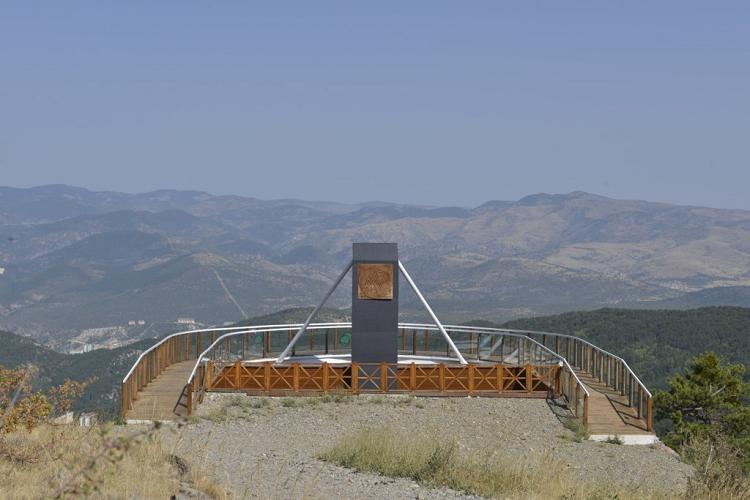
Soğuksu National Park consists of volcanic rock formations including andesite, basalt, tuff, and agglomerate. This geological structure has enabled the presence of both hot and cold water springs within the park area. The hot springs are used as spa facilities. Elevation ranges between 1,000 and 1,800 meters, with the highest point being Arhul Hill at 1,780 meters. The park area exhibits a geomorphological character marked by valleys and plateaus.
The annual average temperature in the park is 11.9 °C, with a maximum recorded temperature of 35.6 °C and a minimum of 14.6 °C. The average annual precipitation is 350.3 mm. The dominant vegetation consists of forests of black pine, Turkish pine, oriental beech, oak, and juniper. Turkish pine accounts for 65%, black pine for 24%, oriental beech for 6%, and oak and juniper together for 5%. Within the park boundaries, there are 800 hectares of forested land and 250 hectares of open areas. Reforestation efforts have been carried out in the open areas, particularly with Turkish pine and black pine seedlings. The area is also rich in various grassland species, wild herbs, and geophytes.
Mammal species found in the park include wild boar, bear, fox, jackal, squirrel, and hare. Numerous eagle species, notably the endangered black vulture, and over 35 bird species have been observed in the park. Due to these characteristics, the park holds significant value for birdwatching and wildlife observation.
One of the important natural values of Soğuksu National Park is the petrified tree fossil located at the Kuzcapınar locality. This fossil formed when Miocene-era trees were buried under lava and tuff deposits due to volcanic activity, and subsequently petrified over time in an oxygen-free environment. The most prominent specimen is approximately 250 cm in length and 150 cm in diameter. The fossil tree is of considerable scientific and paleontological importance.
The Soğuksu National Park Visitor Information Center, opened in 2015, functions as a nature museum displaying examples of the park’s flora and fauna. The center highlights the park’s symbolic elements: the black vulture, the fossil tree, the Atatürk Pine, and the regional endemic plant species, the mountain tulip. Guided presentations are offered in Turkish and English, and pocket maps detailing walking trails are distributed to visitors. In 2017, the center welcomed approximately 2.5 million visitors.
Approximately one-third of the park is designated for use, while two-thirds are reserved for conservation. Activities permitted in the use areas include nature walking, camping, cycling, birdwatching, and photography. For day-use visitors, the park provides a picnic area with a capacity of 800 people, along with fountains, toilets, rain shelters, trash bins, and picnic ovens. Accommodation options include an 80-bed hotel, a tented camping area, and bungalow-style structures. Outside the national park boundaries, there are 12 hotels in the Kızılcahamam district.
Within the park are an open-air theater (capacity 500), children’s play areas, walking and jogging paths, a mosque, a restaurant, sightseeing routes, water springs, and various historical structures. Additionally, there are forest roads and production stations. Facilities for security, police services, and healthcare are located around the park perimeter.
Soğuksu National Park welcomes approximately 500,000 visitors annually. Visitor numbers peak during spring and autumn, especially on weekends, when large numbers arrive from Ankara and surrounding areas. Entry to the park is charged. The entrance area includes a consultation building, social facilities, and a parking lot.
Ankara Metropolitan Municipality. “Soğuksu Milli Parkı.” Ankara Büyükşehir Belediyesi. Accessed July 15, 2025. https://www.ankara.bel.tr/cevrekorumavekontrol/peyzaj-uygulama/prestij-parklari/soguksu-milli-parki
Kızılcahamam Belediyesi. "Soğuksu Milli Park Fossil Tree." Kızılcahamam Municipality. Accessed July 15, 2025. https://kizilcahamam.bel.tr/GezilecekYerDetayi/SOGUKSU-MILLI-PARKI-FOSIL-AGAC/21
Kızılcahamam Belediyesi. “Soğuksu Milli Parkı Ziyaretçi Tanıtım Merkezi.” Kızılcahamam Belediyesi. Accessed July 15, 2025. https://kizilcahamam.bel.tr/GezilecekYerDetayi/SOGUKSU-MILLI-PARKI-ZIYARETCI-TANITIM-MERKEZI/8
T.C. Ministry of Agriculture and Forestry, 9th Regional Directorate. "Ankara Soğuksu National Park." T.C. Ministry of Agriculture and Forestry. Accessed July 15, 2025. https://bolge9.tarimorman.gov.tr/Menu/51/Ankara-Soguksu-Milli-Parki

Location | Ankara | ||||||||
|---|---|---|---|---|---|---|---|---|---|
Type(s) | National Park | ||||||||
Area(s) | 1 187 hectares | ||||||||
Elevation Range | 1,000–1,800 m | ||||||||
Highest Point | Arhul Tepe | ||||||||
Ecosystem | Forest–Steppe transition zone | ||||||||
Forest Area | 8,000,000 m² | ||||||||
Plant Species | Çayır Ardıç Meşe Köknar Karaçam Geofit species Sarıçam | ||||||||
Animal Species | more than 35 bird species Black Eagle Rabbit Wild Boar Squirrel Wildcat Jackal Wolf Fox Bear | ||||||||
Geological Structure | Agglomerate Tuff Basalt Andesite | ||||||||
No Discussion Added Yet
Start discussion for "Soğuksu National Park" article
Location and Access
Geological and Geomorphological Structure
Climate and Vegetation
Fauna
Fossil Tree and Geological Monument
Visitor Information Center
Uses and Recreation
Cultural and Technical Facilities
Visitor Statistics and Entry Information