This article was automatically translated from the original Turkish version.
Scientific Name(s) | Passer hispaniolensis | ||||||||
|---|---|---|---|---|---|---|---|---|---|
Family | Passeridae (Sparrows) | ||||||||
Size(s) | 14–15 cm | ||||||||
Distribution(s) | Southern Europe Western Asia North Africa | ||||||||
Status in Türkiye | Summer migrant; common in Central Anatolia, Eastern and Southeastern Anatolia | ||||||||
Habitat | Open farmlands rural settlements edges of wetlands | ||||||||
Diet(s) | Seeds insects grains | ||||||||
Reproduction(s) | Colonial incubation period 12–14 days 4–6 eggs | ||||||||
Behavior | Flocks in flight; communal roosting | ||||||||
Migration | Arrives in spring, returns to Africa in autumn | ||||||||
Conservation Status | IUCN – Least Concern (LC) | ||||||||
Sedge Sparrow (Passer hispaniolensis) is a small, agile songbird species belonging to the genus Passer within the family Passeridae. Taxonomically, it is closely related to the House Sparrow (Passer domesticus) and shares certain morphological and behavioral similarities. However, the distinctive black-spotted pattern on the chest of males makes it easily distinguishable from the House Sparrow.

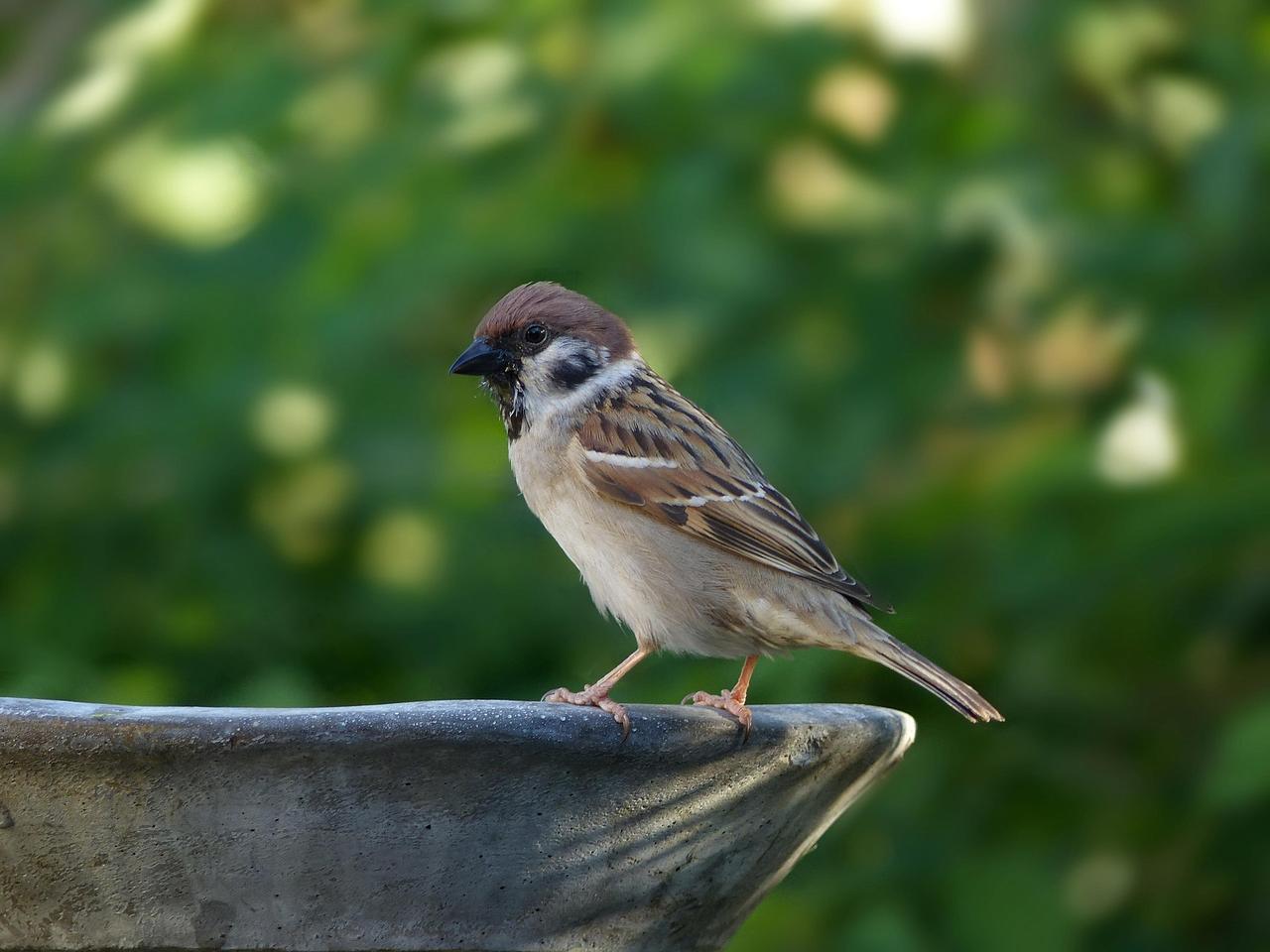
Sedge Sparrow (Generated by Artificial Intelligence.)
This species measures approximately 14–15 cm in length and exhibits clear sexual dimorphism. During the breeding season, males have dark-colored heads and chests with a series of black-spotted markings on the breast. Females, in contrast, have a paler and streaked appearance, which can lead to confusion with female House Sparrows. Their short, robust, conical beaks are adapted for cracking seeds. They have large, dark eyes and typically light brown legs.
The Sedge Sparrow is a typical species of the Mediterranean biogeographic region. It has a wide distribution across southern Europe, North Africa, the Middle East, and Western Asia. In Türkiye, it is a summer migrant, commonly observed during the summer months in Central Anatolia, Eastern Anatolia, and Southeastern Anatolia.
It nests in open agricultural fields, wetland margins, scrublands, and on human-made structures in rural settlements. Irrigation canals, marsh edges, and cultivated fields are particularly favored habitats for communal roosting and feeding.
The Sedge Sparrow is a social and flock-oriented bird. Outside the breeding season, it moves in large flocks consisting of hundreds of individuals. These flocks may perform synchronized flights at dawn and dusk. Their undulating, coordinated flight patterns over agricultural fields are particularly noticeable. During the day, they disperse across fields or wooded areas, but at dusk they gather in large numbers to roost in tall trees or reed beds. This flocking behavior is believed to offer advantages in predator avoidance, navigation, and efficient use of food resources.
The Sedge Sparrow has an omnivorous diet. Its primary food sources include cereal grains such as wheat, barley, and oats. During the breeding season, it supplements its diet with insects, caterpillars, and other small invertebrates to meet the protein needs of its young. As such, it is regarded both as a beneficial species for controlling agricultural pests and as a factor affecting crop yields due to its consumption of grain.
The breeding season in Türkiye typically occurs between May and July. They nest colonially, building clustered nests in tree branches, shrubs, or sometimes inside human-made structures such as utility poles.
Nests are constructed from dry grasses, feathers, and leaves. Females usually lay 4–6 eggs. The incubation period lasts 12–14 days, and both parents feed the chicks. The young fledge after 14–16 days.
The Sedge Sparrow is a summer migrant in Türkiye. It arrives in the country during spring to breed and returns to northern Africa in mid-autumn. During migration, it travels in large flocks and commonly roosts in wetlands, reservoir margins, and agricultural areas.
Overall population levels remain stable. However, environmental factors such as habitat alteration, intensive pesticide use, and drought may threaten certain local populations.
Although listed as “Least Concern” on the IUCN Red List, habitat loss and the use of agricultural chemicals pose regional threats to the species.
Anadolu Ajansı. “Sürü Halinde Uçuşan Söğüt Serçeleri Doğayla Bütünleşti.” Accessed July 17, 2025. https://www.aa.com.tr/tr/pg/foto-galeri/suru-halinde-ucusan-sogut-serceleri-dogayla-butunlesti/146
Doğa Derneği. "Anadolu'nun Serçeleri." Accessed July 17, 2025. https://dogadernegi.org/serce/
Ornito. "Söğüt Serçesi." *Ornito Türkiye*. Accessed July 17, 2025. https://ornito.org/Bird/Detail/425
Pixabay. "Hayvan, Kuş, Serçe görseli JPG." Pixabay. Accessed July 17, 2025. https://pixabay.com/tr/photos/hayvan-ku%C5%9F-ser%C3%A7e-sperling-3434140/
Özçelik, M. “Türkiye Faunası.” *TÜBİTAK Dergisi*. Accessed July 17, 2025. https://services.tubitak.gov.tr/edergi/yazi.pdf?dergiKodu=4&cilt=28&sayi=329&sayfa=80&yaziid=8129
İzmirli, Celalettin. “Türkiye'de Bulunan Serçe Türleri.” *Acta Biologica Turcica.* Accessed July 17, 2025. https://actabiologicaturcica.com/index.php/abt/article/viewFile/314/215

Scientific Name(s) | Passer hispaniolensis | ||||||||
|---|---|---|---|---|---|---|---|---|---|
Family | Passeridae (Sparrows) | ||||||||
Size(s) | 14–15 cm | ||||||||
Distribution(s) | Southern Europe Western Asia North Africa | ||||||||
Status in Türkiye | Summer migrant; common in Central Anatolia, Eastern and Southeastern Anatolia | ||||||||
Habitat | Open farmlands rural settlements edges of wetlands | ||||||||
Diet(s) | Seeds insects grains | ||||||||
Reproduction(s) | Colonial incubation period 12–14 days 4–6 eggs | ||||||||
Behavior | Flocks in flight; communal roosting | ||||||||
Migration | Arrives in spring, returns to Africa in autumn | ||||||||
Conservation Status | IUCN – Least Concern (LC) | ||||||||
No Discussion Added Yet
Start discussion for "Söğüt Sparrow (Passer hispaniolensis)" article
Morphological Characteristics
Distribution and Habitat Preferences
Behavioral Traits and Social Living
Diet and Ecological Role
Reproductive Biology
Migratory Behavior and Population Dynamics
Conservation Status